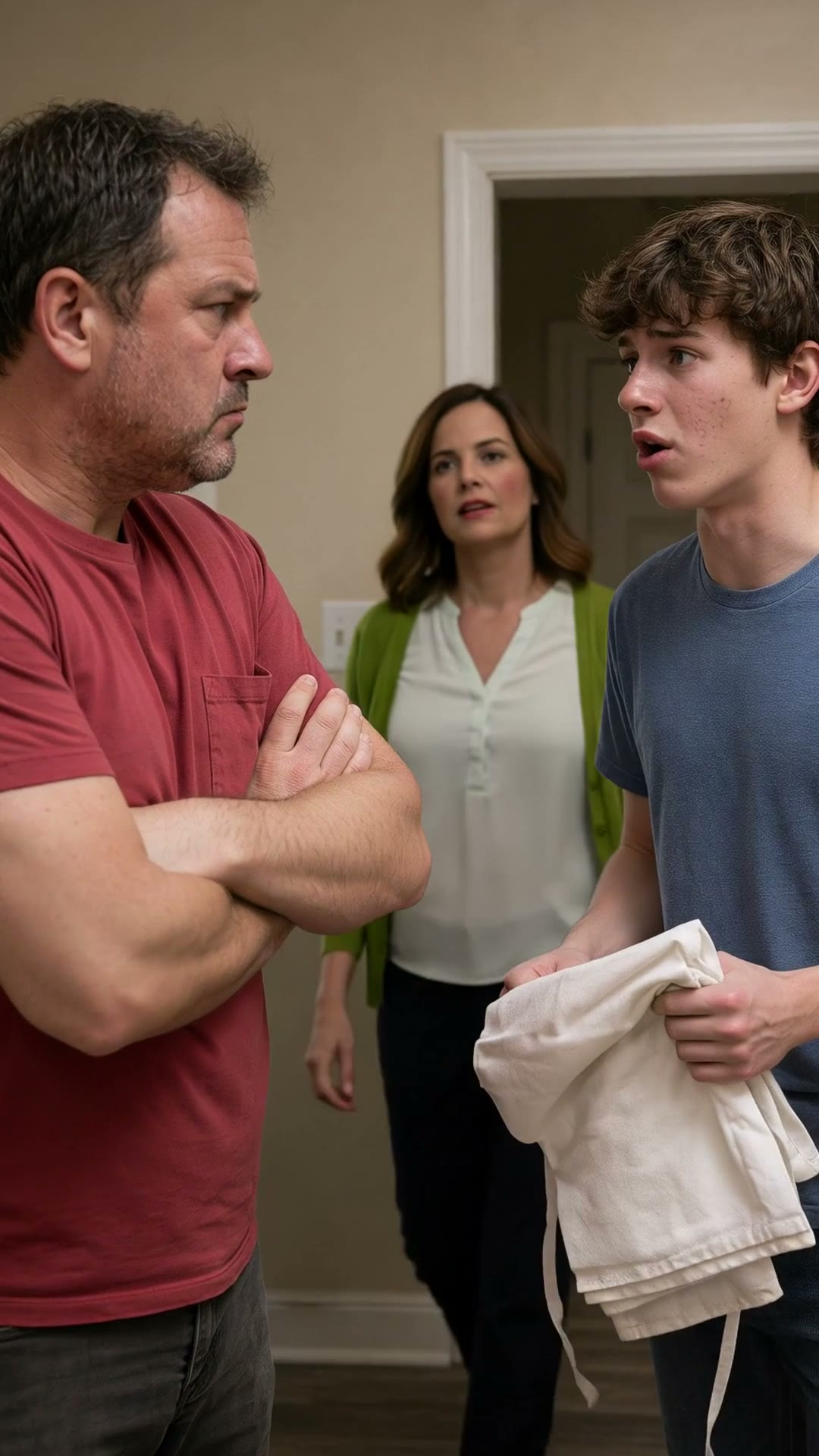
"Baking is for girls! Put that apron away before somebody sees you!"
Dad swept the empty flour bag off the counter. I had cleaned up after practising pastry for a school class. The apron was folded beside my bag, ready to take back. He looked at it as though I had left something shameful in the kitchen.
I was seventeen. I liked making things people could eat, and I chose the class because I wanted to learn. I still played football with friends. I did not understand why liking one thing meant Dad needed to protect me from another.
He said boys would laugh. I said some boys in the class were my friends. He told me they were probably being polite and that I should not build a reputation for doing women's work. I had heard him praise cakes Mom supposedly made, but apparently enjoying the result was different from being seen with flour on your hands.
"It's a class I chose. I'm not doing anything wrong."
Mom came back from the hall. She looked at Dad before she spoke.
"Paul, shall I tell him who you baked with last Saturday?"
Dad had been attending a weekend bread class with two friends. The cakes he called Mom's were sometimes his. He enjoyed measuring, practising and getting a loaf to rise. He kept the class quiet because one friend at work made a joke when he mentioned it.
Mom said she would not announce every hobby he wanted private. She also would not let him shame me for something he enjoyed himself. Keeping his confidence had become a different matter when he used it to claim there was a rule that applied only to his son.
Dad said he wanted me to avoid the same teasing. I asked why his answer to a cruel joke was to repeat it at home before anybody else could. He could tell me some people might be unkind. He did not have to make our kitchen the first place it happened.
He apologized for calling it women's work. Mom asked him to acknowledge that he had accepted credit being given to her while treating the same activity as embarrassing in me. She was happy to bake. She was not happy to serve as a disguise that let him enjoy a skill without risking anybody knowing.
I took the apron to class the next day. I did not enter a competition or win something that forced Dad to approve. I made pastry that needed improvement and asked the teacher about it. The class mattered because I wanted to learn, not because success could turn an allegedly shameful interest into a respectable one.
Dad brought home bread the next Saturday and said he made it. It was slightly dense. We ate it anyway. He did not need to be brilliant for the admission to count, any more than I needed to be brilliant before being allowed to practise.
Some weeks later, he asked whether I wanted help with a recipe. I said yes to washing dishes and no to advice about a step I had already learned differently. He managed both answers without turning the kitchen back into a test of what sort of boy I was becoming.
Mom now gets credit for what she makes and time off when she wants it. Dad can enjoy a class openly. I can decide which subjects interest me without having to make them fit an argument about whether my apron is the correct colour.
He still worries about people laughing. I told him I would rather have a father who stood beside me when they did than one who tried to prepare me by joining in.
I also asked him not to describe the class differently when relatives asked about school. He could say I enjoyed baking. There was no need to replace it with a safer-sounding subject so nobody had the chance to hear what I actually chose.
Would you have baked with him afterward, or kept that interest separate until you trusted his apology?