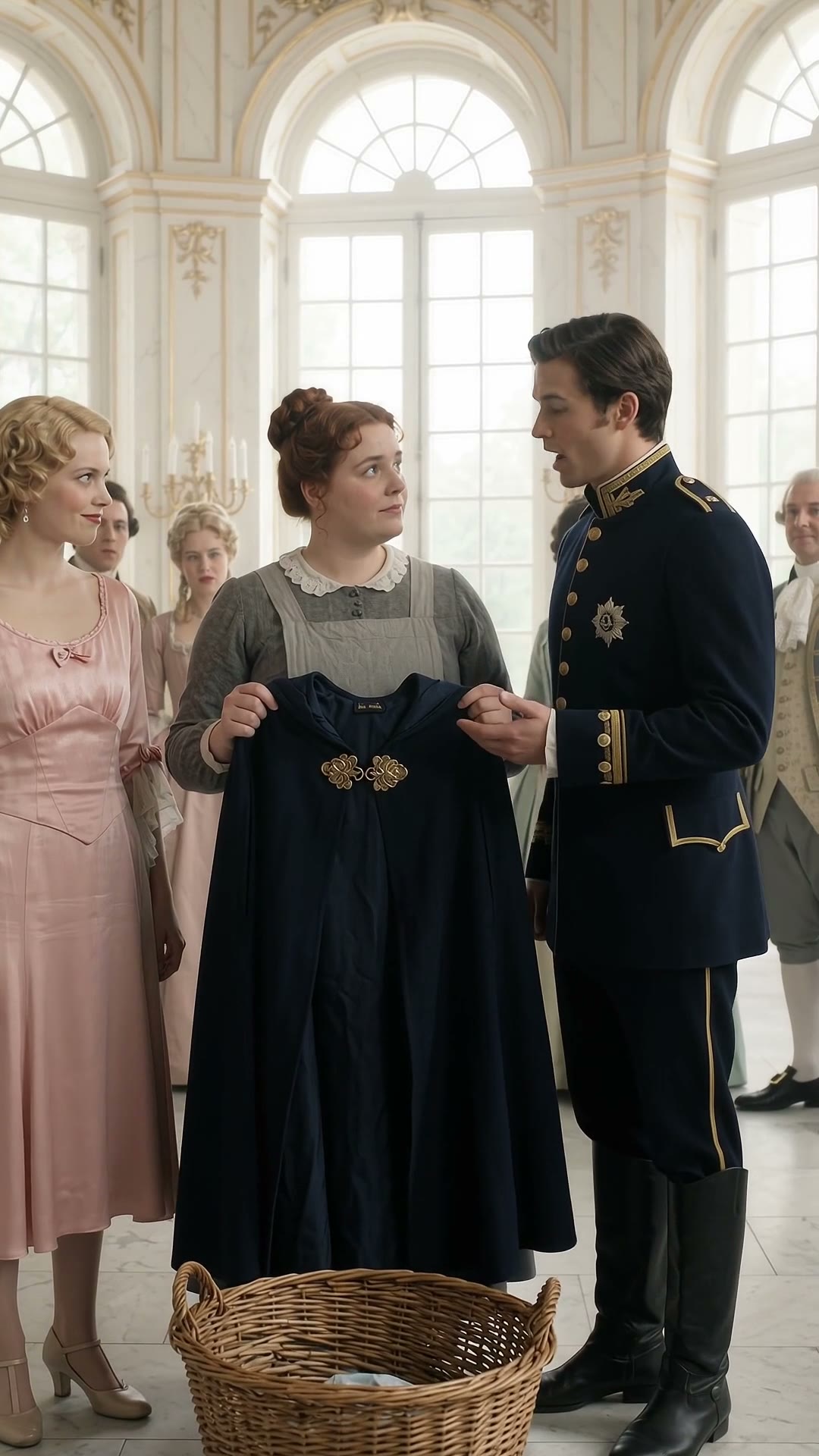
It isn't mine, my lady. I only kept it safe.
That was all Wren Hollis said, softly, with the whole gallery watching her. Only a moment before, she had been carrying a basket of clean linens through the east gallery of the palace when Lady Rosalind Vane stopped her. Rosalind was the most admired young woman at court, and everyone said she would soon be engaged to Prince Lucien. The prince was standing right there, by the tall window, in the bright daylight that spilled across the white marble and gold.
Rosalind glanced into the basket and wrinkled her nose. She lifted out a folded navy cloak, held it at arm's length between two fingers as if it were filth, and dropped it back onto the laundry. "A beggar's rag in the prince's hall?" The ladies behind her laughed.
Wren didn't argue, and she didn't cry. She lifted the cloak with both hands and slowly unfolded it, the way you would hold up something precious. The round gold clasp caught the light.
Rosalind opened her mouth to laugh again, but the prince had already stepped forward. He wasn't looking at Rosalind. He was staring at the clasp. Then he looked at Wren, really looked at her, for the first time. "That's my cloak. I wrapped you in it during the flood."
The gallery went silent. Rosalind's fan began to tremble in her hand, and every drop of color left her face. She knew exactly what that cloak meant.
To understand why, you have to go back three springs, to the night the river swallowed the lower town.
Wren was seventeen then, living in the crowded houses along the water. The flood came faster than anyone expected. Walls cracked, boats were scarce, and families who had not climbed high enough were left clinging to rooftops in the dark. Wren was on one of those roofs when a rider came down the flooded lane alone, without his guard. It was Prince Lucien. He waded to the foot of the roof, lifted the frightened girl down into the water, and wrapped her in his own navy cloak against the cold before the boats carried the survivors away.
He never learned her name. The shelters were full of shouting families and soaked soldiers, and the shaking girl slipped away into the crowd. The prince spent the following weeks searching every shelter in the city for a nameless girl in a navy cloak. He never found her.
Wren kept the cloak. She was too frightened to walk up to the palace gates and say, I am the girl from the river. Instead she took work in the palace laundries, with the navy cloak folded at the bottom of her basket. She meant to return it one day, and the day never came. For two years she washed the palace linens, kept her head down, and never spoke about that night to anyone.
Rosalind's secret was built on someone else's memory. A stable boy who had heard the gossip about the search told her the story of the rescue, including the navy cloak and its round gold clasp. Rosalind listened carefully and kept every detail. Then she made the decision that would change her life. She went to Prince Lucien and told him she was the girl from the flood.
The prince wanted to believe her. He had never stopped looking for that girl, and here was a lady who spoke of the cold water and the cloak. His courtship began soon after. Rosalind was welcomed everywhere, and her engagement was spoken of as settled. The only person who could have contradicted her was a laundress who had never spoken up. Rosalind believed she was safe.
That is why she went white in the gallery. The cloak in Wren's hands was proof that Rosalind had never been near the river. When she sneered at it, she was not really mocking a rag. She was trying to shame its owner into silence and make the evidence disappear.
Lucien did not raise his voice. He turned to Rosalind very slowly and asked a single quiet question, loud enough for every courtier to hear. "Tell me, my lady, where were you standing the night the river rose?"
Rosalind could not answer. Her lips parted, closed, and parted again. The ladies who had laughed only moments before now stared at the floor. The Queen, who had been watching from the far end of the gallery, stepped forward and ended the matter. Lady Rosalind was sent home from court in disgrace, and her hopes of an engagement were over. The admiration she had enjoyed among the young ladies of the palace vanished with them.
Wren stood with the cloak still in her hands. She had asked for none of this. The Queen, moved by her quiet dignity, gave her a place among the Queen's own ladies, with a proper room and a respected position in the household. The laundress from the lower town was suddenly someone the whole court had to greet with respect.
In the weeks that followed, the court began to see the laundress differently. The Queen asked for her in the afternoons, and Wren read aloud to her in the sunny sitting room while the ladies embroidered and listened. Wren never forgot the lower town, though. Each spring, when the river rose high again, she went down to the families who had lost their homes and brought them bread, blankets, and the story of the navy cloak, so that they would know that kindness has a way of finding people.
The prince kept finding his way to her. Every evening after that, he asked Wren to walk with him in the palace gardens. They talked about the river, the cold, and the girl who had nearly been lost in the water. For the first time in years, Wren spoke about that night without fear.