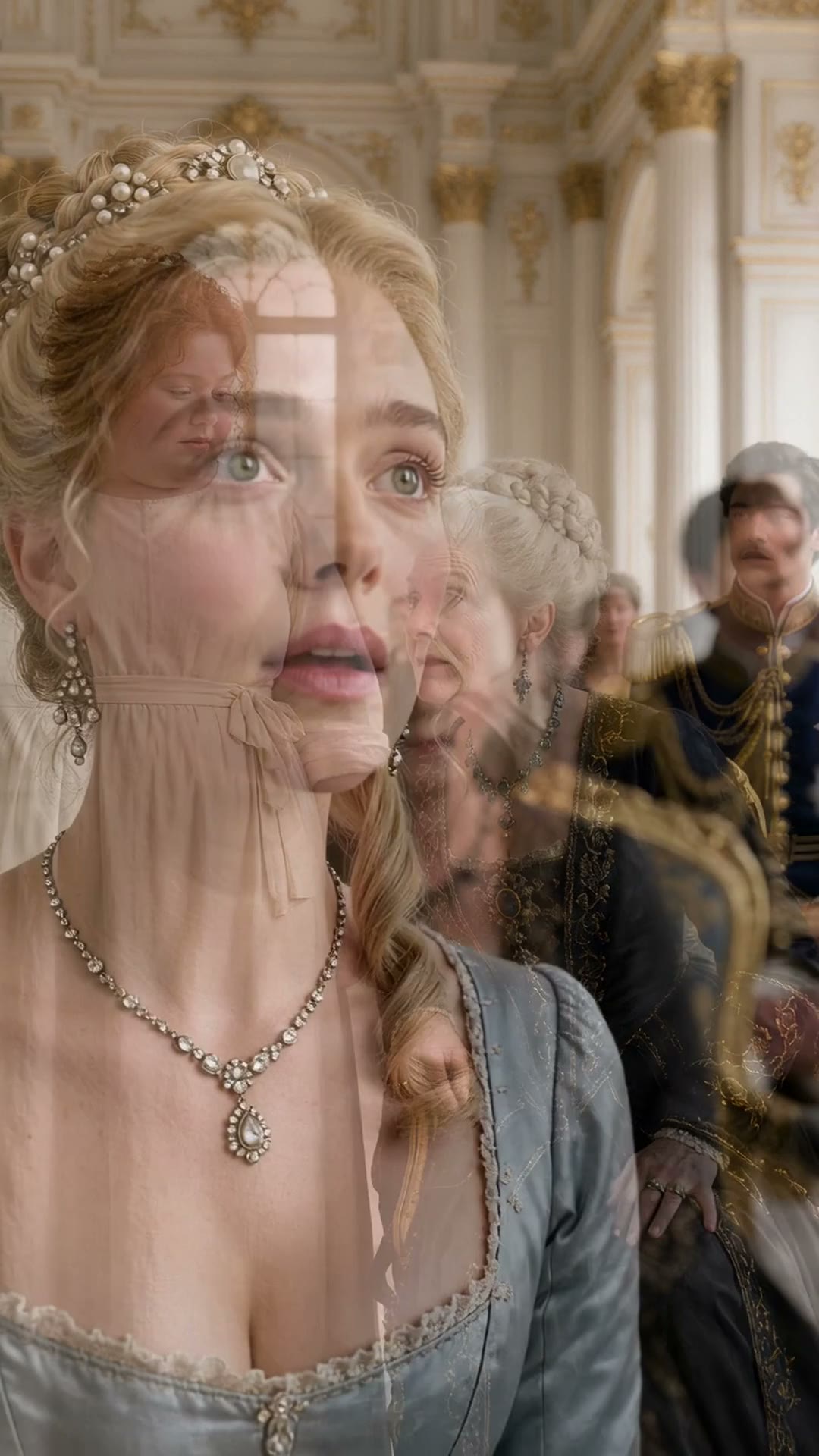
The afternoon reception was the kind the court loved best: the great hall flooded with sunlight, white marble and gold, music drifting from the gallery, and plenty of time for cruelty disguised as fun.
Lady Rowena Clare was bored. When a plump kitchen girl came up with a tray of sweet wine, Rowena saw her chance.
"Sing for us, kitchen girl," she called out. "Make us laugh."
The girl's name was Nell Brook. She had worked in the palace kitchens since she was twelve, and in seven years no one above stairs had ever asked her name. She knew exactly what they wanted: a red-faced servant croaking out a tavern song while the ladies hid their giggles behind their fans.
She set the tray down. She folded her hands over her apron and closed her eyes. And she sang the only song that had ever belonged to her.
"Hush now, little rose, the river knows that lullaby…"
It was a small, old-fashioned tune, soft as water moving under a bridge. The laughter in the hall drained away. And near the front of the court, Duke Ambrose of Westmere, a stiff, silver-haired man known for never smiling, went as pale as the marble.
He had not heard that song in more than twenty years.
His wife, the late Duchess, had written it at the river house at Westmere, for their only child, Margaret. She sang it every night by the open window above the river Wend, and when the Duchess died, Margaret was the only one left who knew it. She sang it to her father on the nights he could not sleep for grief.
Then Margaret fell in love with Tom Brook, a ferryman who carried people across the Wend. The Duke forbade it. She left one night with a single bag and her mother's silver comb, and in his fury the Duke struck her name from the family book and told the court his daughter was dead to him. For years her letters came. He sent every one back unopened. The last one he did open was written by a stranger: Margaret had died of a winter fever, leaving a little girl of six.
He told himself he had no granddaughter. He told himself so for thirteen years.
"Only my late daughter sang it," he whispered now, in front of the whole court.
Nell stared at him. Her mother had told her only that her grandfather lived in a great house on the same river, that he was very proud, and that one day he might be sorry. After her father drowned in a spring flood, an aunt had found Nell a place in the palace kitchens. She had never once imagined that the proud old man might be standing in the same hall.
The Duke crossed the marble slowly, leaning on his cane. "Who taught you that song, child?"
"My mother, my lord," Nell said. "Margaret Brook. She died when I was six."
With shaking fingers she drew a small silver comb from the pocket of her apron. She had carried it every day since the funeral. On its back was engraved a swan, the crest of the house of Westmere.
The Duke took it in both hands, and the man who never smiled began to cry in front of the entire court.
There was no one left in the hall who thought the moment was funny. Lady Rowena tried to laugh it off, and found that no one would meet her eyes. By evening the whole palace was repeating the story of the lady who ordered the Duke of Westmere's granddaughter to sing for her amusement. The Queen quietly released Rowena from her household, and she went home to the country before the week was out, to a family that was not pleased to see her.
The Duke did not wait for a week. That same night he had Margaret's name written back into the family book, and beneath it, in his own hand, the name of Eleanor Brook, called Nell, his granddaughter and heir. He paid off her place in the kitchens, and the cook who had worked her hardest wept when she left.
In the spring they went home to Westmere together. On the first warm evening, the old Duke sat by the open window of the river house, the same window where his wife had sung, and asked his granddaughter for the song.
Nell sang it for him, softly, the way her mother had sung it to her. Below them the river moved quietly under the bridge.
And for the first time in twenty years, the Duke of Westmere slept through the night.