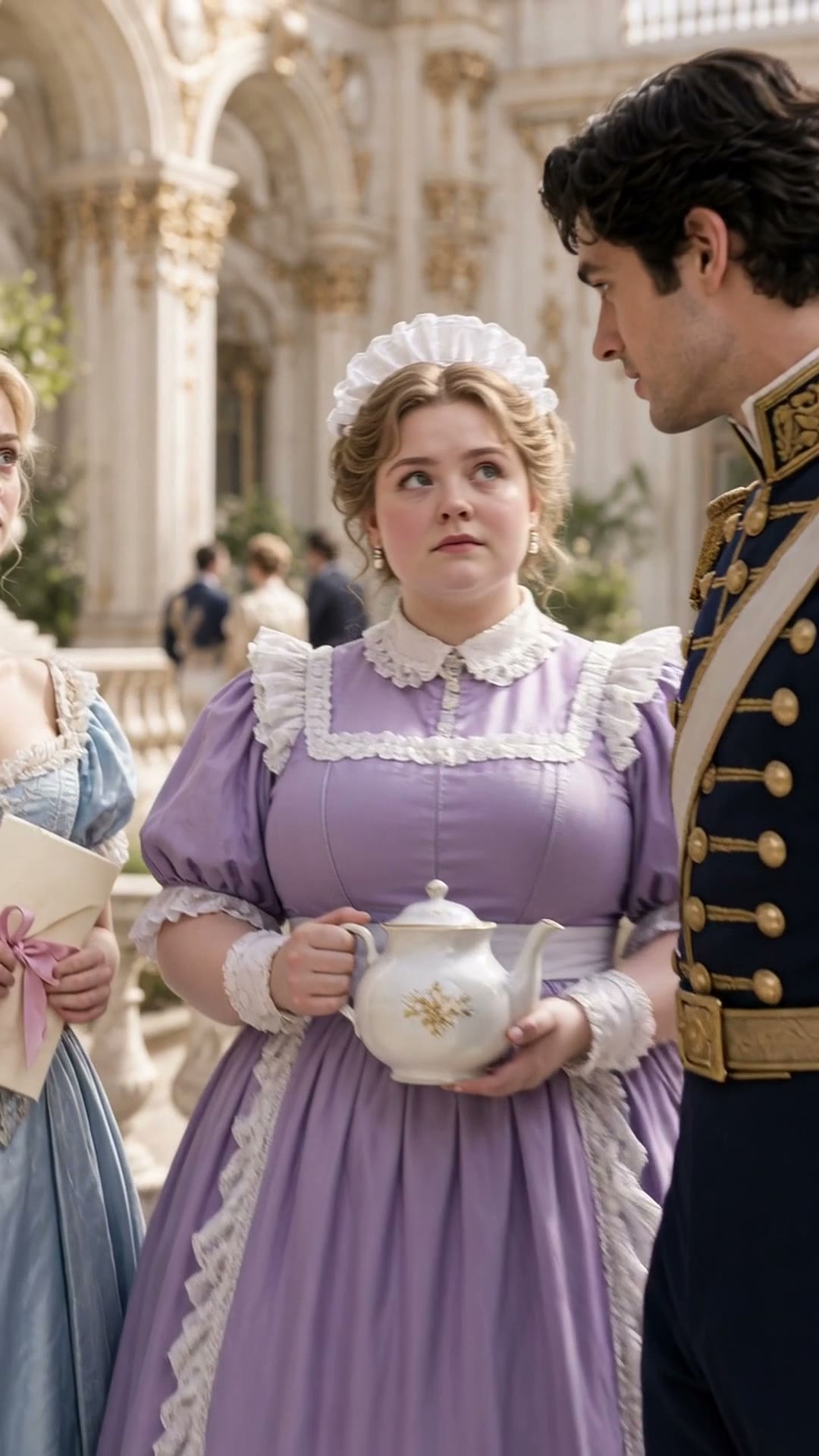
For almost a year, someone had been leaving poems for Prince Julian.
They appeared in the palace library, tucked inside the same old book of sea charts that he had loved since he was a boy. No signature. No initials. Just a single page in neat, careful handwriting, every few weeks. They were poems about the lake behind the palace, about summer, about two children who used to sit under a willow tree and make up stories about the ships they would sail one day.
Julian read them so many times that the pages grew soft. He wanted desperately to know who had written them. He read some of them aloud at court, hoping the author would step forward.
Lady Celestine Varne stepped forward instead.
She never said it in so many words. She simply blushed when he read them, lowered her eyes, and let the court whisper. Her mother made sure the whispers grew. Within a few months, everyone believed that the lovely, delicate Lady Celestine was the secret poet, and that a royal engagement was only a matter of time.
But Julian kept one thing back. The very last poem, the one that had arrived just before winter, ended with a line he had never read aloud to anyone. He always stopped before it. He said it was unfinished. In truth, it was the only line that made him certain the writer knew something no one else could know.
Ivy Marsh knew it, because she had lived it.
Twenty years earlier, she had been the little daughter of the palace's old head gardener. Julian had been a lonely, serious boy with too many tutors and no friends. They met by the lake, under the great willow, and for three summers they were inseparable. They read the same books. They invented a whole kingdom of ships and islands. When it was time for him to go away to school, he made her promise to wait for him under the willow until he came back.
He came back four years later. By then her father had died, and Ivy, fifteen and with no family left, had been put to work below stairs. The boy who returned was a young prince surrounded by courtiers. He walked past the scullery maids a hundred times and never looked twice. She did not blame him. She was a maid now. She was not supposed to be seen.
But she never stopped writing. And one day, dusting the library, she found his old book of sea charts and slipped a poem inside. Then another. She never meant to be discovered. She only wanted him to remember.
That afternoon, standing by the wall with her teapot, she heard him read her poem to the court, and she heard Celestine laugh softly and lower her eyes as if it were hers. Something in Ivy finally broke.
"I wrote you that poem, Your Highness," she said. "Every word."
The ladies laughed. Julian did not.
"Then finish the last line," he said.
And Ivy, with tears on her lashes, said it: "And still I wait beneath the willow tree."
"Nobody knows that line," the prince said slowly, "but me and her."
Every eye in the room turned to Lady Celestine. She tried to laugh, to say she had told the line to her maid, that the girl must have read her letters. But Julian quietly asked her one question: what was the name of the ship the two children sailed in the fourth poem? It was a name never written in any poem, only spoken under the willow twenty years ago. Celestine had no answer. Ivy whispered it before he finished asking: "The Swallow."
The teapot slipped from her hands and shattered on the marble. Nobody moved to scold her.
Lady Celestine left the room without a word. By evening the whole palace knew. The engagement talk was finished, and so was her reputation as the gentle, gifted poet. Her mother took her away to the country "for her health," and when she returned the next season, the ladies who had once crowded around her now smiled behind their fans in a way she understood all too well.
Ivy was not dismissed. She was not punished. But she was too frightened to go back to the salon, and she spent the rest of that day hiding in the scullery, sure that she had ruined her life.
At sunset, a footman found her and said that someone was waiting for her by the lake.
The willow was still there, older now, its long branches touching the water. And under it, without his gold braid or his guards, sat Prince Julian with the old book of sea charts on his knees, holding every poem she had ever written.
"You kept your promise," he said. "I'm sorry it took me so long to keep mine."
She sat down beside him. And for the first time in twelve years, Ivy Marsh did not have to wait anymore.