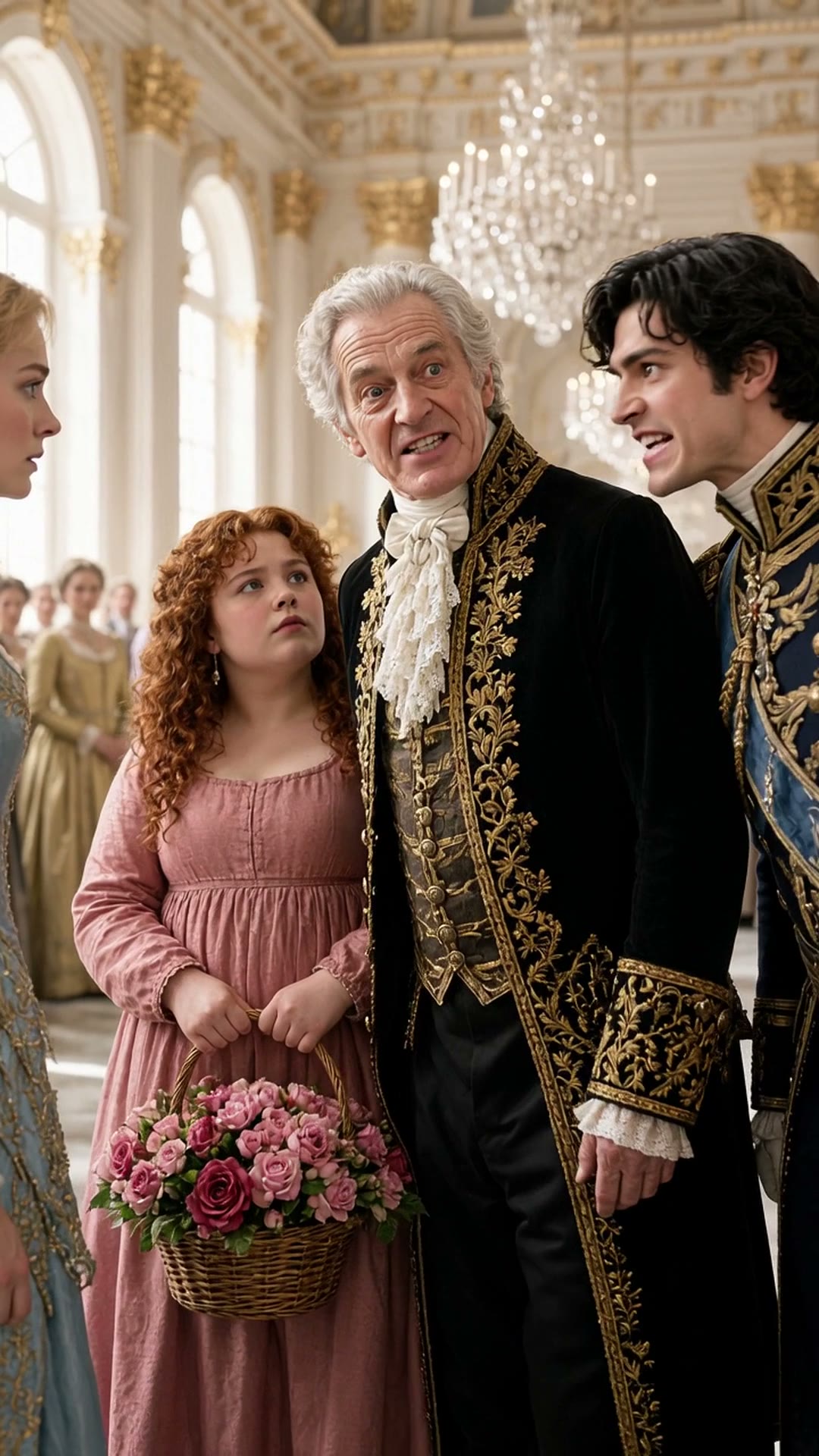
Every Thursday morning, Rose Ashworth climbed the long hill to the palace with a basket of roses on her arm. She was twenty-four, sturdy and freckled, with a thick honey-brown braid and a rose-pink cotton dress she had sewn herself. The roses were her pride. She and her grandmother grew them behind a small stone cottage at the edge of the city, and the palace steward bought every one she brought.
That Thursday, as she crossed the great white-and-gold hall, Lady Celestine Varne stepped into her path.
Celestine was bored, and the court ladies around her were ready to be amused. She looked Rose up and down, the round face, the plain dress, the basket, and stretched out one silk slipper.
"Kneel and kiss my shoe, flower girl."
The ladies laughed. Rose felt the heat rise in her cheeks. But her grandmother had raised her with one rule, repeated so many times that it had become part of her bones: you are poor, but you are no one's servant.
"I kneel to no one but the crown," Rose said.
The silence that followed was dangerous. Celestine opened her mouth to call the guards. But old Lord Bramwell, who had been sitting by the window, rose slowly to his feet. He was nearly eighty and walked with a cane, and he was staring at Rose's face as if he had seen a ghost.
"What is your name, girl?"
"Rose Ashworth."
The old man gripped the back of a chair. "Ashworth," he repeated. "The king's lost sister married an Ashworth."
Forty-five years earlier, the king had a younger sister, Princess Margaret. She was not the delicate kind of princess the court admired. She was strong and broad and loud, she preferred gardens to ballrooms, and she spent every free hour in the royal rose garden with the young head gardener, Thomas Ashworth. They fell in love. When the old king found out, he forbade it and arranged a marriage for Margaret with a foreign duke three times her age.
Margaret refused. One night, with the help of a single loyal friend, she climbed out of the garden gate with Thomas and vanished. The old king struck her name from every record and forbade the court ever to speak it. Her younger brother, who would one day become King Henry, was only sixteen. He never stopped looking for her. But by the time he had the power to search, the trail had gone cold.
The loyal friend who opened the garden gate that night was a young officer named Bramwell.
For forty-five years, he had kept the secret. Margaret had written to him twice, long ago, and asked him never to tell anyone where she was. She did not want to be forgiven by a father who had sold her. Then the old king died, and then Thomas died, and Margaret was too proud and too ashamed to come back. She became a widow with a little son and later a granddaughter, growing roses at the edge of the city she had been born to rule.
Lord Bramwell had not heard the name Ashworth spoken in the palace in all those years. And now here was a girl with Margaret's green eyes and Margaret's stubborn chin, refusing to kneel to a woman who was not the crown.
"Say that again," he whispered.
"Rose Ashworth," she said. And then, because her heart was pounding and she did not understand what was happening, she said the name her grandmother had made her promise never to say outside their cottage door. "My grandmother is Margaret Ashworth."
Lord Bramwell sat down heavily and covered his face with his hand. When he looked up again, his eyes were wet.
He went to the king that same hour. He brought the two old letters he had kept for forty-five years, in Margaret's own handwriting. King Henry read them standing, then sat down without a word, then read them again.
That evening, a plain carriage with no crest on its door stopped outside a stone cottage at the edge of the city. An old man in a dark coat stepped out and stood at the gate for a long time, looking at the roses. Then the cottage door opened, and an old woman in a gardening apron came out and stared at him. Neither of them said anything at first. Then the king of the realm walked up the little path and took his sister in his arms like the sixteen-year-old boy he had once been, and they both wept.
As for Lady Celestine, she learned the price of a cruel little game. The next week, before the whole court, she was required to make a formal curtsy to the king's grandniece, Miss Rose Ashworth. Her face was scarlet, and the ladies who had laughed with her now whispered about her. By the end of the month the queen had quietly removed her from her household, and the invitations to her stopped coming.
Rose did not move into the palace. Neither did her grandmother. They said they were too old, and too fond of their roses. But every Thursday, a royal carriage now came down the hill to the stone cottage, and Princess Margaret, for the first time in forty-five years, had tea with her brother.
And the roses on the king's table came from the same garden as always.