"Get your junk out!"
My brother Derek didn't just scream it. He shoved our late father's steel tool rack against the wall of the garage, sending my hand-carved ceramic molds crashing and shattering across the concrete floor, then hauled my glassblowing pipes out of the open garage door and flung them down the driveway.
I stumbled back against the workbench with flour still on my hands and tears burning my eyes. Five years. Five years of double shifts, burned fingertips and micro-loans, turning Dad's old garage into a real glass studio. Last week the city told me we were the top choice for the downtown cultural center project.
Instead Derek, in his fitted designer polo, announced that the garage was now storage for his new contracting business. He called my life's work garage junk and me a freeloader who had never paid for a single thing under this roof.
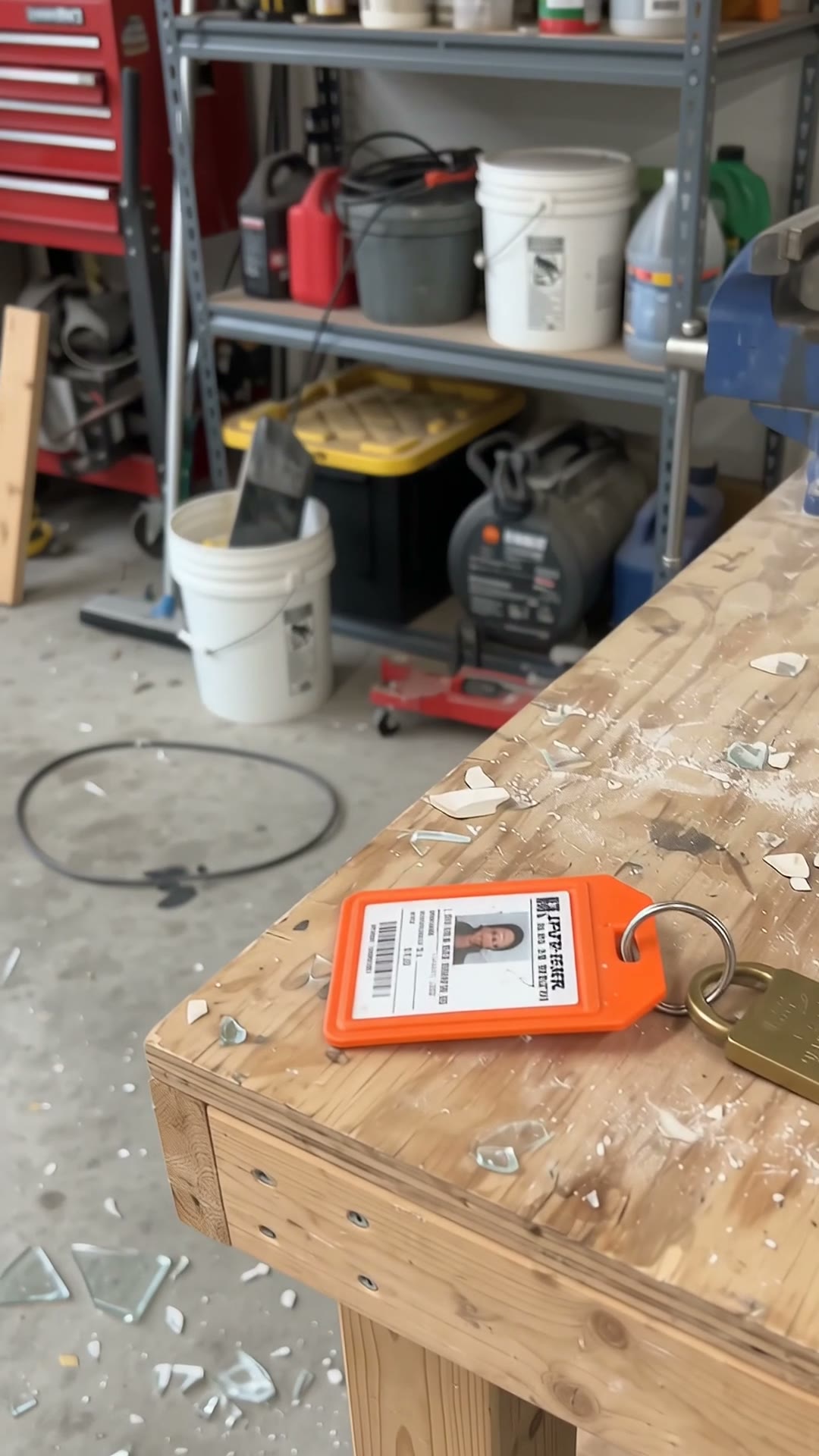
My hands were shaking, but a cold calm settled over me. I wiped my face with my sleeve, reached into my stained canvas apron pocket, pulled out a bright orange inspection badge with a heavy brass locking tag, and slammed it down on the workbench in front of him.
"Look at the seal on that badge, Derek!"
Derek went completely still. Then the kitchen door banged open and our mother, Linda, rushed into the garage, staring at the badge in horror, and cried out:
"Derek, wait! Is that the bank's seal?!"
Here is what Derek never bothered to learn about my garage. Five years ago, Dad, Frank, helped me turn the old detached garage into a glass studio. The bank financed the build, and the loan is in my name because I run the business. Dad co-signed quietly, and after his funeral the payments became mine alone. I have never missed one.
The orange badge in my apron is part of that deal. When a bank lends against a building and the equipment inside it, its inspectors issue a sealed collateral pass to the borrower. The pass lists every kiln, torch, mold rack and pipe set that is pledged, and none of them may be moved, sold or damaged without the lender's written consent. The brass tag is numbered, and the seal is the bank's.
Derek knew none of this. Last month he asked Mom if he could store his drywall trailers in the garage. I said no. He never asked the bank, and he never asked me.
Derek laughed and said it was just a piece of plastic. Mom stepped toward him and said, very quietly, that a bank's collateral pass is the lender's authority over everything on its list. Damaging pledged property triggers the default clause, and the bank can call the whole loan that same day. I had read that clause three times in March, and I could recite it.
I made one call from the end of the driveway and read the pledge number from the brass tag to the bank's regional officer. Forty minutes later an inspector photographed the shattered molds and the scratched pipes in the dirt and taped a freeze notice to the garage door. Our neighbor's video of the scene went into the file that evening.
The consequences came in order. The garage stayed locked until the damage was assessed. Derek's firm had to pay for every ruined mold and pipe, because the pledge was in my name and he had no right to touch it. The committee pushed its decision back two weeks, but it did not disqualify me.
That evening Derek sat at the kitchen table with his head in his hands. Mom did not raise her voice. She opened Dad's blue folder to the first page of the loan and turned it so he could see the signature of the man who had trusted me with the business. Derek read it twice and apologized to me in front of her. I told him he would pay for every piece he had broken, sign a written statement for the bank, and stay out of that garage for good. He agreed, and I did not ask for more.
The freeze was lifted four weeks later. I rebuilt the molds from my own sketches. The first pipe I pulled out of the dirt that morning sits on the shelf above my kiln, its brass tag still shining, and I delivered the cultural center samples on schedule.
Would you have called the bank too, or would you have forgiven him across the kitchen table?