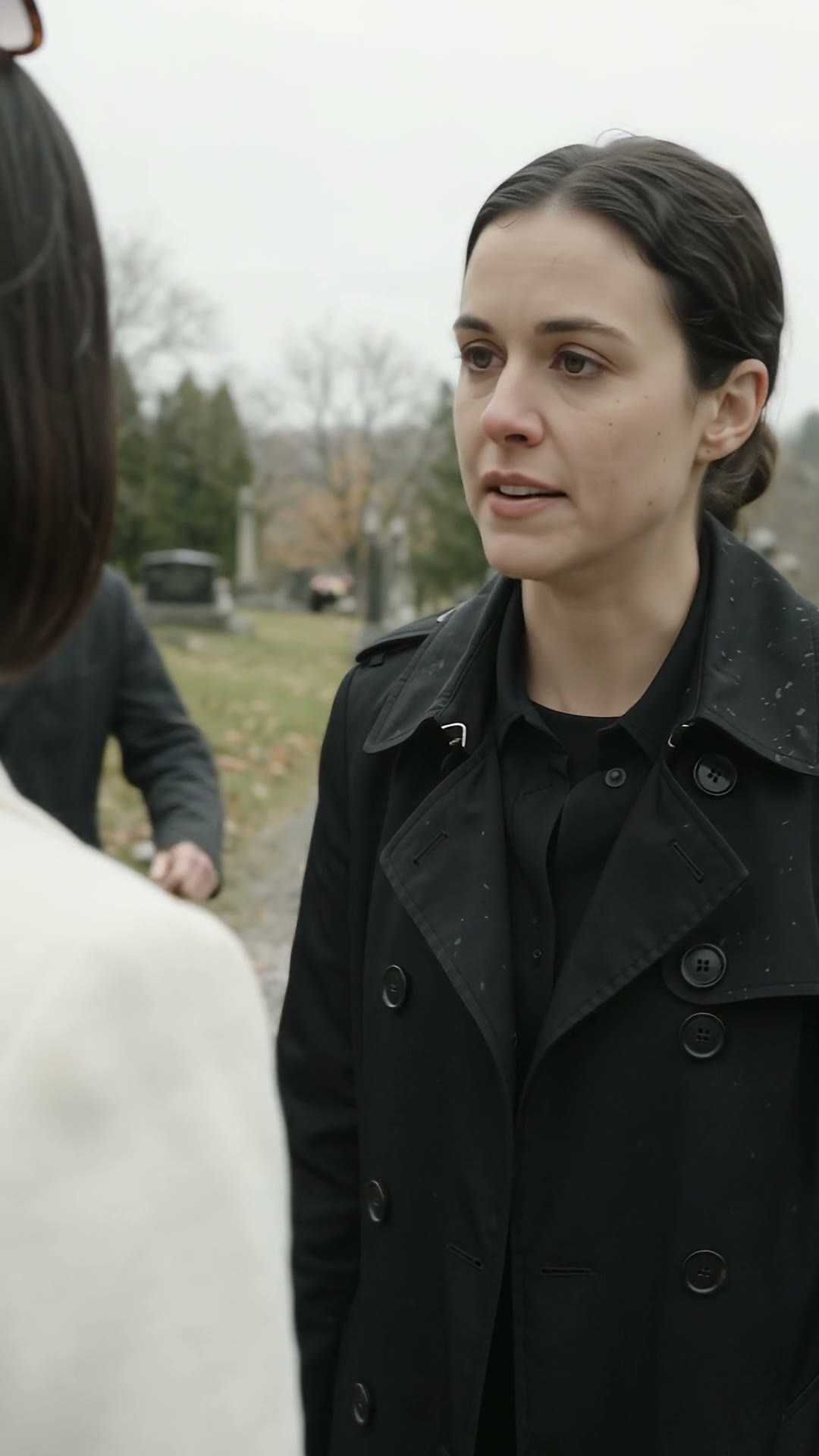
"You brought nothing to our mother's name!"
My sister Helena didn't just scream it. She snatched our mother's heavy leather memorial guestbook off the folding table by the old stone cemetery gate and hurled it into the wet mud in front of every mourner. It landed with a sickening thud and splattered my boots and the hem of my black trench coat.
Gasps rippled across the hillside. I had only come to write one last goodbye to Mom.
Helena arrived in a spotless white designer coat with her sunglasses pushed up in her hair, and treated our mother's burial like a hostile takeover. For three years she stayed in the city climbing her corporate ladder while I drove forty miles every single weekend to sort Mom's pills, boil her broth and hold her hand. Now, with Mom barely laid to rest, she called me a penniless freeloader and demanded the groundskeeper throw me off the grounds.
I did not cry. A strange, cold calm settled over me. I reached into my coat pocket, pulled out Grandpa's heavy silver fountain pen, and set it down on the wet stone marker between us. I looked my sister straight in the eye and said:
"Listen to the pen."
Helena's sneer faltered. Behind her, our Uncle Ray, Mom's older brother, came striding up the gravel path, staring at that pen as if it were a ghost, and called out:
"Helena, wait! Mom told me about that pen!"
Ray reached us in a few long strides, his charcoal overcoat flapping open. He ignored Helena completely. He lifted the silver pen off the marker with both hands, the way you would lift something fragile, and turned it over until he found the small seam near the barrel that Grandpa had always called the repair.
Grandpa gave this fountain pen to Mom when she finished nursing school. She kept it in her writing desk for decades and used it for birthday cards and grocery lists. When she got sick, she started talking to it, which sounded silly until I understood what she was doing.
Mom had been dying for almost a year. In her last weeks, when the oxygen machine hummed beside the bed, Helena drove in from the city for a single afternoon, with papers in a folder. She wanted Mom to sign an amendment to the estate. I was not in the room. The home nurse was, and she told me later that Mom kept asking, "Where is Nora? I want Nora to hear this."
After Mom died, Helena told everyone that Mom had signed the amendment with a clear head. She wanted the house, the savings and the lake cottage under her control, and me left with a box of photographs and no say at all.
Mom had hidden something inside the pen. Years earlier she had asked Ray, her older brother, to help her fit a tiny recorder inside the silver barrel, so her own voice could speak for her if anyone ever tried to change her wishes. Ray was the only person who knew. Now he was staring at the pen, and his face had gone the color of wet paper.
I pressed the seam. The barrel opened on its threads, and a small memory card slid into my palm. Ray took it, plugged it into the phone he carried, and held the screen so Helena could see.
The first voice on the recording was Mom's, weak and rattling but completely clear. She told the notary that she did not want the amendment, that she wanted Nora to decide about the house, and that she was too tired to read anything. Then a second voice cut across hers. "Mom's confused. Just sign it. We have to finish before Friday." The notary hesitated. Helena told her it was routine.
Helena's face crumbled. She gripped the folding table, the same table where she had hurled the guestbook, and whispered that it was a deepfake. "Anyone can make a recording," she said. "Anyone can fake a voice."
Gerald Hale, our family attorney, had been waiting at the back with the funeral director. He stepped forward, opened his leather portfolio, and pulled out the amendment and the notary's copy that Helena had asked him to file on Monday. "Then we will ask the notary whether she recognized the woman on this tape," he said. "And we will match the recording date against her register today." He did not raise his voice. He did not have to.
The consequences came quickly. Within the week the probate court froze the amendment pending a forensic audio review and a fraud inquiry. Helena lost her role as executor, and the earlier will was confirmed as written. The house, the savings and the lake cottage went to me, with Ray named co-executor to watch the accounts.
Helena did not come to the reception after the burial. She sent a text saying she was sorry.
The pen is in my writing desk now, where Mom kept it. I write my grocery lists with it every Sunday, and I always listen before I sign anything.
So here is my question for you. If your sister hurled your mother's memorial book into the mud, and you knew she had also forged a deathbed amendment, would you reveal the recording right there at the gate, or wait for the court?