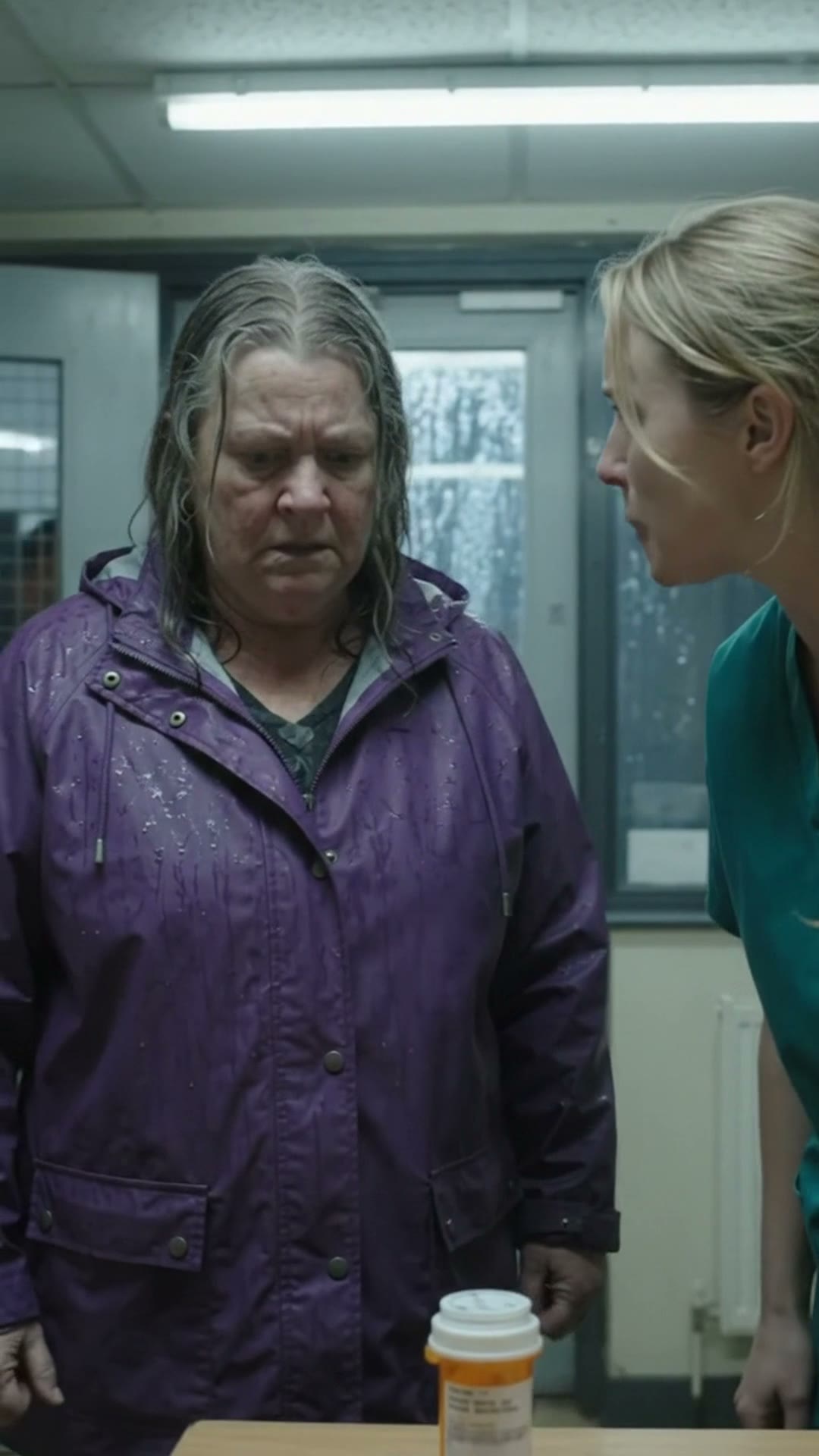
"You worked my son into his grave. His clinic is mine!"
My mother-in-law Glenda screamed that at me across the reception desk of my late husband's vet clinic in Pikeville, at closing time. Then she swept both arms across the desk. The desk organizer crashed onto an empty patch of floor. Dog biscuits scattered under the waiting-room chairs.
Nate died in March. He was forty. We built this clinic together for nine years, him in surgery, me at the front in my green scrubs, and we still owe the bank for the X-ray machine. Our daughter Josie is five. She does her coloring behind this desk every afternoon. This clinic is the only thing her daddy left her.
For three years Glenda told everyone she had a bad heart. Nate paid for her heart medicine out of the clinic account every month without a word, because she was his mother. Since the funeral she's told the whole church I worked him to death, and she wanted my keys tonight.
I didn't cry. I reached into my scrub pocket, took out a small orange pill bottle and set it on the empty desk in front of her.
"Your heart pills, Glenda. Three years of them. Explain these."
She went grey. Behind her, Nate's younger brother Russ came in from the kennel room with a leash still in his hand and stopped when he saw the bottle.
"Mom's heart pills? What did you find in them?"
After the funeral I had to take over the clinic books. Every month for three years, thirty-four hundred dollars had gone to a mail-order compounding pharmacy for Glenda's "heart peptide formula," a special medicine she said no insurance would cover. Nate never questioned it. She was his mom, and she cried every time it came up.
Glenda said, "Those are prescription. You had no right." Russ didn't look at her. He looked at me, and I told him the whole thing right there over the broken glass.
I went to vet school with a pharmacist, and I did not recognize that formula. It bothered me. So I took one bottle from Glenda's bathroom cabinet when I dropped off a casserole. My old classmate arranged a proper laboratory analysis. The capsules contained sugar and cellulose, not the medicine listed on the invoice. That did not tell us whether Glenda had a heart condition. It told us the clinic was paying for something it was not receiving.
The "pharmacy" was a two-room outfit. It kept a small fee and sent the rest of every payment back as a "rebate" to a checking account in Glenda's maiden name. Over three years it came to one hundred and twenty-two thousand dollars, drained from the clinic while Nate worked six days a week and I begged him to take one day off.
Russ sat down on the floor of the lobby, right in the dog biscuits. "Where is it, Mom?" he asked. "Where did all of it go?"
Glenda did not have it. She broke down and told us about a man she called "Colonel Mike," an Army officer stationed overseas whom she had met online the winter after her husband died. He sent her love poems and promised to retire and marry her. He needed money for leave papers, then for a medical bill, then for shipping his belongings home. She knew Nate would never hand her money for a man she had never met. But he would pay for his mother's heart without asking a single question. So she invented the heart.
Russ took her to the sheriff's office the next morning, and they reported the scam to the federal fraud line. "Colonel Mike" was never found. Nine thousand dollars came back. The rest was gone.
Glenda sold her house on the lake. Every dollar went back into the clinic account, and it paid off the X-ray machine with some left over. She moved into Russ's spare room, gave up her phone for a flip phone, and goes to a support group for scam victims at the library on Thursdays.
Russ surprised everybody. He had dropped out of college twice, and Nate always said he would find his way someday. That fall he enrolled in the vet tech program at the community college, and now he works the front desk with me three afternoons a week. Josie calls him "Uncle Doctor."
In the spring Glenda finally saw a real cardiologist, because Russ made her. Her heart was perfect. "The only healthy heart in this family," she said, "and I broke everybody else's with it." The next week she came to the clinic with a pan of banana bread, sat on the floor behind my desk and colored with Josie for an hour. On her way out she said she was sorry, and that she knew sorry did not pay a single bill.
Could you forgive a mother-in-law who invented a heart condition and drained her own son's clinic?