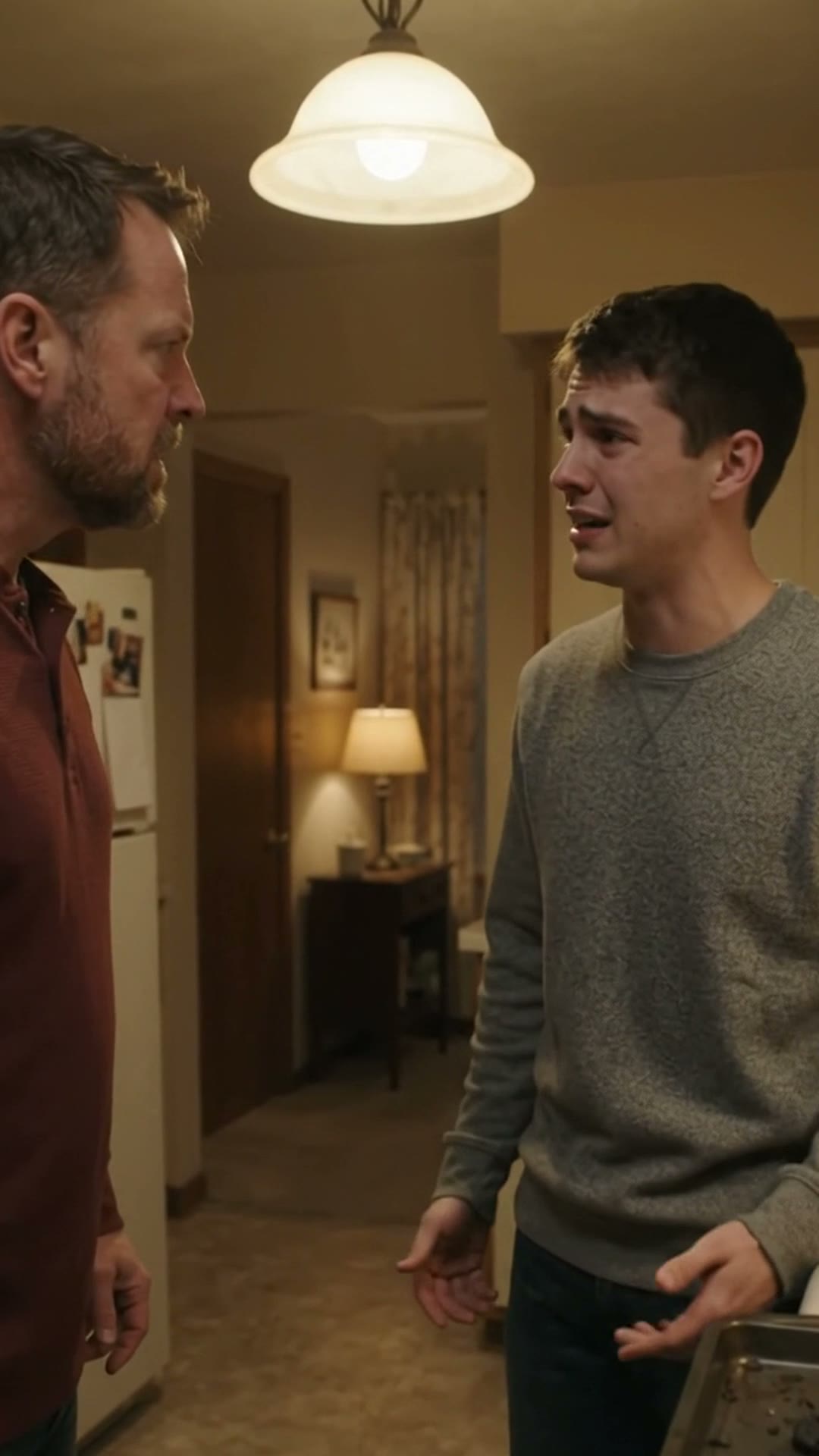
"You ruin everything you cook! Don't waste my food again!"
Dad threw the oven glove onto the floor. The tray had cooled by then. Supper was burnt, and he had decided it proved something about every meal I had ever attempted.
I was twenty-six, visiting for the weekend. Mom was away, and I offered to cook so Dad could finish work in the garden. He told me where the pan was and which setting to use. I followed the recipe I made successfully in my own flat. The vegetables blackened long before the time was up.
When I asked whether the oven had been running too hot, he said blaming equipment was childish. He brought up a cake I spoiled at thirteen and told Grandma I still could not manage an ordinary instruction. I did not mind admitting a mistake. I minded being told the mistake was a permanent description of me.
"I used the setting you told me. Why won't you let me check it?"
Grandma came from the doorway with the loose control knob in her hand. She looked at Dad.
"Victor, shall I show him what you put back on that oven?"
The plastic fitting inside it was cracked. Dad had knocked it off while cleaning, pushed it back and discovered it no longer sat reliably in the position its markings suggested. Grandma had asked him to have it checked before anyone used the oven. He said he would deal with it later.
He knew the control could mislead somebody. He had not told me, then refused to let me examine it once the food burned. That was the part he could not explain as disappointment about supper. He had watched me accept instructions from him while withholding information that mattered to following them.
We did not try to repair the control ourselves. Dad stopped using the oven until it had been properly checked. A family argument was not a reason to keep testing a faulty appliance with another meal or pretend a loose part could be made safe by pushing it harder.
Grandma said she should have spoken when I first started cooking. She assumed Dad had warned me. I said I understood the assumption, but I needed both of them to stop treating the failure as evidence of something wrong with me before asking what had actually happened.
Dad apologized for the accusation and for mentioning the old cake. I asked whether he remembered what happened after that cake. He did not. I had made another one the next day. He remembered the failure so reliably that it had become the whole account of a skill I continued learning without him.
We ordered supper. Dad paid and cleared away the burnt food himself. I did not make a second meal to prove I could do it properly under supervision. I had offered help, not volunteered for a practical examination conducted by somebody who knew the equipment was unreliable.
The oven was repaired the following week. He told me when he rang, then said he had been embarrassed about neglecting it. I said admitting that sooner would have been less damaging than making me stand in his kitchen while he recited my supposed history of incompetence.
I still cook when I visit if I feel like it. Sometimes Dad asks what I put into a dish because he likes it. Those questions are easier to answer than an accusation disguised as advice.
I had offered to pay for replacement ingredients. Once we knew about the knob, Dad said I did not owe that either. I wanted him to say it to Grandma as clearly as he had announced I wasted his food. Withdrawing a public accusation only in private would have left the original account sitting at the table.
Would you have stayed for the takeaway after that apology, or left before supper?