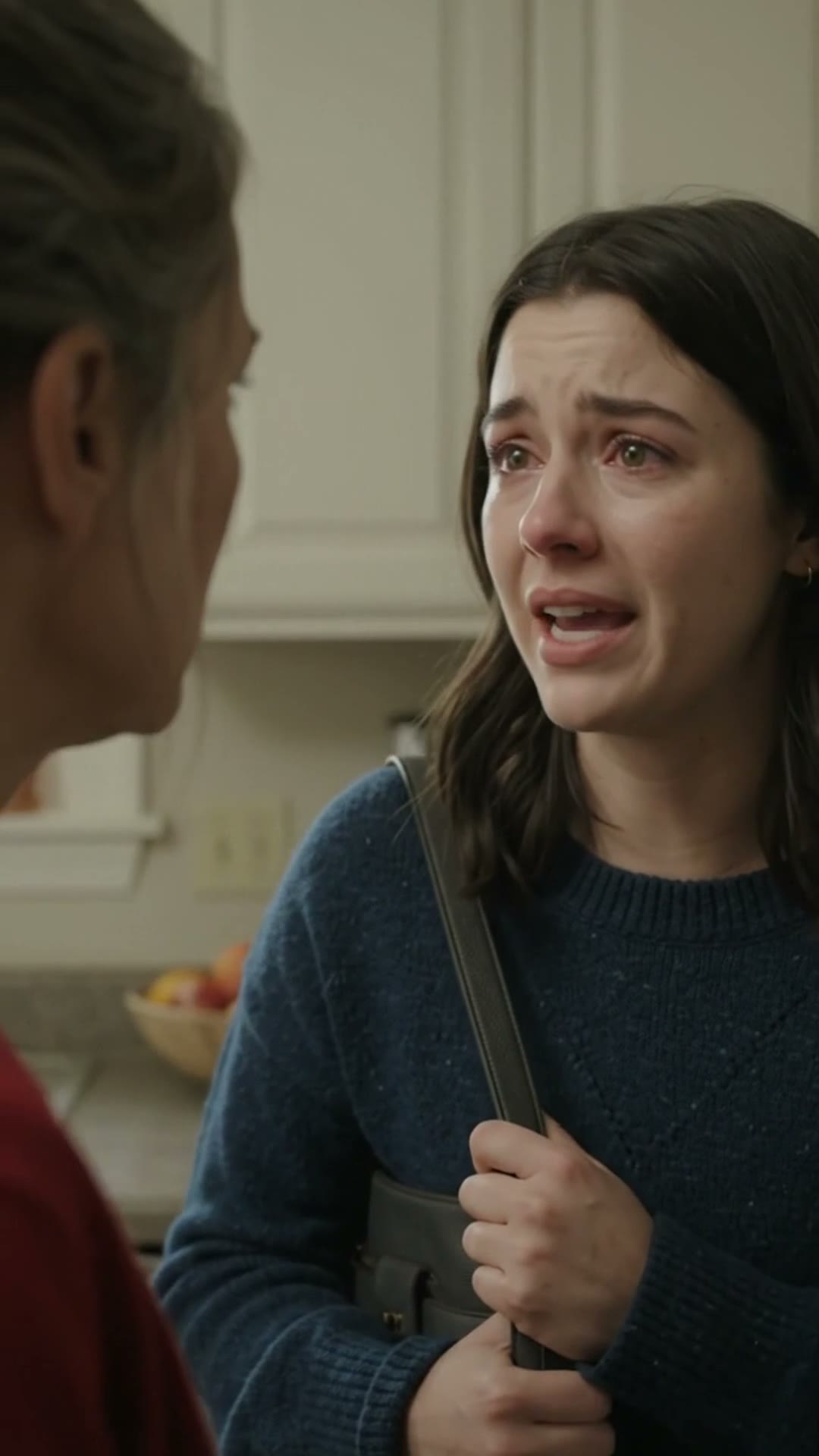
"You're still an addict! Don't bring that filth into my house!"
Mom threw the empty paper bag toward her kitchen bin. My actual medication was still in my closed handbag. I kept it beside me while she told me bringing it meant I had lied about getting better.
I was thirty-five and receiving prescribed treatment as part of recovery from opioid addiction. I followed a plan with qualified professionals. I was not asking Mom to manage it. I mentioned an appointment because she asked why I could not stay overnight, and she turned the answer into an accusation.
She said recovery meant taking nothing and that I was using a clinic to excuse a weakness. I did not want an argument about medical decisions beside the rubbish. I wanted her to stop treating a plan she did not understand as something she could dispose of to prove a point.
"It's prescribed treatment. You don't get to throw it away."
My husband Tom came in with the envelope I had asked him to bring if I wanted it. He looked at me before speaking.
"Nora, do you want me to bring out the letter you asked for?"
I said yes, and chose the part I wanted to share. It was a summary supplied to me by my clinician, explaining that prescribed medication could be part of my continuing treatment. It did not invite my mother to supervise doses, decide when treatment should end or demand the rest of my records.
Mom read it quietly. She said she thought treatment was supposed to remove the need for any medication. I told her questions could be discussed with reliable information and appropriate professional advice. They could not be settled by shaming me until I stopped something prescribed.
The letter was not a guarantee about every future day of recovery. I did not present it as one. It answered the particular claim she had made: that receiving prescribed treatment meant I was simply pretending to recover. I was doing the work, including the parts that did not fit her imagined picture of a person who needed nothing.
Tom did not make medical claims on my behalf. He asked whether I wanted to leave. I did. I kept the letter and my bag, and we went home without waiting for Mom to approve the part of my care that I had already discussed with people qualified to provide it.
Later I told her I would not bring treatment discussions into visits unless I chose to. She could ask how I felt and accept a general answer. She could not inspect my belongings, announce a plan for stopping medication or share guesses with relatives as if they were updates from a clinician.
She apologized for calling it filth. I asked her to acknowledge the attempt to throw my things away too. She had missed the medication because the bag was empty, not because she respected my refusal. That distinction mattered to whether I could trust another visit.
For a while we met outside her house. She learned to ask questions without announcing that the answer proved something shameful about me. I kept my support network separate from the pressure to make my mother feel reassured every time she saw me.
We still disagree sometimes. I can love her without making her comfort the measure of whether my treatment is legitimate. Recovery does not require me to surrender medical decisions to the loudest person in the kitchen.
I asked her to correct any account she had already given relatives. She could say she misunderstood my treatment without sharing the letter. The correction did not require another disclosure of information I had never agreed to make public.
Would you have resumed visits after those boundaries were accepted, or needed a longer break from her?