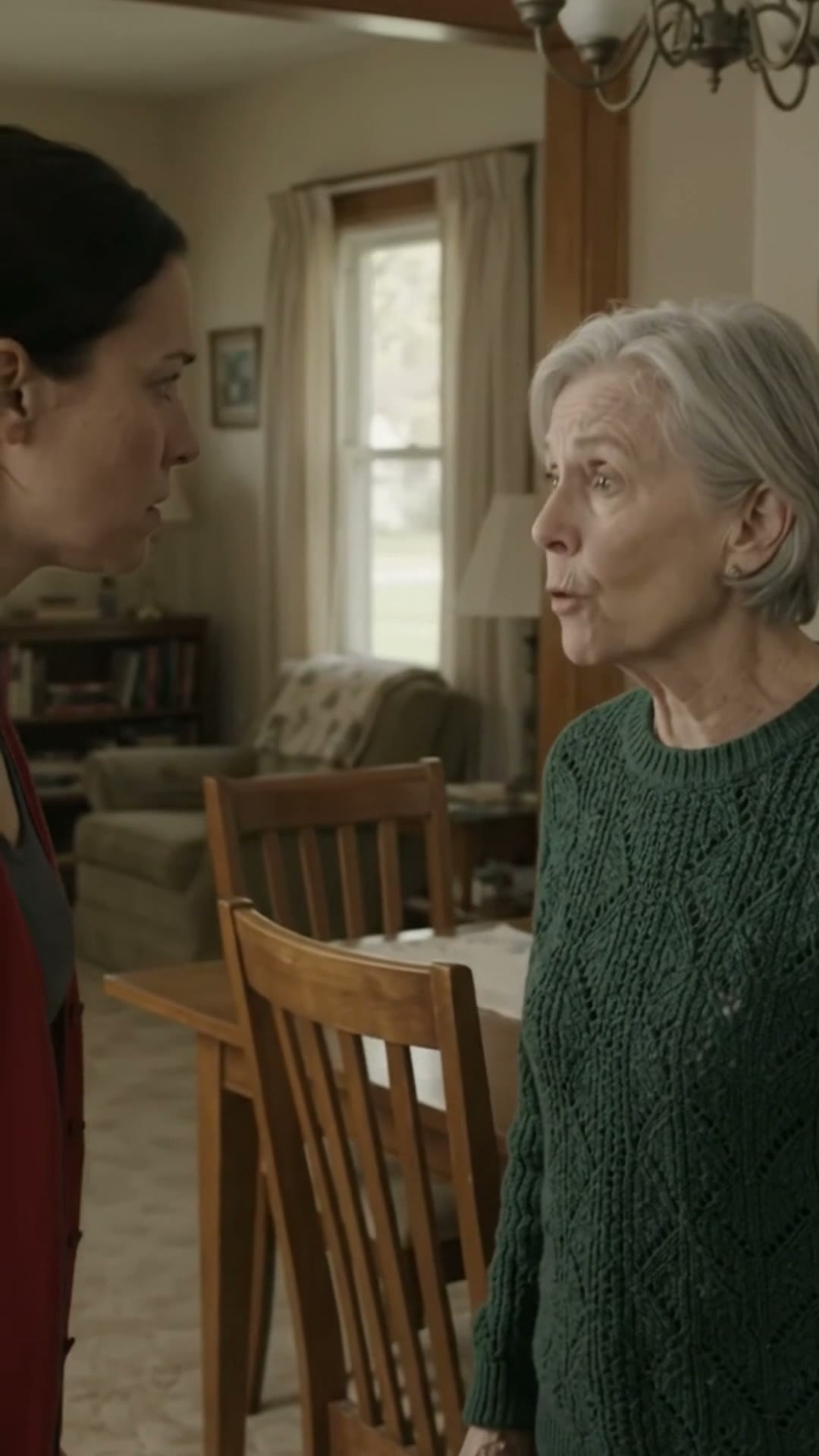
"Don't offer to read it! We don't need you stumbling in front of everyone!"
Lydia threw the storybook onto the carpet. My grandson had asked whether I would read after lunch. He was still upstairs building a railway when his mother decided the answer for both of us.
I was sixty-seven. I left school early and had struggled with reading for most of my life. I learned to remember bus routes, recognise familiar labels and ask questions without revealing why I could not manage a form. Lydia knew. She treated it like an embarrassing family fact best kept out of sight.
For the past year I had attended an adult reading group. I told her once. She said it was nice that I had a hobby. I had not told her every small thing I could do now, because I did not want every improvement examined for what remained difficult.
"I offered to read to Leo, not give a performance for you."
My son Sam came in from the hall with a small player. He looked at the book on the carpet, then asked me a question.
"Mom, may I play the story you recorded for him?"
I said yes. A month earlier, Leo had been ill and wanted the same story every evening. Sam helped me record it so he could listen when I was not visiting. I practised the book with someone from my reading group, then recorded it slowly, including the voices Leo liked.
I stumbled twice. I paused, found the word and continued. Sam had asked whether I wanted another attempt. I said no. It was a grandmother reading a story, not an examination recording where every hesitation needed to disappear.
Lydia listened without looking at me. When it ended, she said she had not known I could read that much. I told her there were still things I found difficult. That did not make it kind to throw a book away before I had even opened it, or to assume that her son would find a familiar voice humiliating.
Sam said Leo already knew the recording. He sometimes corrected the funny voice I gave the bear. He had never treated a pause as a reason to stop listening. I did not want him turned into a little judge of whether Grandma had improved enough to be allowed a book at the table.
Lydia apologized. First she said she was trying to protect me from embarrassment. I asked whose embarrassment she meant. I had offered to do something I was ready to try. She had made the embarrassing moment herself by announcing what she thought I could not do.
When Leo came downstairs, she asked whether he still wanted the story. He did. I read it after lunch, with the book on my lap and no relatives gathered to mark each word. He interrupted to ask about the bear's hat. I answered, found my place again and finished.
I still go to the group. Some weeks progress is slow. Lydia has learned to ask whether I want help with a letter instead of taking it from my hand. I have learned that I can decline help too, even if the person offering has read easily all her life.
The recording stayed on Sam's player. It was not proof that people with reading difficulties deserve respect only once they achieve enough. I deserved not to be shamed before I recorded a word. It was simply something I had made for a child who enjoyed hearing me.
I kept the book at home for another week before taking it back. I wanted to finish it at my own pace, not hurry because somebody was waiting for proof. At the group, I asked about the two words I missed. Nobody laughed. We wrote them down, and I tried them again the next morning.
Would you have read after that apology, or taken the book home and tried another day?