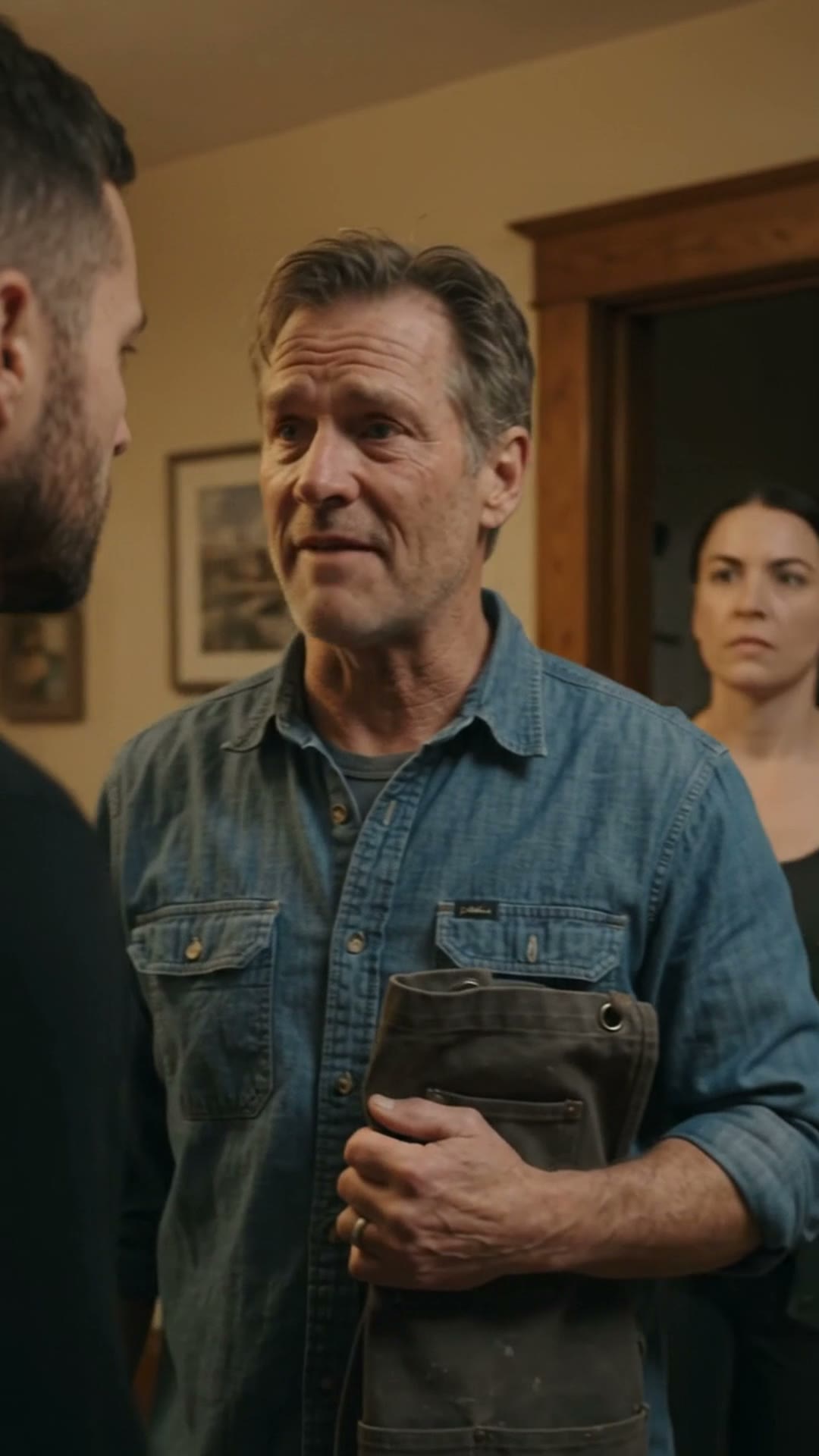
"Put that work apron away! You're embarrassing me in front of her!"
Evan swept the empty takeaway bag off the table. I was not wearing the apron. I had folded it over my arm after washing my hands, and I suddenly did not know where to put it.
I worked in a small supermarket, mostly closing shifts. I had asked to leave early for dinner with my son and his fiancée, Grace. The bus ran late. I brought the bread rolls Evan liked because he had mentioned them when he invited me.
He said I should have gone home and changed. I told him I could leave if they preferred another night. He said that would make a scene too. It felt as though arriving as his father had been the mistake, and every ordinary thing I did afterward only made it worse.
"I came straight from closing. You said dinner was at seven."
Grace had been hanging her coat in the hall. She came back slowly, looking from my work shirt to Evan.
"Evan, have you told your dad what you told me he does?"
Evan said it was a misunderstanding. Grace told me he had described me as a retired purchasing manager. He said I spent my time helping a friend with a shop because I liked to stay busy. It was a tidy account of a man who had already finished earning his place in the room.
I was sixty-three and still earning my wages. I stocked shelves, checked dates, cleared spills and worked the till when needed. I had never been a purchasing manager. There was nothing difficult to explain about it unless somebody began by assuming my actual work required an apology.
Grace said she was not asking me to justify it. She wanted to know why Evan had given her a false account and then become angry when I arrived dressed for the job I actually had. She had asked about his family because she wanted to know them, not to assess whether their titles would suit her wedding photographs.
Evan said he worried her parents would look down on me. He had not met them often enough to know that, and he had not given me a chance to decide how I wanted to answer questions. He had solved an imagined embarrassment by making the real person stand in his kitchen feeling unwelcome.
I folded the apron more tightly while they talked. I had washed it that morning and checked my shirt in the staff-room mirror before leaving. I realized I was still trying to solve the embarrassment by finding something else I could tidy. There was no stain I could remove that would correct the account he had given her.
We did not have the dinner we planned. I took the rolls out of their clean paper wrapping, left them on a plate and went home. Grace asked whether she could call me another day. I said yes. I did not ask her to fix my relationship with my son as the price of joining the family.
Evan came to see me the following weekend. He apologized for the lie and for shouting. I asked him to correct the account wherever he had used it. I would not spend the wedding answering questions about a career I had never had just to protect him from admitting what he had invented.
At the next dinner, he introduced me plainly. I still arrived from work, but with time to put my apron in my bag. That was a choice about tidiness, not a disguise I owed anybody. We ate the rolls while they were still warm.
I had paid for some of his college books and sometimes needed overtime to do it. I did not list those payments at dinner. They were not tickets I could exchange for a respectful introduction. He owed me one because I was his father, not because I could prove that the supermarket had financed parts of his life.
Would you have left that first dinner, or stayed and made him correct the story at the table?