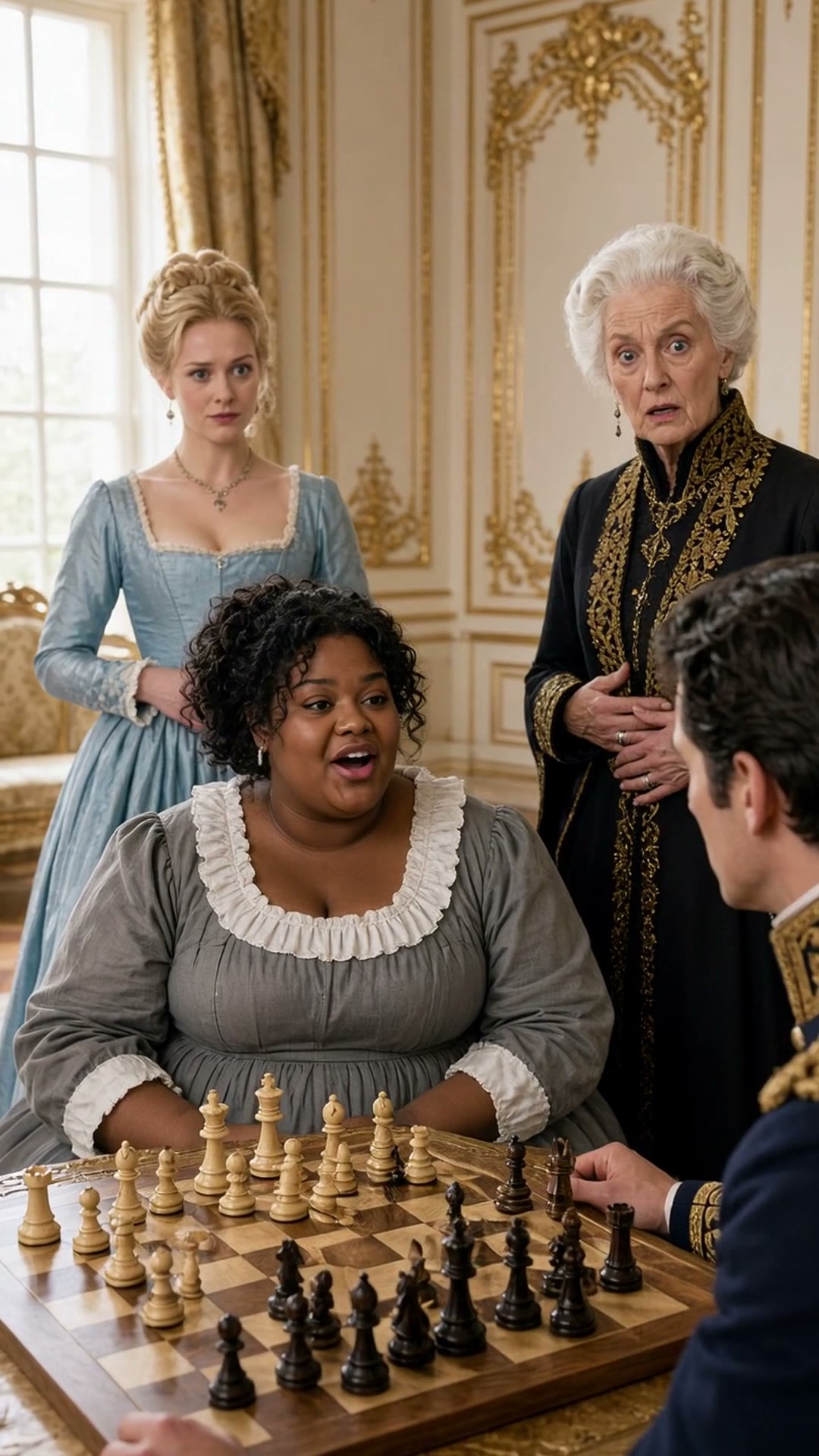
Prince Lucien had never lost a game of chess in his life, and he made sure the whole court knew it. That afternoon, bored in the bright white-and-gold hall, he decided to prove it again, this time for laughs.
He pointed at a plump young servant clearing cups near the window. "You. Sit." Then, to the court: "Beat the prince, and I'll leave the court myself."
The ladies tittered. The young lords grinned. Hattie Cole, twenty years old, eight years a scullery girl, wiped her red hands on her apron and sat down without a word.
Lucien played the way he did everything, fast and showy, glancing at his friends after every move. Hattie played as if no one else were in the room. Within a dozen moves his smile was gone. Within twenty he was leaning over the board, sweating. Then she moved her queen one square and folded her hands.
"Checkmate, Your Highness."
He searched the board twice. There was no escape. "Who taught you?" he demanded.
"Your father, Your Highness," she said. "In the kitchens. Every night."
To understand that answer, you have to go back seven years, to the winter Queen Matilda died.
King Aldous did not weep at the funeral. He simply stopped sleeping. Night after night he walked the dark corridors of the palace alone, and one night the warmth drew him down the back stairs into the great kitchens, where the fires were banked low and a twelve-year-old girl sat on a stool beside the ovens, frowning at a chessboard.
He knew that board at once. It was Matilda's old travelling set, the little walnut one she had played on in her carriage. After her death a steward had cleared her rooms and thrown it out with the rubbish. The kitchen girl had pulled it out of the ash pile, found a book of chess problems in the same heap, and was teaching herself by firelight.
The King did not say who he was, and she was too tired to recognize a man in a plain dressing gown. He sat down across from her and showed her how the knight moves. The next night he came back. And the next.
For seven years, King Aldous went down to the kitchens nearly every night. Hattie kept the fire going and the board set up. He taught her openings and traps and patience, and she told him about the price of bread, the cook's bad leg, the scullery boy who had no shoes, the things no minister ever told him. He called it the only honest hour of his day. He asked her to tell no one, and she never did.
Lucien knew none of this. In those seven years he had rarely visited his father at all.
Now the court stood frozen, and the prince's own words hung in the air. Before he could laugh them away, the doors at the end of the hall opened and the King walked in. Someone had run to tell him.
He looked at the board for a long moment. Then he looked at his son.
"She has beaten me four times this year," he said. "You lasted twenty moves. I am almost proud of you."
Then his face hardened. "You gave your word before the whole court, Lucien. A prince who can break his word in public will break it on a battlefield. You will keep it."
So Prince Lucien, who had wagered his place for a laugh, left court that same week for a year at the northern garrison, under a plain captain who woke him at dawn and did not care whose son he was. The young lords who had grinned beside him found that the King no longer remembered their names.
Hattie was given a new title, Keeper of the King's Privy Chamber, with her own room, a proper wage and shoes for the scullery boy. And she and the King went on playing, no longer in secret, but in the daylight of the King's study, with Matilda's walnut set between them.
A year later Lucien came home, thinner, quieter, with calluses on his hands. On his first night back he did not go to a ball. He went down the back stairs to the kitchens, where Hattie was visiting the cook, and he asked her, very politely, if she would teach him.
She set up the board.
"Your father's first lesson," she said, "is to look at the whole board, not only at your own pieces."
Lucien smiled, a real smile this time, and sat down.