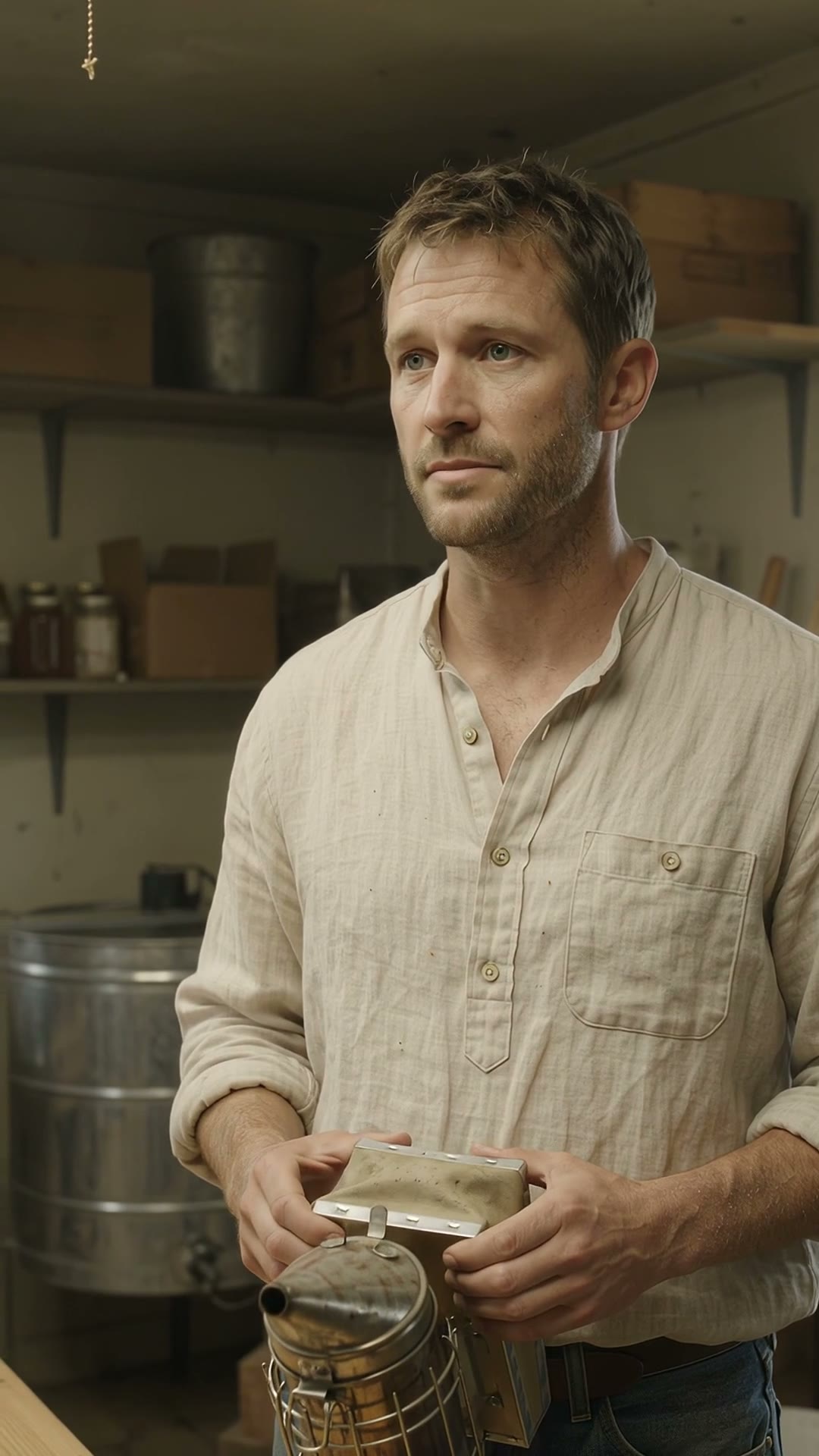
"Hand over the smoker. You're trespassing on my land."
My cousin Gavin barked it across Grandpa's long pine packing table, then dragged his arm through a whole row of freshly sealed honey jars. They flew off the table and burst on the floorboards, amber honey and glass splashing across my boots while golden light poured through the sash windows. Aunt Maeve, in her floral apron, gasped and pressed both hands to her mouth.
For seven years I lived at this apiary. I stayed through the winter that nearly killed our queens, through the droughts, through every pre-dawn morning tending thirty-two hives, because Grandpa Arthur asked me to when his hands began to shake. Gavin visited twice in all that time. Now, in a brand-new khaki field vest, he marched in and announced the deed was his and that I could walk away empty-handed.
My throat burned. Honey was dripping from the table edge like a clock. I set the smoker down, held his stare, and said quietly:
"Grandpa trusted the bees to steady hands, Gavin."
Gavin sneered and stepped closer. Then the heavy oak door rattled open, and Grandpa's little brother, Uncle Hal, strode in with his straw hat in one hand and a thick manila envelope in the other:
"Gavin, stop! Have you read Arthur's easement papers?"
I should explain how a man who only wanted to keep bees ended up standing in a honey-house with his cousin's fists clenched. Grandpa Arthur built this apiary by hand, and he taught me that a hive tells you what it needs if you are patient enough to listen. When his hands began to shake, he asked me to take over the thirty-two hives, the extraction room and the orchard along the creek. I said yes before he finished the sentence.
Gavin saw it differently. He left for the city at nineteen and started calling the farm a tax write-off. Over seven years he visited twice, both times asking Grandpa when he planned to sell the land. Grandpa smiled and changed the subject. Aunt Maeve kept the books and always said Gavin would come around once he understood how much work the bees took.
Six years ago, Grandpa sat at his woodstove with a lawyer and a county officer and placed thirty-five acres into the state's agricultural land preservation program. The orchard, the creek access and the honey-house were locked into a perpetual easement, and Grandpa named me the agricultural conservator. Gavin had been told the deed would pass to him. He never asked to see the papers, because he never bothered to read anything that did not carry a price tag.
When Gavin walked in that afternoon, I held my ground. I had a blue-bound copy of the easement in my drawer, with the state seal and Grandpa's notarized signature. But I did not want to win a fight over honey jars. I wanted him to read the words himself.
Then Uncle Hal came through the oak door. Grandpa's younger brother had driven three hours with a thick manila envelope. He had helped Arthur file the paperwork and kept the originals in his safe. He laid the envelope on the packing table and looked at Gavin the way you look at a child who has broken something precious.
Gavin read clause four twice, and his face went from red to grey. The fee-simple title could pass to the heirs, but the easement ran with the land forever. No sale, no development, no removal of the apiary, and no change to farming rights without approval from the Commonwealth. The easement named me the sole person authorized to keep the operation running.
Gavin tried to argue, then to bargain, then to threaten a lawsuit. Hal reminded him calmly that the state had approved the easement years before Grandpa died, and that any lawyer could only read the same paper we had.
The consequences were practical, not cruel. Gavin's planned sale collapsed, because no buyer will pay for land that cannot be developed. He received a letter confirming that he held title but could not disturb the easement, and he had to pay the legal fees he had already run up. He did not get the honey-house or the hives.
A month later Gavin came back with an apology that sounded practiced but sincere enough. We did not hug. We did harvest the autumn honey together, and he carried the jars without complaining. That was a start.
The bees are still humming in their white boxes, and the jars on Grandpa's table still catch the light. I open the honey-house every morning before sunrise and think of the old man who trusted steady hands.
Should a family forgive the cousin who tried to take the farm, or is keeping your distance the only fair answer?