"This wing is for donors only! Take your flowers out!"
The yellow tulips hit the marble floor first. Then my paper bag tore open and June's oranges went bouncing away under the leather waiting-room chairs, one after another, like they were running from the noise.
Kendra Lowe stood behind the polished reception desk with her arm still stretched out from the sweep. She had taken one look at my old gray cardigan, my flat cap and my bus pass, and decided I had walked into the wrong world.
My name is Samuel Whitaker. I'm eighty-one. For forty years I built houses in North Carolina, first with my own two hands, then with a crew, then with a company that grew bigger than I ever meant it to. My wife, June, kept the books. We lived in the same little brick house the whole time. We drove the same kind of sensible car. We saved.
Twelve years ago, our son, Daniel, died on the fourth floor of that hospital. The doctors and nurses were kind, but the ward was crowded and old, and families slept on plastic chairs in the hallway. After the funeral June said, "Sam, nobody should say goodbye in a hallway." So we gave nearly everything we had saved to build a new wing. Quiet rooms. Real beds for families. A garden on the roof.
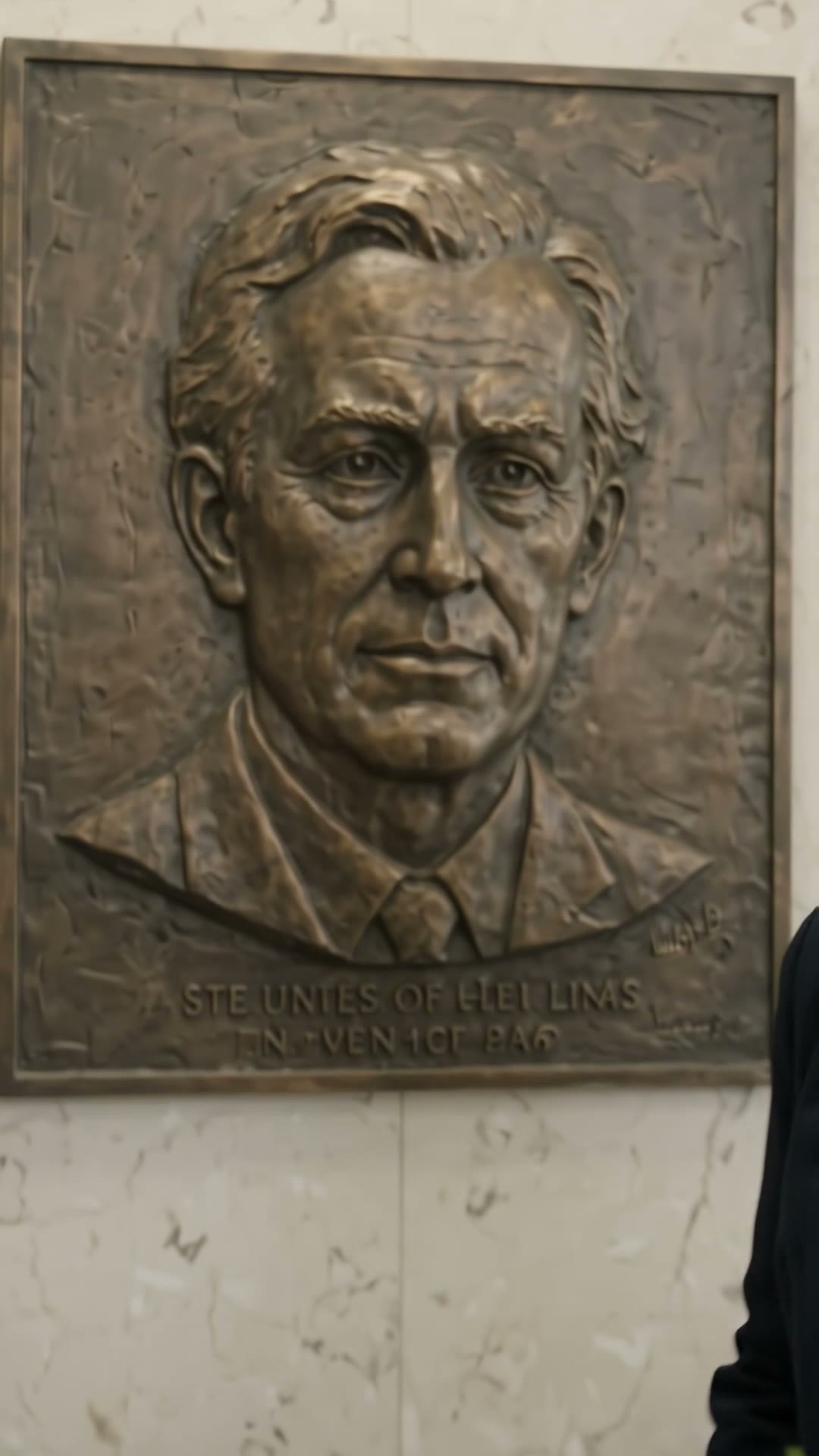
The hospital insisted on a plaque. A bronze one, with my face on it, right above the reception desk. I hated it. I never went back to look at it.
Over the years, without anyone telling us, the wing turned into something else. A "private" wing. A wing where the hospital put its donors and their friends, with a receptionist to keep everyone else out.
That week, June had a fall and broke her hip. They offered her the private wing. She said no. "Put me where everybody else goes," she told them. So she was in a regular room, 412, on the other side of the building. The elevator just opened on the wrong side.
"I only came to see my wife." I said.
That's when the young man in the hoodie, Jamal Reed, tilted his phone up to the wall behind Kendra. To the bronze face. My face, forty pounds lighter and twelve years younger, but mine.
"Look at the plaque… that's his face!"
For a moment nobody moved. I remember the hum of the vending machine in the corner and the squeak of a nurse's shoes somewhere down the hall. I remember thinking how strange it was to see my own face up there, polished and serious, looking down on me while I stood on the floor holding wet tulips. The man in the bronze looked like someone important. The man on the floor just looked like a husband who was late for visiting hours.
Everyone in the waiting area looked up at the plaque. Then at me. Then up at the plaque again.
Kendra turned around slowly. She looked at the bronze. She looked at me standing there with the tulips against my chest. All the color drained out of her face.
"Mr. Whitaker?" she whispered. "Oh my God. I didn't… I'm new. They told me nobody gets in without a donor card."
"I don't have a donor card," I said. "I never needed one to visit my wife."
The woman in pearls got up and started picking up the oranges. Jamal put his phone down and helped her. Neither of them knew me. They just did it.
Within ten minutes the hospital director came down the stairs, out of breath, apologizing so fast I couldn't keep up. He offered to fire Kendra on the spot. He offered to move June into the best room in the wing. He offered to put a second plaque up, a bigger one, so it would never happen again.
I said no to all three.
"Kendra did what she was told," I said. "The rule is the problem. My son didn't die in a donors-only hospital. This wing was built for anyone who needs it. I'd like it to go back to being that."
The director stared at me. Then he nodded.
By the end of the month, the donors-only rule was gone. Beds in the wing are given by medical need now, nothing else. Families sleep in real beds again. The garden on the roof is open to everyone.
Kendra kept her job. A few weeks later, she came down to room 412 on her lunch break with a little bag of oranges. She sat with June for an hour, and June taught her how to peel one in a single spiral, the way she has done for sixty years. They talk every week now.
Jamal sent me the video. He never posted it. He said it didn't feel right. I respect that young man more than I can say.
June came home in the spring. Her hip is fine. Every Sunday we sit on the porch of our little brick house and she peels oranges and I bring her yellow tulips, and neither of us has gone back to look at that plaque.
We don't need to. We know what it was for.
Was that the right kind of justice, or was I too soft on Kendra?