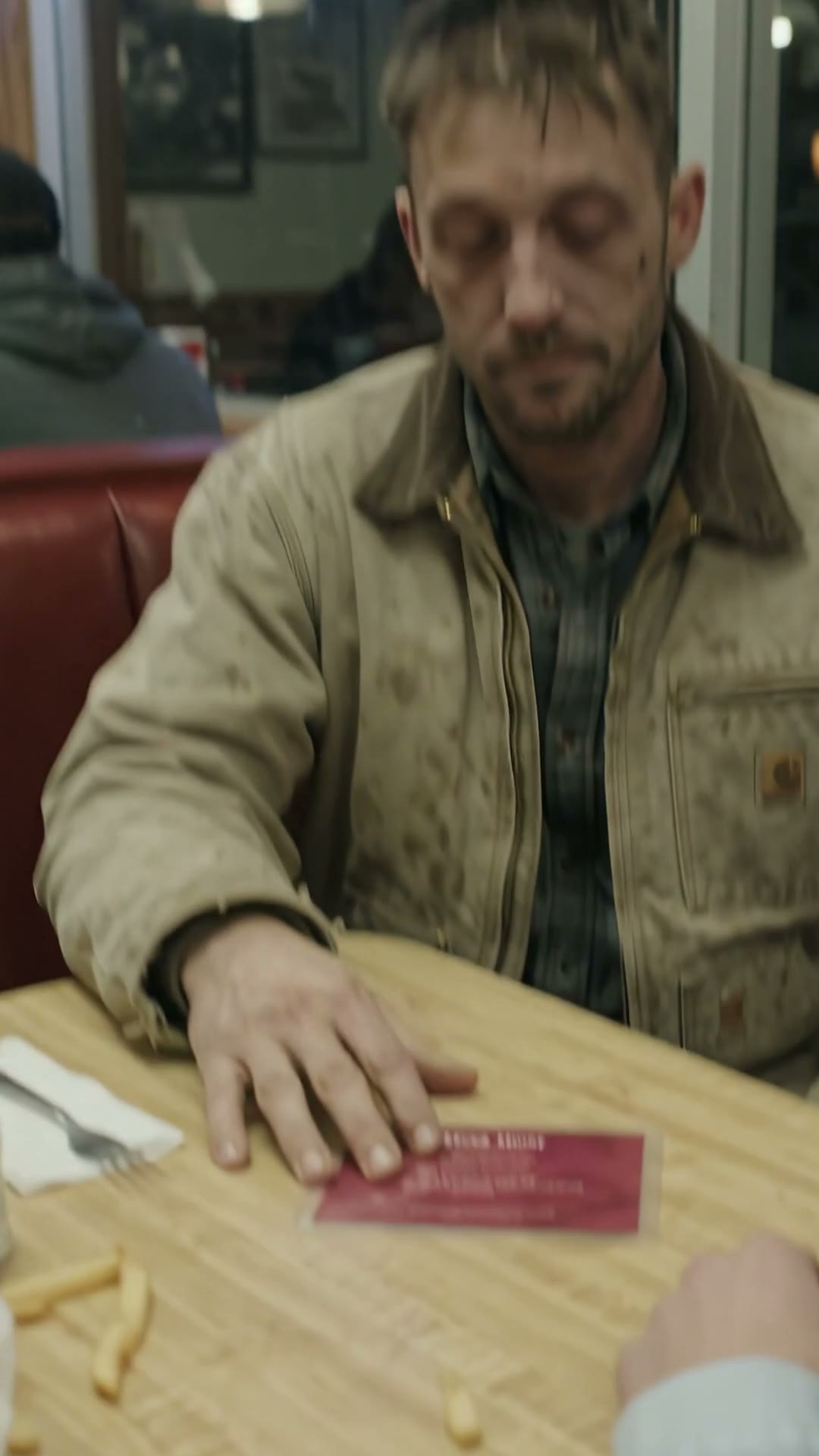
Choke on it, you parasitic leech!
My mother, Evelyn, screamed it into my face, then swung her arm across the sticky table and sent my entire dinner flying. A tall plastic tumbler of iced cola slammed onto the linoleum, ice skidding across the floor, while my basket of fries and silverware crashed after it under the humming fluorescent lights.
I'm twenty-eight. I had come straight from a twelve-hour shift at the diesel depot, still in my faded canvas work jacket, to sit in a corner booth at a roadside diner off Route 9 in western Pennsylvania and celebrate my younger brother Mason's graduation. Every eye in the diner turned toward us.
Her gold earrings swung and her faux-fur collar bristled as she leaned over the booth. Mason sat across from me in his clean pressed shirt, silent, staring at the tabletop.
For six years she had told the whole church and the whole family that I abandoned them after Dad died and left her to save Mason alone. When Dad, Richard, died in 2020, Mason was sixteen and dying of progressive kidney failure, and I was twenty-two and working double shifts. I lived in a damp basement room behind a repair shop, eating canned soup and working seventy-hour weeks, while Mom played the martyr who had single-handedly saved her youngest. I never corrected her once.
Dad's life insurance was supposed to pay for Mason's care. Mom controlled that money, and every bill we ever saw came through her.
I did not raise my voice. I reached into my chest pocket, took out a laminated crimson card, and laid it flat on the wet table, sliding it right under my brother's hand.
"Look at the card, Mom. Read it."
Mason looked down. It was a living-donor card from the transplant program in Pittsburgh, issued the spring he was dying. The donor's name was printed in block letters across the front, and the donor was me.
Mason's fingers started to shake. "Mom… whose name is on that card?!"
She snapped that I was lying, that I was bitter and jealous, that I was trying to ruin his graduation dinner because I never went to college. Her voice carried across the diner, but nobody looked away now.
"Ask her where the insurance money went," I said, keeping my eyes on Mason. "Three hundred and eighty thousand dollars. She lost it on offshore sports betting sites and online roulette wheels based in Curacao. I found the bank statements while you were on the ventilator."
The waitress who had brought our drinks stood frozen against the counter, clutching her tray to her chest.
"The surgeon told me you had forty-eight hours to get a transplant, or the toxins in your blood would cause permanent brain damage," I said. "The private donor program would not operate without a living donor and a funded guarantee. So I signed an anonymous family waiver and gave them my left kidney. I also signed a confession of judgment for the remaining two hundred and twelve thousand dollars in medical debt under my own name, so Mom would not go to prison and leave you homeless."
Mason's eyes filled. He looked at the card, then at the scar along my side that I had always kept covered, and he understood that a piece of me had been working inside him for six years.
He pushed his plate away. "Mom. Did you take Dad's money?"
She could not answer him.
The following Monday I took photocopies of the bank statements to the county prosecutor. The state attorney general's office opened a fraud case. Mom was charged with theft and insurance fraud, and she agreed to a restitution plan that a judge ordered her to pay over many years. Our aunt, who had repeated Mom's story to everyone at church, came to my door and apologized on the doorstep without coming in.
Mason and I still meet in that corner booth every few weeks. He insisted on paying back the medical debt himself, even though I told him to finish his degree first. He has a job at a clinic now, and a new habit of calling me before he makes any decision that touches his health.
So here is my question for you: when a family's secret protects the person who lied, should the truth come out at the dinner table or in a courtroom?