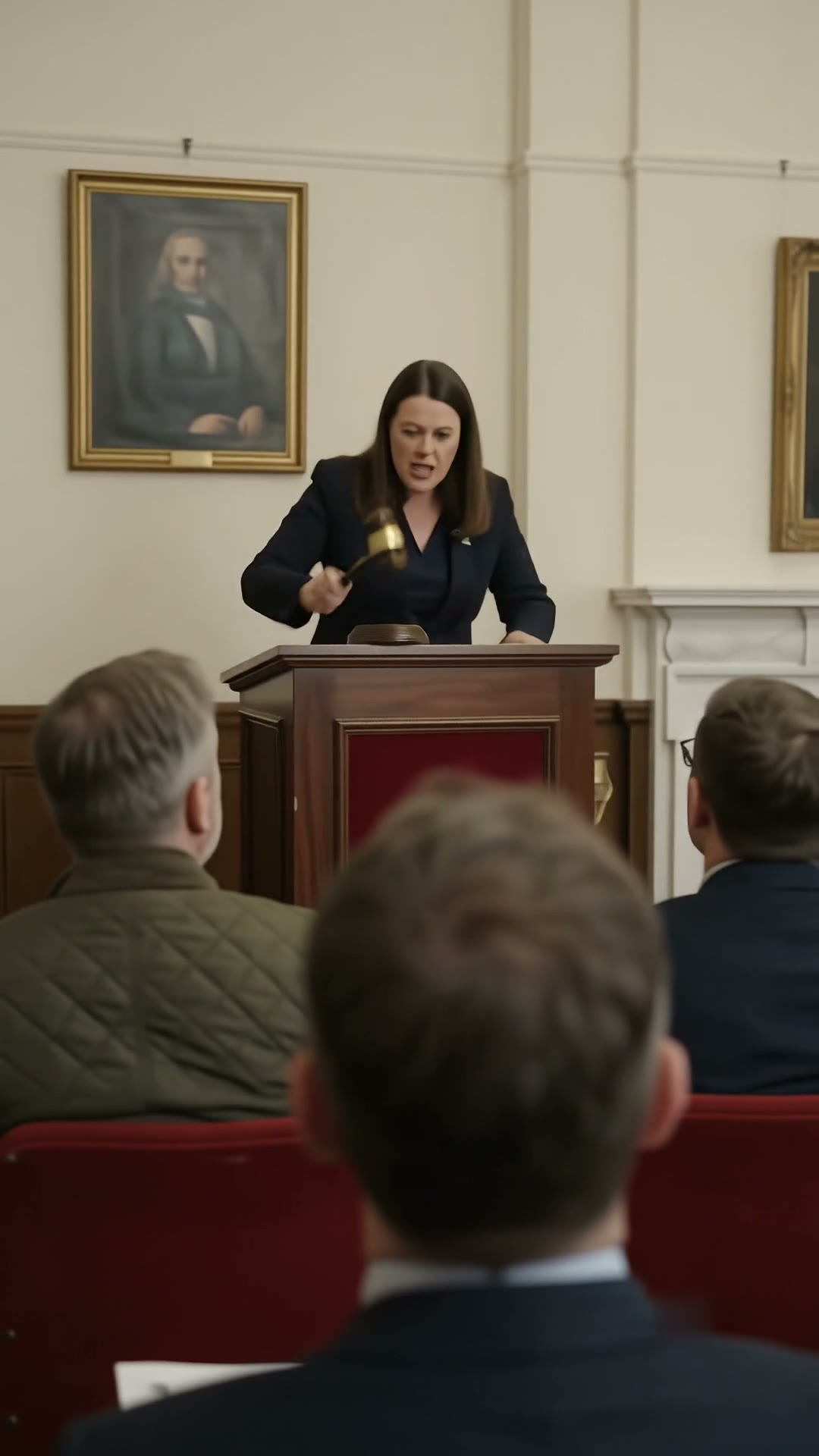
"This room isn't for tracksuits! Take your lunch and leave!"
My steel thermos hit the carpet with a dull thud. Tea spread across the floor. My sandwich rolled under the chair in front of me, and my bidding paddle landed face down at the feet of a woman in pearls.
Graham Pell, the senior specialist, had cleared the chair beside me with one sweep of his hand.
My name is Leon Mercer. I am forty-one, and I had come straight from the gym at the community center I run on the south side, still in my dark green tracksuit and sneakers. Around me sat silk scarves, gold watches and the soft voices of people who have never worried about rent. Every collector in the room turned to look at the man who had dared to sit in the fourth row.
They didn't know why I was there.
Lot 47 was six small watercolors by an "unknown artist." She wasn't unknown to me. She was my grandmother, Rosa Mercer. She painted them on her lunch breaks in a garment factory, on cheap paper, with a child's paint set: the harbor at dawn, our kitchen window, my father as a boy asleep on the stairs. When I was twenty-two, my family lost everything, and a dealer bought the paintings with the furniture for almost nothing. I had been looking for them for nineteen years.
Someone laughed into a glove. Graham pointed at the exit like he was shooing a dog.
I picked up my paddle, wiped the tea off on my sleeve and raised it as high as my arm would go.
"One bid. The whole lot. Then I'll leave."
The room went silent. At the podium, Celia Ashford looked straight at me. She didn't wait for anyone else. The hammer came down.
"Sold. Graham… come to my office. Right now."
Graham laughed nervously. "Celia, the bidding hasn't even opened."
"It's closed," she said. "Office. Now."
He walked to the back of the room with his face burning. I followed a minute later, my thermos in one hand and my wet sandwich in the other.
Celia closed the door behind us. Then she turned to Graham.
"Do you know who you just threw out of my sale?"
Graham looked at my tracksuit. "A man who wandered in off the street."
"This is Leon Mercer," Celia said. "Two years ago the bank was about to shut us down. Twenty-two people were about to lose their jobs, including you. Every other buyer wanted to tear the building down and sell the land. Leon bought our loan. He holds the mortgage on this building. He holds the debt on every velvet chair in that room. If he called it in tomorrow, there would be no auction house."
Graham sat down on the edge of a desk like his legs had stopped working.
Here is the part nobody in that room would have believed. I started in construction at sixteen, hauling drywall. By thirty I had my own crew. By thirty-five I was buying the old buildings nobody wanted and fixing them myself. I never bought a suit I didn't need. When I heard the auction house was in trouble, I didn't buy it because I love art. I bought it because I once lost something precious to a stranger with money, and I didn't want that room to become another parking lot.
I never told Celia about the watercolors. She found out only when she saw my face as Lot 47 came up.
"Mr. Mercer," Graham said, barely above a whisper. "I'm sorry. I had no idea who you were."
"That's what bothers me," I said. "You'd have been polite to me if you had known. You'd have offered me champagne. The man in the tracksuit is the same man either way."
Celia asked me what I wanted done with him. I knew what she expected. Graham expected it too. He had already loosened his tie.
"Keep him," I said. "But I want one thing. My grandmother taught kids to paint every Saturday at the community center on Dorchester Avenue. That's where these are going. I want Graham to hang them himself. Not a mover. Him."
The next Saturday, Graham Pell showed up at the center in a pressed suit, carrying six small frames wrapped in blankets. He measured the wall twice. He hung them at a child's eye level, because I asked him to. The kids watched him the whole time.
When he finished, a nine-year-old girl tugged his sleeve and asked if he was a painter. He said no. She handed him a crayon and a sheet of paper anyway.
He stayed two hours. He drank bad coffee from a paper cup. He painted a terrible boat.
Graham still works at the auction house. Celia tells me he is the first one to offer a chair to anyone who walks in, no matter what they're wearing. Every few months he comes to the center on a Saturday without being asked.
My grandmother's harbor at dawn hangs right beside the door. Every kid who comes in sees it first.
Would you have kept Graham on after what he did, or shown him the door?