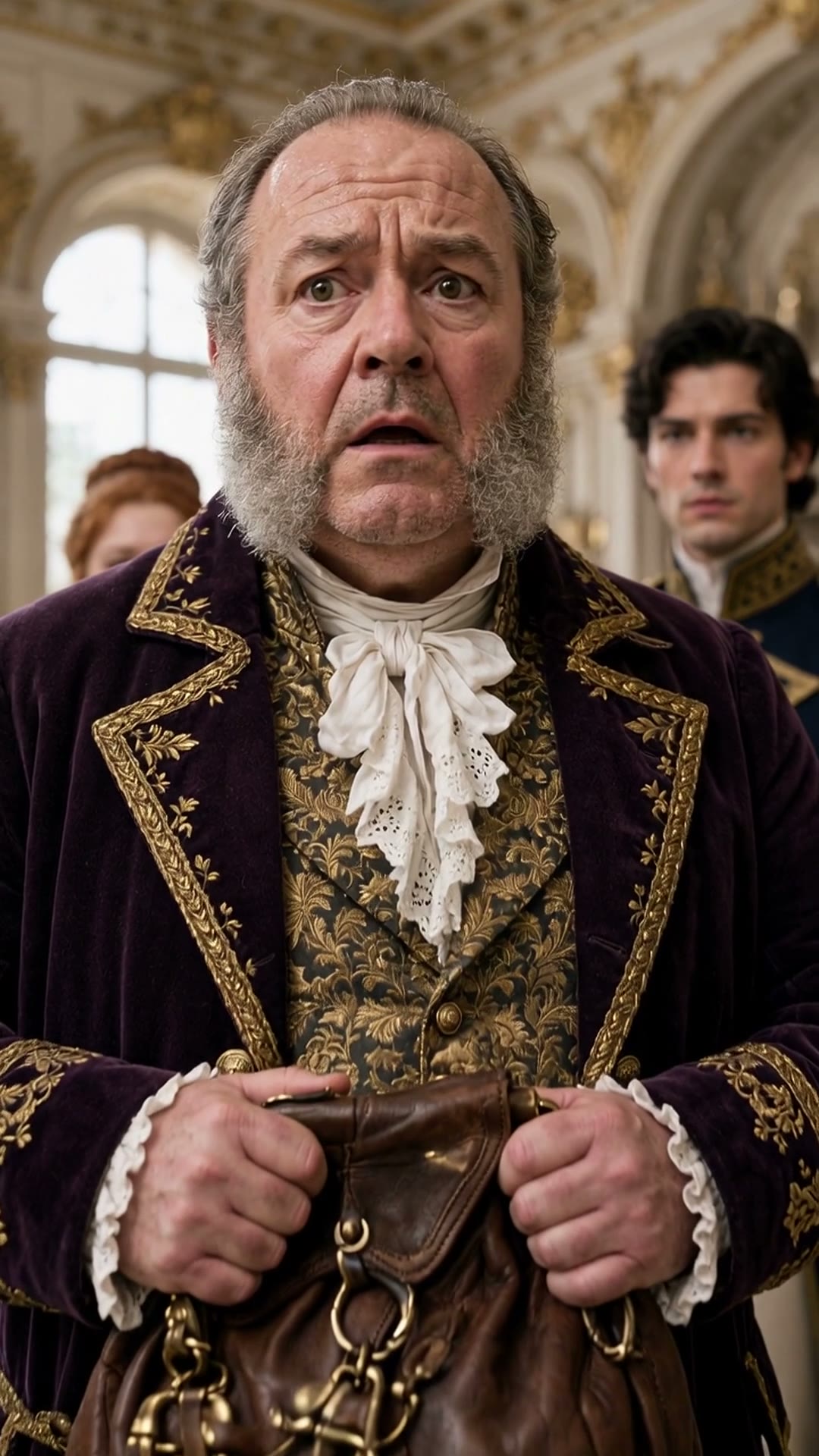
Lord Varney had been Keeper of the King's Treasury for eleven years, and in all that time no one had ever counted the gold behind him. That was how he liked it.
So when Crown Prince Rowan announced, without warning, that the royal chest would be counted that very morning in the great hall, Varney's clerks suddenly fell ill, all three of them. The prince was not impressed. He asked the household whether anyone in the palace could count quickly and honestly, and the head cook sent up a plump young woman from the kitchens with flour still on her sleeves.
Her name was Dorothy Pell. Everyone called her Dot.
"A fat girl counting the king's gold?" Varney laughed, loud enough for the whole hall. "Absurd!"
"Then count it yourself, my lord," Dot said quietly.
He did not. So she sat down and counted.
What Varney did not know was that he had met her father.
Samuel Pell had been a treasury clerk for twenty years, a careful, gentle man who taught his little daughter to count with dried beans on the kitchen table and to check every sum twice. Three years earlier, two hundred crowns had gone missing from the royal chest. Lord Varney had pointed at Samuel. There was no proof, but there was a lord's word against a clerk's, and that was enough. Samuel was dismissed in disgrace. He never found another post, and he was dead within the year. Dot had found work in the palace kitchens and kept her father's old ledgers in a box under her bed.
She had gone through those ledgers a hundred times. The shortfall that ruined her father always appeared in the same way, in the same weeks, after the same lord's visits to the chest. She had never been able to prove it. Until that morning, when someone handed her the king's gold and the treasury book side by side.
She counted for an hour. Then she laid her hands flat on the table.
"Three hundred crowns are missing."
The hall went still. And Dot, who had waited three years for this moment, turned to the man who had laughed at her.
"Open your purse, Lord Varney."
He did not move. It was Prince Rowan who stepped forward and held out his hand. Varney's fingers shook as he untied the heavy leather purse and emptied it onto the table.
Forty-seven gold crowns rolled across the wood. Every one of them was a new crown of this year's minting, with the King's portrait struck in fine fresh lines. Those coins had come from the royal mint a month before and had never yet been paid out to anyone. There was only one place in the kingdom they could have come from: the chest on that table.
Varney began to talk, fast. A loan, a mistake, a gift. No one listened. By evening the prince's guards had searched his townhouse and found the rest of the three hundred crowns sewn into a cushion, along with a small notebook in his own hand that went back years, including the two hundred crowns of three summers ago.
Dot stood in the hall while Prince Rowan read those pages aloud. When he came to her father's name, her eyes filled, but she did not look away.
The King's justice was swift and public. Lord Varney was stripped of his office and his title, his estate was sold to repay every crown he had taken, and he was banished from court. The lords who had chuckled at his joke that morning crossed the street when they saw him afterwards.
And on the steps of the great hall, before the whole court, the Crown Prince read a royal letter declaring that Samuel Pell, clerk of the treasury, had been falsely accused and was an honest servant of the crown. His name was restored to the treasury rolls, and the wages he had lost were paid to his daughter.
Then the prince turned to Dot. "The treasury needs someone who counts twice," he said. "Will you?"
She became the first woman ever to sit at the counting table of the royal treasury. On her first morning, she took a small, worn pen from her pocket, her father's, and set it beside the ledger.
Then she opened the book and began to count.