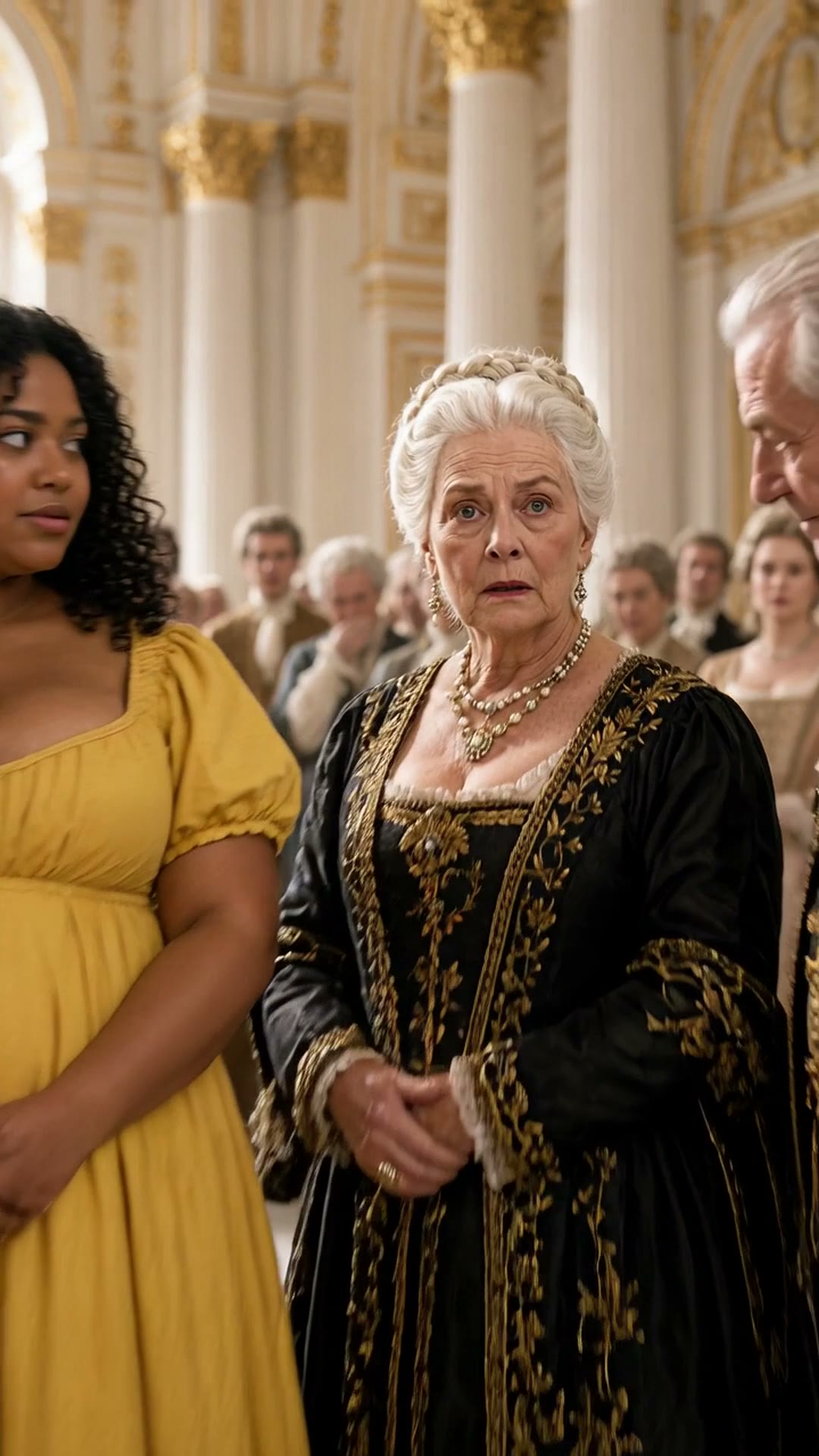
The Queen Mother Adela had chosen the question herself, and she had told no one, not even her son.
For a month, the noble families of the kingdom had been preparing their daughters for the royal bride selection. They had learned the line of kings, the court dances, the names of every duke and his lands. King Stephen, newly crowned and tired of being treated like a prize, had added one condition of his own: every unmarried woman of the palace household could stand among the brides if she wished. Most of the maids laughed and stayed away. One did not.
Hannah Whitlow was twenty-five, the daughter of the head gardener, round-faced and broad-shouldered, with sun-browned arms and a dark braid over her shoulder. She came in her best moss-green dress, and from the moment she entered the white-and-gold throne hall, the noble ladies made sure she felt every inch of the distance between them.
Then the Queen Mother rose and asked: "Every royal bride knows this. Name the late king's favorite flower."
The ladies smiled. Everyone knew. Lady Clarissa Dunmore, whose mother told everyone that the Dunmores had dined with the late king every month for twenty years, answered at once: "The rose, of course."
Hannah should have stayed quiet. Instead she said gently, "He had none. Every flower made him sneeze."
The hall laughed. The Queen Mother did not. She turned to the old Royal Steward, Barnaby, who had served the late king for forty years. His eyes filled with tears. "She is right, Your Majesty."
It was the best-kept small secret of the old king's reign. King Robert had loved his wife with his whole heart, and his wife loved roses. So he filled the palace with them, had them painted around his portraits, carved above the doors. And he suffered for it every single day. His eyes streamed, he sneezed through council meetings, and he refused to let anyone tell the Queen, because she would have torn out every rose bush in the kingdom for his sake.
Only the gardeners knew, because the king had given them one strange standing order: on any path he walked alone, every blossom was to be cut before dawn. The head gardener, Tom Whitlow, gave that job to his little daughter. From the age of eight, Hannah walked ahead of the king's morning route with a basket and small shears, clearing the way.
One morning the king caught her at it. Instead of being angry, he laughed until he sneezed, and then he asked her name. After that he often stopped to talk. He liked the herb garden best, rosemary, thyme and sage, because nothing there bloomed loudly enough to bother him. And in his last year, when he was ill and his son was away at the war on the northern border, it was Hannah he walked with every morning.
She saw how much he missed his boy. So, without asking anyone, she began writing letters to the young prince at the front. Small, plain letters: your father walked to the herb garden today; he ate well; he laughed at the ducks; he asked about you three times. She signed them only "H." She never expected a reply. She never knew whether the letters arrived.
They did. King Stephen had read every one of them in a freezing tent in the north, and he had kept them all in a leather case. He had come home too late to say goodbye to his father, and those letters were the only record of his father's last year he had. He had looked for "H." at court for months and never found her among the ladies. It had never occurred to him to look in the garden.
The Queen Mother had learned her husband's secret only in his final year, when Barnaby confessed it to her by his bedside, and she had wept over every rose she had ever asked for. She had seen the gardener's girl walking beside him in the herb garden, and she had read one of the letters over her son's shoulder. She chose her question because only someone who had truly loved the old king would know the answer. And only someone honest would correct a duke's daughter in front of the whole court to defend the truth about him.
Lady Clarissa's family did not come out of it well. If the Dunmores had really dined with the king every month for twenty years, they would have noticed him sneezing at the roses on the table. The court noticed that, and the Dunmore stories stopped being repeated. Clarissa left the capital before the end of the season.
King Stephen walked out to the herb garden the next morning. Hannah was there, as always, with her basket. He took the leather case from his coat, opened it, and showed her her own handwriting.
They were married in the autumn. There were no roses at the wedding. The whole chapel was decorated with rosemary, thyme and sage, and the old steward Barnaby, seated in the front row, laughed and wept at the same time.