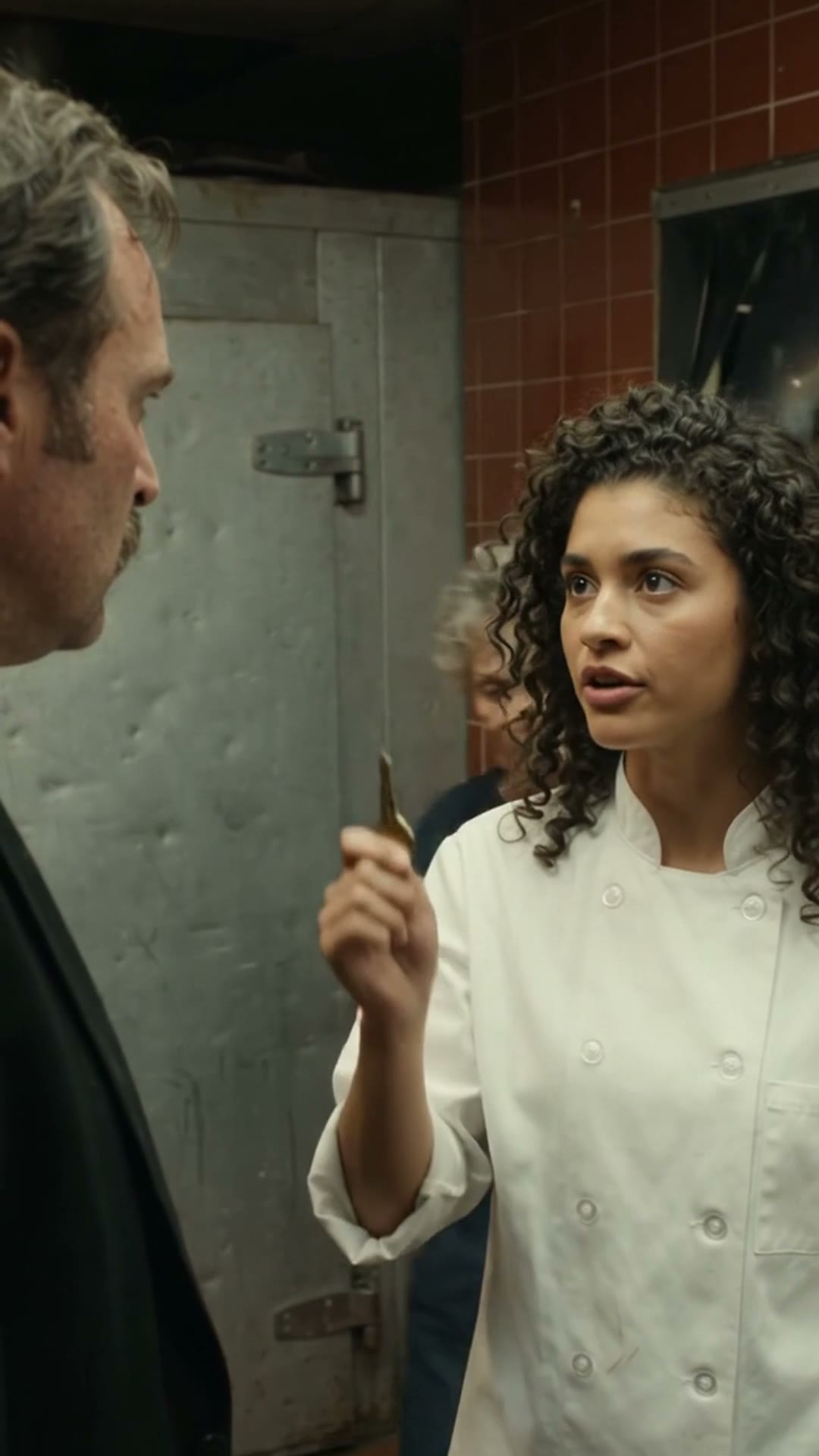
"Remy's two days buried. Cooler key, now — this kitchen's mine!" My uncle Lionel screamed that at me in my father's kitchen on Saturday morning, two days after the funeral, as I was setting up for lunch.
Then he swept his arm down the pass. Empty cast iron skillets crashed onto the red tile. My son Beau was with his grandmother; I was grateful he could not hear his uncle.
Daddy opened Thibodeaux's in Breaux Bridge forty-one years ago with one burner and his mama's roux. I grew up on a milk crate by that stove. Uncle Lionel walked out on the restaurant twenty-seven years ago and never came back, until he showed up at the wake in a borrowed suit.
Now he wanted the old walk-in at the back. The one with two padlocks that Daddy never let anybody open. He said Daddy kept cash in there, and that a daughter had no business running a man's kitchen.
Shaking, I stood between my uncle and that steel door and said, "Daddy left two keys, Uncle Lionel. You have neither."
He laughed and started yanking at the padlocks with both hands. Then the plastic curtain of the cold room behind him flew open. Miss Viola, seventy-four, Daddy's cook since before I was born, came out with her hairnet pulled tight and a key on a string around her neck.
"Lionel, why not open Remy's walk-in in front of everybody?"
Lionel let go of the padlocks. I don't think he expected anyone to call his bluff.
Daddy had given me my key a year ago, when the doctors first said his heart was failing. He told me only that there was a second key, that I would know who had it when it mattered, and that the walk-in should be opened "with the two of us watching, so nobody can lie about it after." I never understood what he meant until that morning.
Miss Viola and I stood side by side at the steel door. She opened the top padlock, I opened the bottom one, and the door swung out, stirring dust from the shelves.
There was no pile of money. The walk-in had been switched off for years. Inside were wooden shelves, and on the shelves were old coffee cans, eleven of them, each with a name scratched into the lid with a nail.
One for each person on the crew. Miss Viola's can held her retirement, saved a little at a time, for over thirty years. The dishwasher's can had enough for his daughter's braces. Daddy had been putting away a piece of every good Friday night since the nineties.
My can had no money in it at all. Just his old brass front-door key, worn smooth, and his wedding band. He'd already told me what that meant.
The last can on the bottom shelf had Lionel's name on it.
Lionel opened it himself, slowly, with the two of us watching, like Daddy wanted. Inside was a single key on a rusty ring. It was Lionel's old key to the restaurant's back door, the one he'd thrown on the counter the night he walked out in 1999, after he emptied the register and left Daddy with a week of unpaid suppliers.
Daddy had kept it for twenty-seven years. Daddy had kept that key after Lionel took three thousand two hundred dollars and left the suppliers unpaid. There was no cash in his brother's can. The other cans held money Dad had put aside for people who stayed; this one held the place Lionel had left empty.
Lionel sat down on an upturned crate beside the fallen skillets, holding that key, and cried like I've never seen a grown man cry.
Later, out by the dumpsters, he told me the truth. His shrimp boat had been repossessed in March. He owed money to people in Lafayette you don't owe money to. He'd heard the old story about cash in Remy's walk-in for years, and when his brother died he thought it was his last way out.
I could have called the sheriff over the skillets. I didn't.
Instead I offered him the job nobody wants: the five a.m. prep shift, peeling onions and cleaning crawfish, under Miss Viola. She agreed on one condition. That he would repay the three thousand two hundred dollars he had taken, one week's pay at a time, the honest way.
He has shown up at five every morning since. Miss Viola still doesn't smile at him, but last month she let him stir the roux.
Beau asked me why I gave Uncle Lionel another chance after what he did. I told him the truth. Grandpa had remembered his brother. That did not mean forgetting what he had done. Lionel still had to earn his place back.
Would you have given Lionel a job in your father's kitchen, or shown him the door?