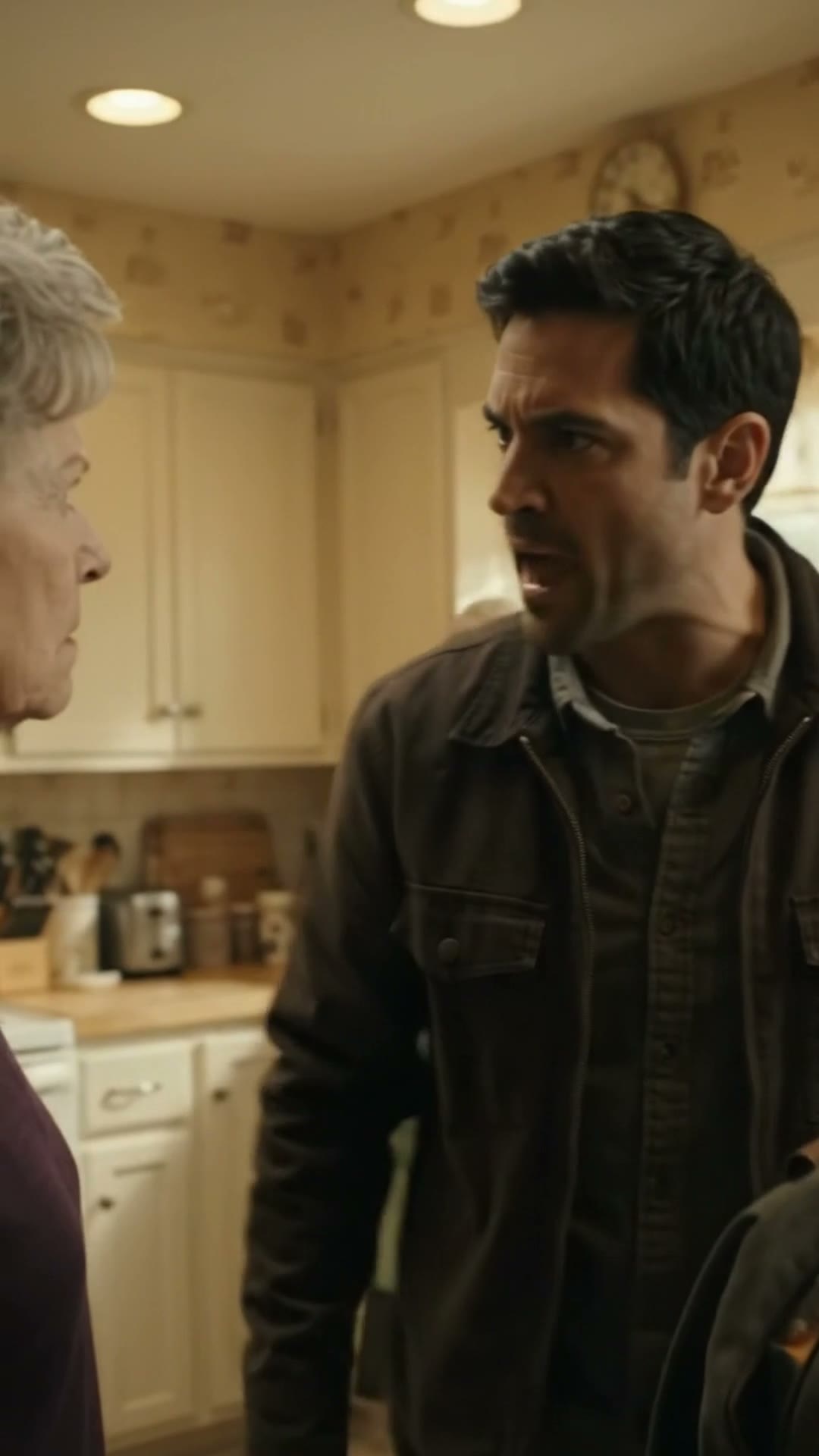
"He eats what we eat! Your precious child isn't special!"
Mom swept Ben's closed lunch box off her kitchen table. It hit the tile and the catch broke. I picked it up without opening it. My son was outside with my wife, looking at the new snow on the shed roof.
Ben was six and had a diagnosed nut allergy. We had brought food he could eat and the emergency medication prescribed for him. Mom had agreed to both when she invited us. I had put his backpack by the pantry before going out to help unload the car.
Now the red medication case was missing. Mom said I had probably left it at home. I knew I had checked the bag before leaving our driveway. She kept telling me not to spoil Sunday dinner by making a scene.
"Don't touch his lunch. Where's the red case from his bag?"
My aunt Helen came in from the pantry carrying Mom's biscuit tin. Its lid was open. A corner of red fabric lay over the rim. Helen looked at her sister, not at me.
"Pat, why did you ask me to put this in your biscuit tin?"
Mom said she had only moved it out of the way. Helen said Mom had asked her to put the sewing kit in the tin so Ben would stop playing with it. Helen had not opened the zip case. She had believed her sister.
I took it, checked that its contents were there and put it in my own coat. Ben had not eaten anything. There was no reaction to turn into a lesson and no dramatic rescue. I went outside and told my wife we were leaving before anyone offered him food.
Mom followed me to the door. She said a case did not need to sit in the middle of a family gathering. I asked why she had called it a sewing kit, and why she had told me I left it at home. She could not explain both as tidying up.
She finally said that if it disappeared for an afternoon, we might see he could manage without everybody fussing. She had not meant to hurt him. I believed that she did not want a hurt grandson. I did not believe that made her experiment safe. His clinician had given us a plan. A Sunday dinner was not a place for Mom to test her competing theory.
Helen said she wished she had asked what she was putting away. I told her she had brought it back as soon as she understood. We did not need to choose a second person to blame so Mom could stop being the one who made the decision.
In the car Ben asked whether Grandma was cross about his lunch. I said Grandma had not followed the rules that kept his food and medicine safe, and the adults were sorting it out. I did not ask a six-year-old to reassure his grandmother or to describe his worst reaction so she would believe him.
We contacted his clinician afterward to review what we should carry and how to explain the plan to relatives. We followed that advice; I did not invent new instructions from an argument. We also stopped leaving Ben alone with Mom. She said that was punishment. I said it was a limit based on what had happened, not a sentence with a date when it would automatically expire.
For months she sent me articles about children being overprotected. I did not debate them while Ben listened. I repeated that she could visit us if she respected the plan and did not bring unagreed food. She did not like it. She came anyway for his school concert, then for a short lunch at our house.
Later she asked whether she could attend an appointment about managing his allergy. We asked the clinician what would be appropriate and Ben whether he was comfortable with her there. Her learning did not erase my need to rebuild trust slowly.
The broken lunch box became a pencil case. The red case travels with us according to his plan. Mom has never been asked to like every rule. She has been asked not to hide the things that make following them possible.
Would you ever allow unsupervised visits again after a relative hid prescribed emergency medication?