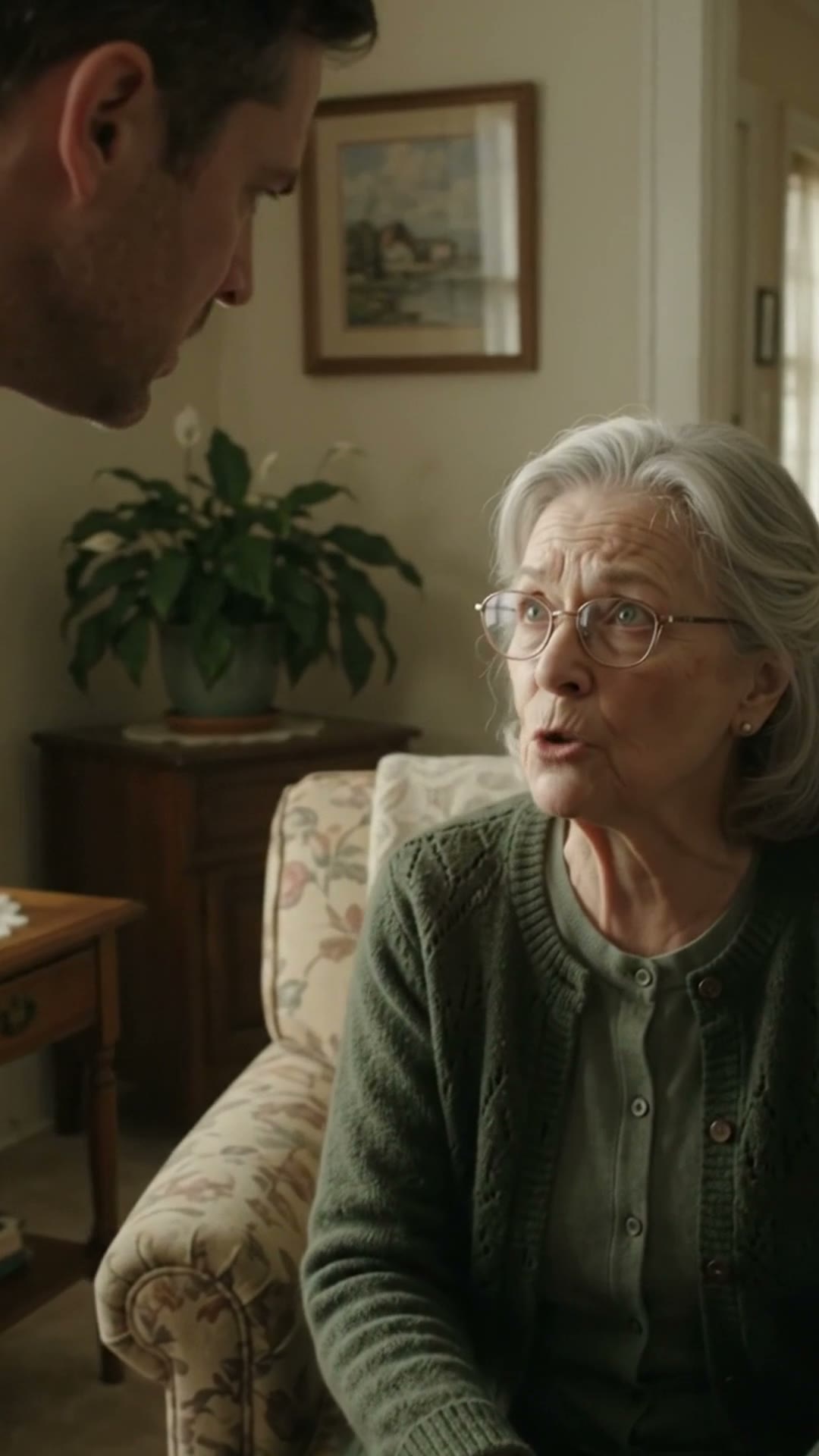
"The doctor says you can't manage! Sign it before you make things worse!"
Robert swept the pen tray off my table. I kept my notebook and glasses beside me. He had brought financial papers he wanted signed, and every question I asked became another example of why I supposedly could not handle my affairs.
I was seventy-seven. I had forgotten two appointments during a difficult month and wanted that taken seriously. I also had a temporary mobility problem. I arranged a home visit with my family doctor so we could discuss what should happen next, rather than rely on relatives guessing about my memory.
Robert said the practice already told him I had dementia and that refusing his help would only delay the inevitable. I had received no such diagnosis. He said I was forgetting that too. It was a difficult claim to answer when asking for the facts was being offered as proof that I could not understand them.
"I haven't had that assessment. Stop telling me what I was diagnosed with."
Dr Harris arrived for the visit I had booked. She looked at me before speaking.
"Mrs Miller, would you like me to explain what I actually recommended?"
I said yes, and agreed to discuss that limited point with my son present. The doctor had recommended a proper assessment of the concerns I raised. She had not made the diagnosis Robert announced or instructed me to sign financial authority over to him.
Robert had contacted the practice with his worries. The answer was that concerns needed an appointment and appropriate evaluation. He turned a next step into a completed conclusion, then presented his preferred financial arrangement as something the doctor already decided was necessary.
Dr Harris did not announce that I could never have a memory condition. She did not settle legal questions about the papers. She said the health concerns deserved attention in their own right, without a rushed financial decision being treated as part of a diagnosis that had not been made.
I asked Robert to leave us alone for the rest of the appointment. He objected, then went into the garden. I wanted to speak honestly about the things I found difficult without every answer being used to argue for the signature he wanted. I could choose support for future appointments after deciding who helped me feel able to speak.
We made a plan for follow-up and for getting practical assistance where I wanted it. The process did not end with a dramatic declaration that nothing was wrong. I wanted reliable answers, including answers I might not enjoy hearing. I did not want my son's certainty substituted for the work of finding them.
I did not sign the papers that day. I sought independent advice about what they meant and what arrangements, if any, I wished to make. Needing help with a task did not mean every proposed transfer of control had to be accepted immediately, especially when the explanation for it had been false.
Robert later admitted he wanted decisions settled quickly because he was anxious and had financial pressures of his own. I told him I could hear that without making it my obligation to surrender control before understanding the consequences. Concern was not a permission to misstate what a clinician had said.
We still speak. I have other people involved in practical support now, with clear limits and my knowledge. My notebook remains beside my chair. Sometimes I need a reminder, and sometimes I need a relative to stop treating a question as a symptom because he dislikes the answer.
Would you have included him in a later appointment after that correction, or chosen another person to support you?