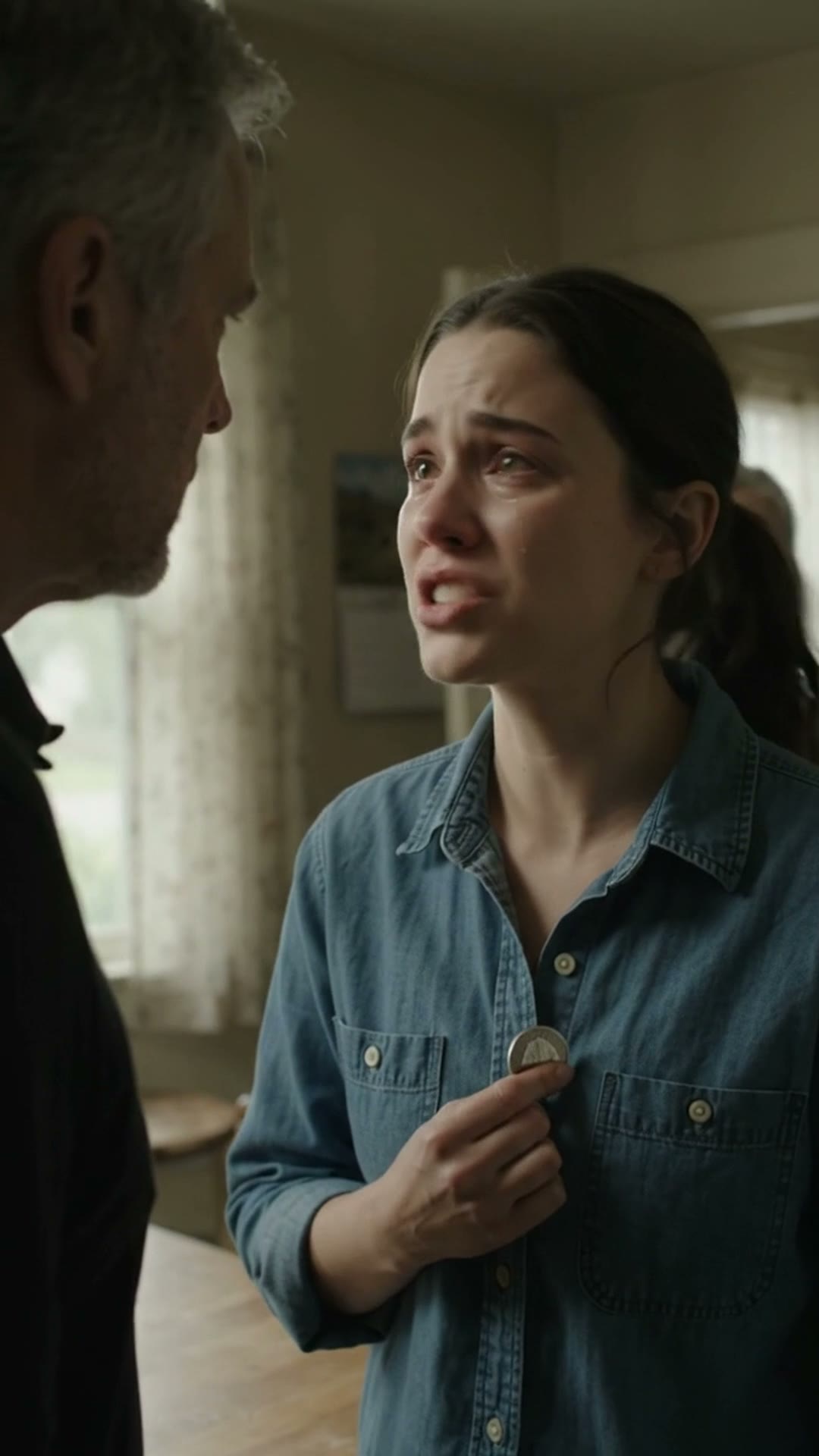
"Six months sober? Stop begging for applause, just stay clean!"
Dad swept my coin off the kitchen table with the bread basket. It rolled under my chair. I crouched to pick it up while he told me people did not get prizes for behaving normally.
I was twenty-eight. I had not asked him to forget what I had done when I drank. I had apologized for the money I owed him and was repaying it every Friday. I had also asked whether we could have dinner on the day I reached six months.
Mom had put three plates out. She was by the doorway with a shopping bag when he started. I thought she would ask us both to leave it until after supper, the way she usually did.
"I asked for dinner, Dad. Not applause. Just dinner."
I held the coin against my palm. Mom came to the table, reached into her bag and took out a small red tin. I had seen it once on the top shelf of their wardrobe when I was little, and been told it held buttons.
"Paul, should we open the red tin in our wardrobe?"
She waited for him to answer. She did not open it because she had decided his private history belonged to me. Dad looked at the tin for a long time, then said yes.
Inside were twelve coins. The earliest had a year I knew only as the year before I was born. The last marked twelve years. Dad picked that one up himself and said he had once needed people to remember a month for him, never mind six.
I had known he did not drink. He said he disliked the taste. I did not know about the job he lost before meeting Mom, the borrowed money or the meetings he had gone to after work. I had spent years assuming that whatever was wrong with me had appeared in a family where nobody else had ever needed help.
He had not hidden a relapse in the tin. He had hidden the fact that he had ever struggled. He said he stopped collecting the coins because he wanted that part of himself to be over. When I began drinking heavily, he thought telling me would give me an excuse. When I stopped, he thought kindness would let me get comfortable.
I told him his silence had not made me more accountable. It had made him look like a man standing safely on a bank, shouting instructions at somebody in the water. He said he had been frightened I would use his history to say none of my choices were my fault. I told him I could take responsibility without being the only imperfect person in the room.
We did not trade histories like scores. What he had done before I was born did not cancel what I had done at twenty-six. I still owed him money. I still needed my own support. He did not become my sponsor because we shared a kitchen table.
Mom said she had brought the tin downstairs that morning after he asked why I needed a special meal. She wanted him to decide whether he could speak honestly. I was glad she had asked before opening it. I needed less shame in the family, not another person's story seized to win an argument.
We ate. Dad apologized for sweeping the table and picked the basket up himself. He asked what had helped me that week. I said going to a meeting before a hard shift, and calling a friend before walking past a place I used to drink. He listened without turning either answer into a warning.
The next Friday I made my payment as usual. He sent the confirmation back with one extra sentence: dinner next month, if I wanted. There was no promise that he would never say the wrong thing again. I said yes.
At one year he came with Mom to an open celebration I had invited them to. He did not stand up and tell my story. He hugged me afterward, asked whether I wanted a lift and accepted it when I said I was going for coffee with friends.
The red tin is still his. My coin is on my own dresser. Neither has to be hidden to make the other person's work real.
Would you have welcomed his story that night, or needed more time after the way he treated yours?