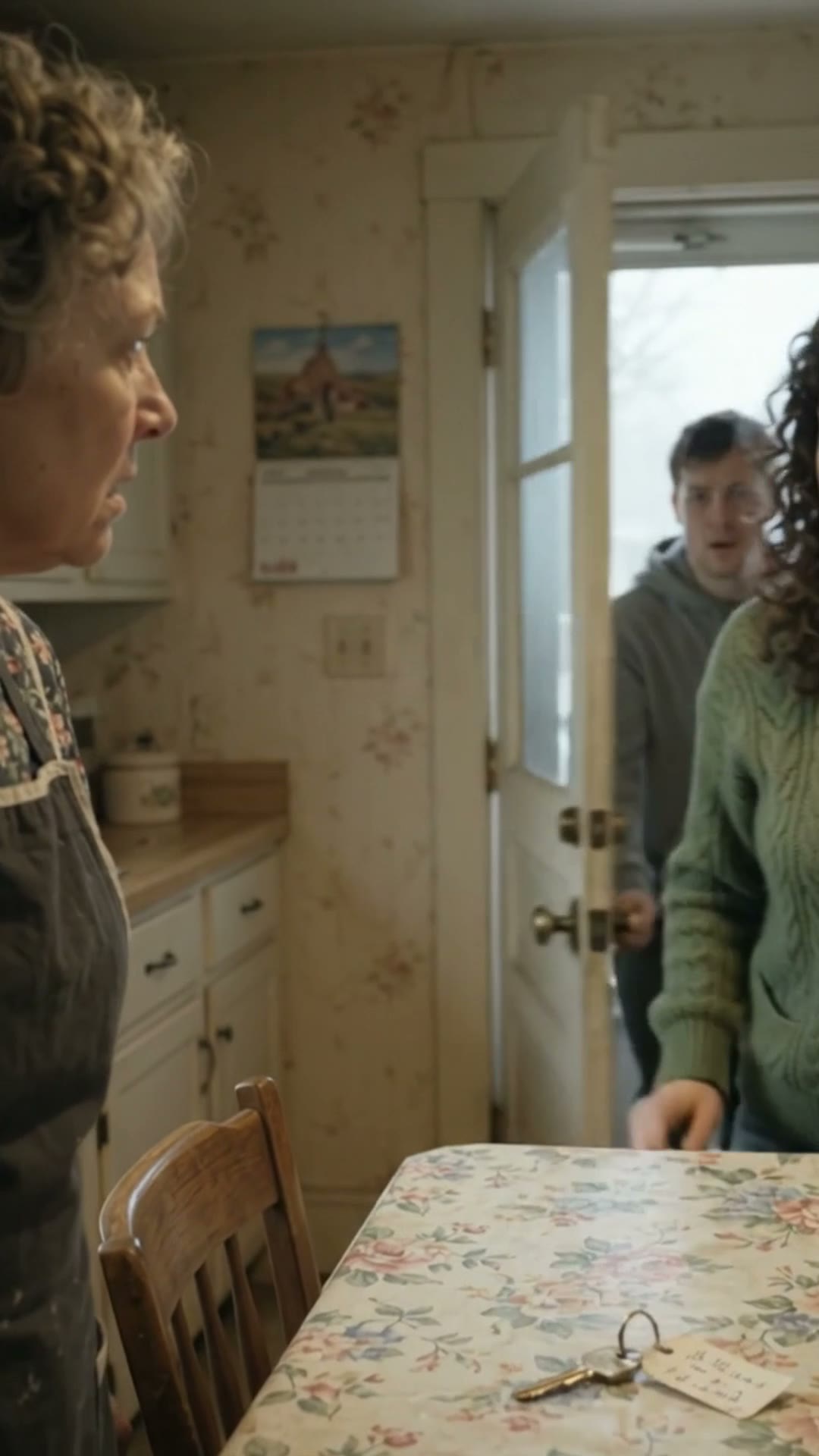
"Take that car back tonight, or you and the baby leave!"
My mother-in-law Arlene screamed that in our kitchen in Waterloo the minute I walked in from buying a used minivan. Then she grabbed her ceramic mug off the counter and hurled it at the wall beside the fridge. It shattered. Tea ran down the wall and across the laminate counter, well away from where I stood.
Our son Bennett is fourteen months old. He was napping upstairs. For a year I've carried him on two city buses to daycare and to work, in the snow. My husband Wes and I saved for that car for eighteen months, and every single month our joint savings came up short with no explanation. Arlene moved in with us after her husband died, and she always had a theory about where the money went. Me. My coffee. My haircut. My "spending."
So I didn't scream back. Three days earlier, putting her laundry away, I'd found something taped under the drawer of her nightstand. I took it out of my coat pocket and set it on the floral tablecloth between us: a small brass key on a worn orange tag.
"First, explain this key taped under your nightstand."
Arlene grabbed the edge of the counter. The color left her face.
The back door opened. Wes came in from the driveway, saw the broken mug on the floor, and then the key.
"Mom, that's a storage unit key. What are you hiding downtown?"
Arlene did not answer him. She said, "That's mine. That's private." Wes picked up the key and put it in his pocket. "Then you can show us tomorrow," he said.
The next morning the three of us drove downtown with Bennett in his car seat, in the minivan she had wanted me to return. At the storage place off First Avenue, Arlene walked to unit one-fourteen and unlocked it herself with shaking hands. I expected boxes of junk. I was wrong.
Inside was a kitchen. Her kitchen. The oak table from the farm where she and Wes's dad, Don, lived for thirty-one years, until the bank took it two years before he died. His brown recliner with the patched arm. Her canning jars, still full of peaches. A framed sampler from her mother. On the seat of the recliner sat a coffee can, and inside it, in rubber-banded bundles, was twenty-six thousand four hundred dollars in cash.
It was our money. For twenty-two months she had used the debit card Wes gave her "for groceries" to pull cash from our joint savings, a few hundred at a time, on the days she said she was running errands. She had not spent one dollar of it.
She sat down in Don's recliner and told us why. The old farmhouse, without the fields, had come up for sale that summer with two acres. She had been saving to buy it back. She wanted to move home, to die where Don died, and she was too proud to ask her son for help. In her head it was not even stealing. Don had given Wes the down payment for our house years ago. "I was only taking back Don's money," she said. Then the minivan appeared in the driveway, and she knew the savings would be gone. That was why the mug hit the wall.
Wes was angrier than I had ever seen him, and then he cried, and so did she. Every dollar went back into our account that same afternoon. Wes cut up the debit card and took over the bills.
We did not call the police, and we did not throw her out in the snow. But she could not stay with us anymore, and she knew it. In February she moved into a senior apartment in Marion on her own Social Security. Don's recliner and the oak table moved with her. We closed the storage unit, and Wes kept the little brass key on his own key ring. He said he never wants to forget how close he came to losing both of us.
The farmhouse sold that spring to a young couple from Waterloo. I found them through a neighbor and asked if an old woman who used to live there could visit once. They said yes. In May I drove Arlene out there in the minivan, with Bennett in the back seat. She walked him through the orchard and showed him the apple tree Don planted the year Wes was born. On the way home she fell asleep in the passenger seat. Before she did, she said, "This is a good car, Renee. I'm glad you didn't take it back."
Now she comes for dinner every Sunday. I pick her up myself.
Would you have let Arlene stay in your home after you found that key?