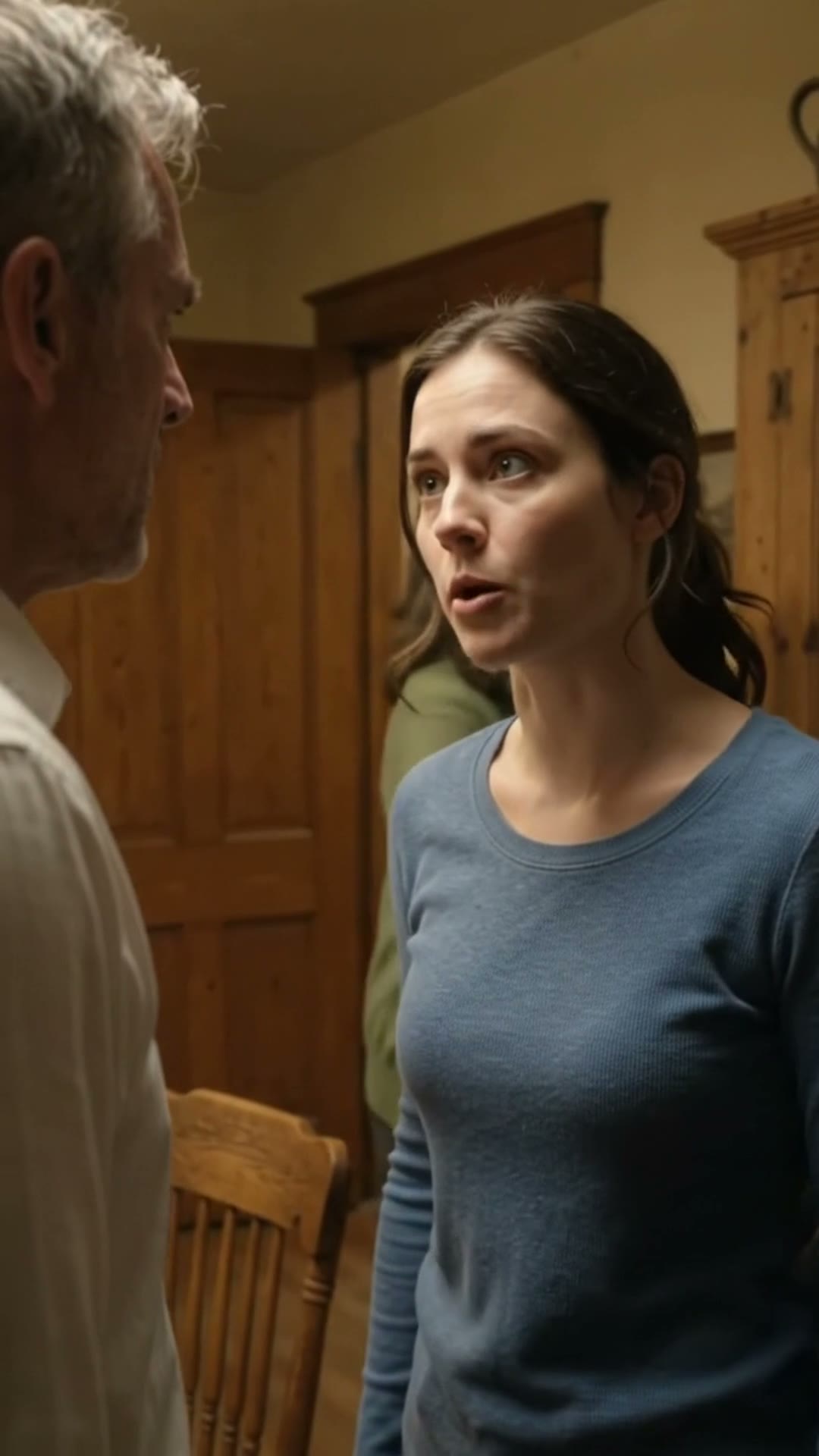
"An electrician? I didn't raise my daughter to crawl under floors!"
Dad kicked my tool bag across the dining-room floor. I had brought it in because he asked to see what I had bought. The handle struck a chair leg, and I stepped back before he could point at me again.
I was twenty-six. After two years in an office job I hated, I had trained, passed the required assessments for my placement and found an employer willing to take me on. I was not announcing that a video online made me qualified to rewire his house. I was starting under supervision, at the bottom, with more learning ahead.
Dad worked in insurance. He said he had spent his life making sure I could do better than physical work. Aunt Sue was visiting for supper. She had been quiet while he told me how embarrassed he would be when people asked about my career.
"You raised me to finish what I start. I start work Monday."
Sue went to the cupboard behind his chair, moved his winter coat aside and took down a worn leather apron. Dad stopped talking before she turned around.
"Victor, shall I tell her whose apron you keep in that cupboard?"
Dad said he would tell me himself. The apron belonged to his father, my granddad Ed. I knew Ed had worked with his hands. Dad usually said he had done maintenance. I did not know he had been an electrician for thirty-eight years, or that Dad kept his first work apron beside the coats he wore to the office.
This was not a secret apprenticeship that would give me a shortcut. Granddad had died before I was born. His experience was not a qualification I could inherit. What Dad had concealed was how he felt about the work that had paid for his own education.
Sue said their father came home tired and sometimes injured, and that the years on ladders had been hard on his back. Dad had seen the cost more closely than I had. I asked why he had not said that instead of telling me he was ashamed of me. A warning about safe work and a demand to protect his reputation were not the same conversation.
He put the apron on the table. In one pocket was the little wooden train Granddad had made him when he was six. I had seen that train on Dad's desk all my life. I had assumed it was something expensive he collected, not something a man in a work van had made at the kitchen table.
Dad said he had promised himself I would never come home with my hands shaking from holding a drill over my head all day. He also admitted that, as he moved into an office career, he had begun saying his father worked in building management. He had let protecting a child from hard work turn into hiding the man who had done it.
I told him training did not mean ignoring danger. I wanted to learn the rules, use the right equipment and work for people who took safety seriously. I also wanted a job I could bear doing. He could ask questions about the placement. He could not kick my tools because the answer did not sound like his.
He apologized, then asked whether he had damaged anything. We checked the bag together. Nothing was broken. He offered money anyway. I said I wanted him to ask about my first day without using it to decide whether he had been right.
Sue put the apron back. Dad asked whether I wanted it. I said it should stay with the train; I needed equipment suitable for the work I was actually doing, not a family object pretending to be protection. He smiled at that, and then looked embarrassed because it was the first time all evening he had listened.
My first month was exhausting. I came home with aching shoulders and more questions than confidence. Dad sometimes wanted to say he told me so. Instead he asked who I could go to for advice. I named my supervisor, not him, and he accepted that answer.
At Christmas he took the train off his desk and told my younger cousins who made it. He said his father had been an electrician. It was a small sentence to have taken so many years.
Would you have discussed his fears after he kicked the bag, or ended the visit before hearing them?