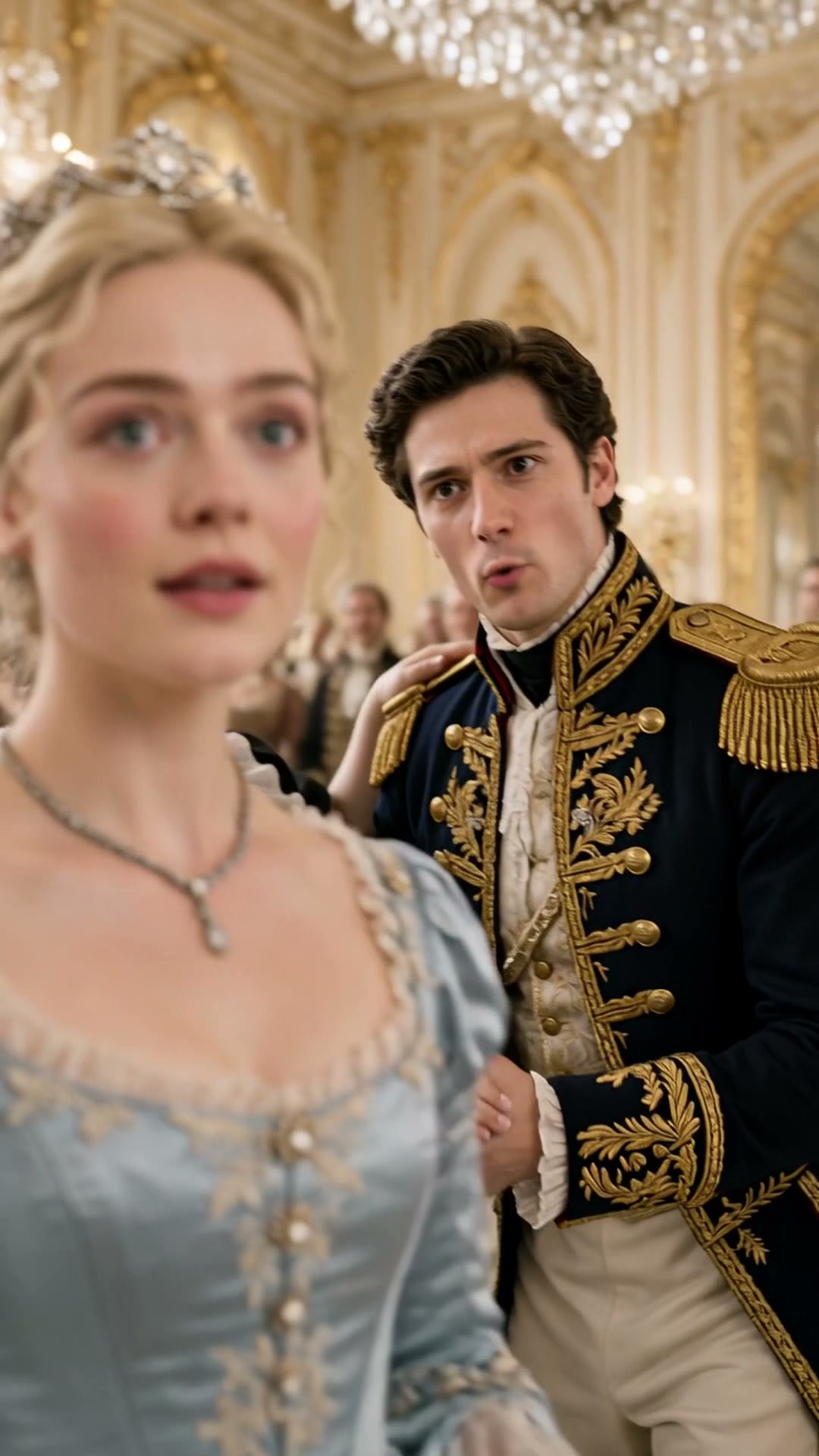
The afternoon light poured through the tall windows of the white-and-gold hall, and the court was bored. The ladies had finished their tea, the gentlemen had finished their gossip, and there was nothing left to do but look for someone to laugh at.
Nora Pell had only come up from the kitchens to clear the cups. She was twenty-eight, broad and soft and strong from six years of carrying trays, and she wore the same black-and-white uniform as every other maid in the palace. She kept her eyes down. She always did.
Lady Celestine Varne saw her anyway.
"Let the kitchen girl show us how a cow waltzes," she said, and the hall burst into laughter.
What none of them knew was who Nora's mother had been. Twenty years earlier, Madame Louisa Pell had been the court's dancing mistress. She had taught three generations of nobles how to waltz, and she had invented one small, unusual turn of her own: a half-spin with the weight held back on the heel, so that a woman seemed to float for a breath before she landed. She taught it only to her best pupils, and to her daughter. When Madame Pell fell ill and lost her position, the family lost everything. After her death, the only work Nora could find was in the same palace where her mother had once been admired, down in the kitchens, where no one would recognize her.
But one night, the winter before, Nora had broken her own rules. The palace was holding its great masked winter ball, and in her mother's old trunk there was still one gown, deep blue and carefully mended. Nora put it on, tied a silver mask over her eyes, and slipped in through the servants' door. She told herself she only wanted to see the hall full of candles, the way her mother had described it.
The prince asked her to dance.
They danced three times. They talked about books and music and the snow. He laughed at her jokes. And when she did her mother's turn, he looked at her as if he had never seen anything like it. Before midnight, frightened by how much she felt, she ran. She left nothing behind, not a slipper, not a name.
Prince Frederick searched for her all winter. He asked every family that had been invited. And a few weeks later, Lady Celestine, who had worn blue that night too, lowered her eyes and allowed him to believe that the girl in the mask had been her. She never quite said it. She simply never said it wasn't. Her family began to talk of a betrothal.
So when Celestine mocked the kitchen maid that afternoon, she had no idea she was mocking the one person in the palace who could ruin her.
Nora set down her tray. Her face was burning, but she heard her mother's voice in her head: chin up, shoulders back, never shrink. She turned to the prince and said, "One dance, Your Highness."
To everyone's shock, he took her hand.
There was no music, only their steps on the marble. And the laughter died one giggle at a time, because the kitchen girl did not stumble. She moved lightly and surely, exactly in time. Then came the turn, the half-spin that floated for one breath before it landed.
The prince stopped dead.
"That turn," he whispered. "You're the masked girl from the winter ball."
He did not need to say anything else. He had danced with Lady Celestine a dozen times since that night, and she had never once done that turn. He had told himself it did not matter. Now he understood exactly why.
Celestine tried to laugh it off. A coincidence, she said, any maid could learn a step. But the old Countess of Ellery, who had been one of Madame Pell's pupils forty years earlier, rose from her chair with tears in her eyes. "That is Louisa Pell's turn," she said. "I have not seen it since she died. Child, are you her daughter?"
Nora nodded. She could not speak.
The court that had laughed at her a minute before now turned, every face, toward Lady Celestine. A year of quiet lies collapsed in a single afternoon. The betrothal talk was over before dinner. Within a week Celestine had "decided" to spend the season at her aunt's house in the north, and the ladies who had giggled behind their fans at Nora now whispered about Celestine instead. No one sent her letters. No one asked when she would return.
Nora was not punished for slipping into the ball. Prince Frederick would not hear of it. Instead he asked her one question, very quietly, in the empty hall after everyone had gone: why had she run?
"Because I was a kitchen maid," she said, "and you were you."
"You were the only person in that room who talked to me as if I were just a man," he answered.
The next winter, the palace held its masked ball as always, but the first dance was different. The prince walked to the center of the floor and held out his hand to a woman in a deep blue gown, carefully mended, with no mask at all.
And when Nora Pell did her mother's turn beneath the candles, the whole court applauded.