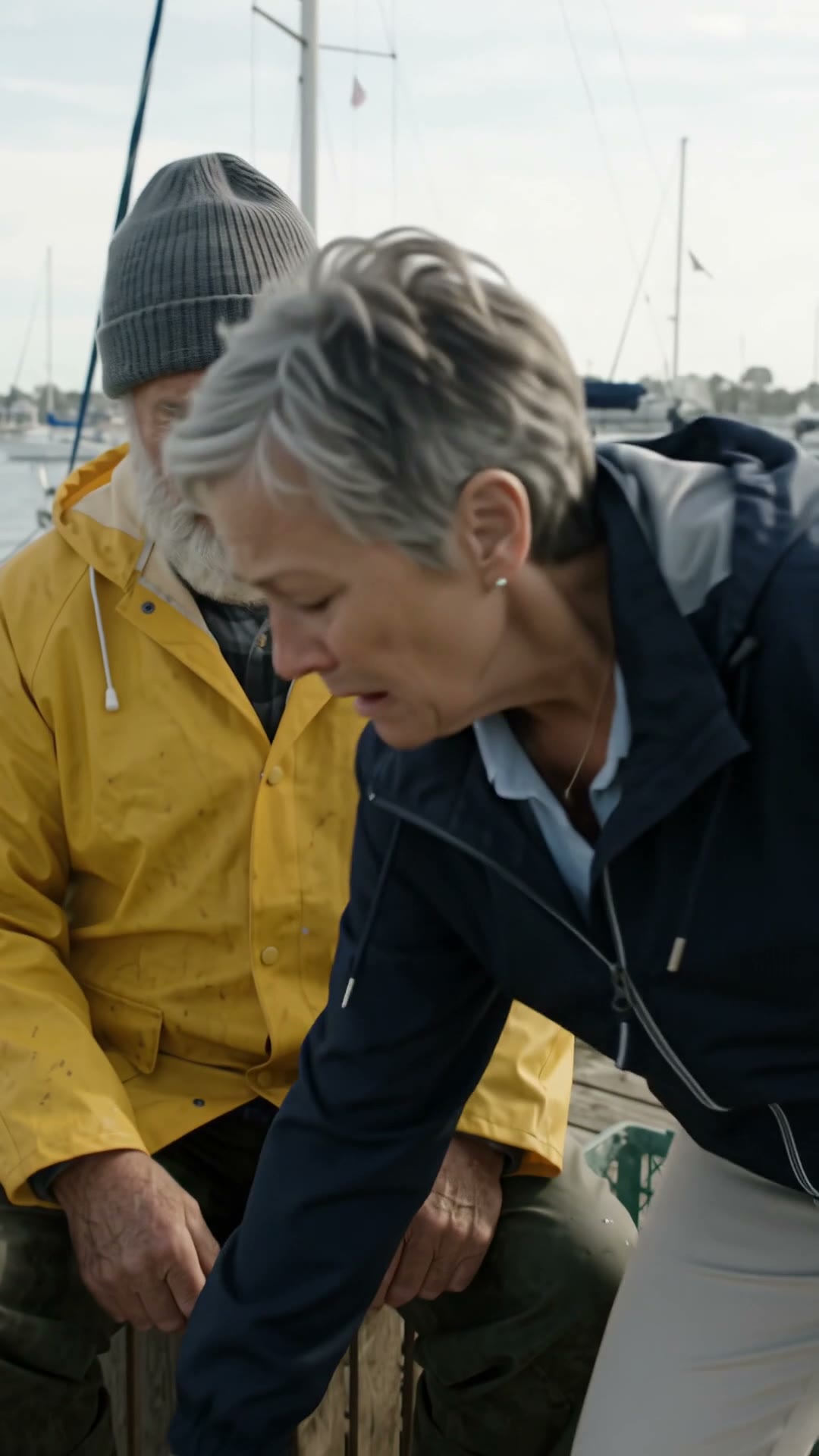
"No fishermen at this club! Take your stinking bucket away!"
My bucket flew off the bench and four good mackerel slapped onto the dock, flopping in the morning sun. Then he kicked my tackle box. Hooks, sinkers and line spilled everywhere and slipped between the boards into the water.
Carter Lyle stood over me in a crisp white polo with a sweater tied around his shoulders, like the bench was his throne and I had sat in it.
My name is Elias Thorne. I'm seventy-four. I've fished out of Gull Harbor since I was six years old. My grandfather, Amos Thorne, built the first stone breakwater in this harbor with his own hands and a team of horses. He bought the whole cove, the shoreline and the harbor bottom, back when nobody else wanted it. The town grew up around his docks.
In 1952, a group of summer people from Boston wanted to start a yacht club on the north side of the harbor. My grandfather liked boats, so he made them a deal. He leased them the moorings and the dock for one dollar a year. Forever. On one condition, written into the lease in his own words: working fishermen of Gull Harbor shall always have free use of the docks.
He also gave the harbormaster's office a copy of the brass key that opens the old sea gate at the mouth of the cove. The other key stayed with the Thorne family. My father wore it on a cord. Now I keep it in my tackle box, because a man my age doesn't like things around his neck.
For seventy years, the deal held. The club's members bought my fish, waved at my boat, and nobody thought much about it. Then the old board retired, and the new one hired Carter. Within a month, Joe Bassett, who has fished these waters for fifty years, was told to move his skiff off the club's moorings. The Kowalski brothers had their cooler of lobsters tossed into the harbor for setting it on the dock. Nobody complained. Fishermen don't complain. We just quietly stopped tying up on the north side.
"Careful, son. You dropped my key, too." I told him.
Ruth Donnelly has been harbormaster for thirty years. She has the other key in her office, in a glass case on the wall. She's seen my father wear the one I carry. She knows every scratch on it.
"That's the old harbor key… you're a Thorne!"
Carter stopped laughing. "A what?"
"A Thorne," Ruth said. Her voice was loud now, so the whole dock could hear. "Carter, the Thorne family owns this harbor. The water, the bottom, the moorings your members tie up to. This club leases it all for a dollar a year. And the lease says fishermen are always welcome on these docks. Always. You've been breaking it for six months."
Every head on every white sailboat turned toward me. The woman with the phone lowered it slowly.
Carter's face went the color of his polo. He looked at the mackerel on the planks. He looked at the hooks in the cracks. He looked out at the boats, every one of them tied to a mooring that belonged to the old man in the yellow slicker.
"That can't be right," he said. "Nobody told me."
"Nobody had to," I said. "You just had to be decent."
Ruth handed me the key. Then she said what everyone on the dock was thinking. "Elias, under that lease, if the club breaks the condition, the harbor goes back to the family. You could take it all back. Today."
I could have. My lawyer told me the same thing later that week. The club's board came to my little house on the hill with a box of pastries and three hundred apologies and asked me what I wanted.
I thought about my grandfather. He didn't build those docks to keep anybody out. He built them so a man with a boat could make a living.
So I told them what I wanted.
First: the lease stays exactly as it is. One dollar a year. The condition stays too.
Second: Joe Bassett gets his old mooring back. The Kowalski brothers get a new cooler, paid for by the club.
Third: Carter apologizes on that dock, in front of every fisherman in town.
He did. The next Saturday morning, twenty-two of us stood on the north dock in our boots and slickers, and Carter Lyle stood in front of us without his sweater and said he was sorry. He didn't make excuses. He even picked up my bucket and handed it to me. It took a lot for him, and I respect that.
Now, every Friday, the club buys its fish straight off our boats. The members get the freshest catch on the coast, and we get a fair price. Carter comes down to the dock himself to pick it up. Last month he asked me to teach him how to gut a mackerel. He's terrible at it. But he's learning.
And the old bench at the end of the dock has a small wooden sign now, carved by Joe Bassett: Fishermen welcome. Always.
The brass key is back in my tackle box. Some days I take it out and look at it, and I think my grandfather would be smiling.
Would you have taken the harbor back, or done what I did?