I’m Maren Ashdown. I am thirty-four years old, and for five years I have worked the night shift at Aldergate Private Bank, polishing forty-one thousand square feet of pale marble until it shines like a frozen lake. I wear a sage-green wool dress under my work apron because the building is always cold after closing. I know every vein in that floor. I know the sound my loafers make on it. Nobody at the bank has ever asked me a question, and I have learned to notice what people say when they think a cleaner cannot hear.
Three weeks ago, wiping the underside of the long marble counter, my cloth caught on something. It was a small brass key, taped up under the lip of the stone, with a number stamped on it: 4471. I looked up box 4471 in the vault register on the archive terminal, which I am allowed to dust but not to touch. The bank’s records say that box has never been rented. But the key was worn smooth by thumbs.
I should have taken it to the manager. But the manager, Mr. Lyle, has been on leave for a month, and the person running the bank in his absence is his deputy, Rhys Halden. He is forty-one and handsome and fond of a charcoal sweater on Fridays. He smiles at everyone. And I had noticed that the security cameras in the hall are turned off every night at eleven, precisely when he stays late.
So I took the key home in my tote bag and watched. For three weeks I saw Rhys carry heavy leather cases down to the vault at night and return with them empty. I saw him wipe the counter himself, once, with a handkerchief. Then last Friday something changed. I saw him look at the underside of that counter, and I saw his face go still.
He knew the key was gone. And on Monday he began asking the night staff, very pleasantly, whether anyone had seen anything small and brass.
I decided that tonight I would carry the key out of the building and put it in the hands of the state banking examiner. I had already written to her, on the bank’s own public address, from the library computer. I did not know whether she would come. I only knew the front doors would be unlocked at midnight, and that I should be gone by then.
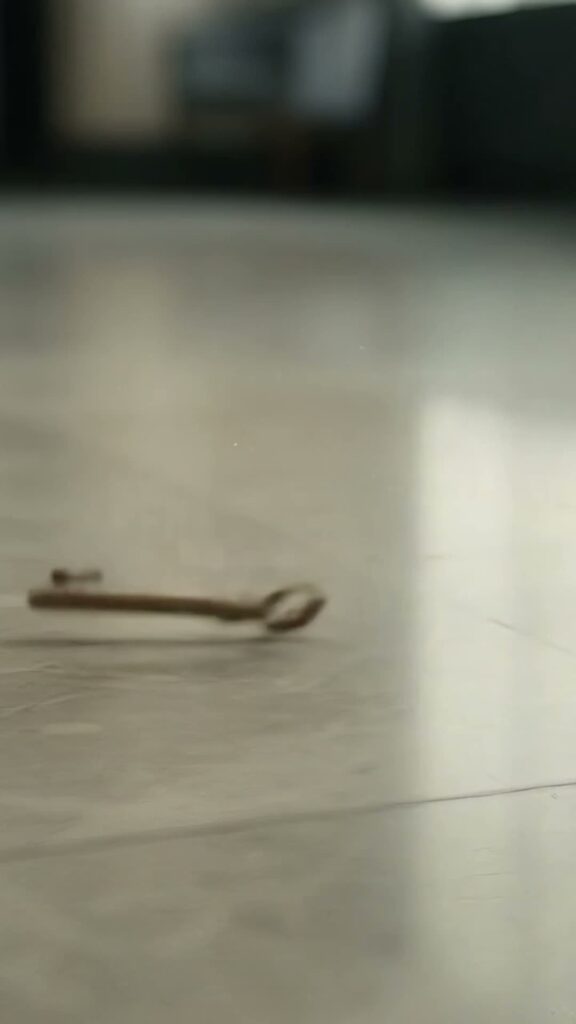
At ten to twelve I was crossing the hall with the bag on my shoulder when a hand closed on the strap. Rhys. He was breathing as though he had run down every stair in the building. He spun me around so hard that my loafers skidded on the wax I had put down three hours earlier, and the tote fell open. The key jumped out and went skating away across the marble, a small bright fish in a big pale sea. I saw his black shoe come down beside it, hard enough to make me flinch.
I went for the key on my hands and knees. He caught the sleeve of my dress and pulled me back, and I slid across the floor a long way, all the way to the black double doors. I stood up and got my hand on the steel lever. It would not move. He had locked those doors from the inside himself an hour before, to keep the cleaning staff from leaving early. That is what he had told the guard.
I turned around. Rhys was standing over me in the middle of that enormous empty hall, thirty yards from the key, thirty yards from me, breathing hard. “Give it to me,” he said, and for the first time I saw what was under the smile. “Nobody will believe a cleaner.”
I said nothing. I was looking past his shoulder at the door. In the center of the black panel there is a tiny brass peephole, put there by an architect who loved detail, and I had polished it every night for five years. It had gone dark. Someone was standing outside, looking in.
Then the lever in my hand moved. Not because of me. Someone on the other side had put a key card to the outside reader and turned the handle, and the door began to open, slowly, an inch at a time.
The person standing on the step was a small woman in a raincoat, with a badge on a lanyard and a folder under her arm. She looked at me, then at Rhys, then at the brass key glinting on the floor between us. “Ms. Ashdown,” she said. “I got your letter. I’m sorry I’m late. I was waiting for the warrant.”
Behind her came two officers in plain coats. Rhys did not run. There was nowhere to run across that floor, and he must have known how far thirty yards is on freshly polished marble. Box 4471 held the bank’s missing reserve ledgers and forty-one bearer bonds. The examiner told me afterward that the man had been moving client funds through it for six years.
Mr. Lyle came back from leave and shook my hand for a very long time. The bank offered me a job upstairs, in the records department, in daylight. I said I would think about it. Then I went back to the hall that evening, as I do every evening, and I polished the floor, because I like the way it shines, and because I know that from now on somebody is listening when the cleaner speaks.





Join the conversation