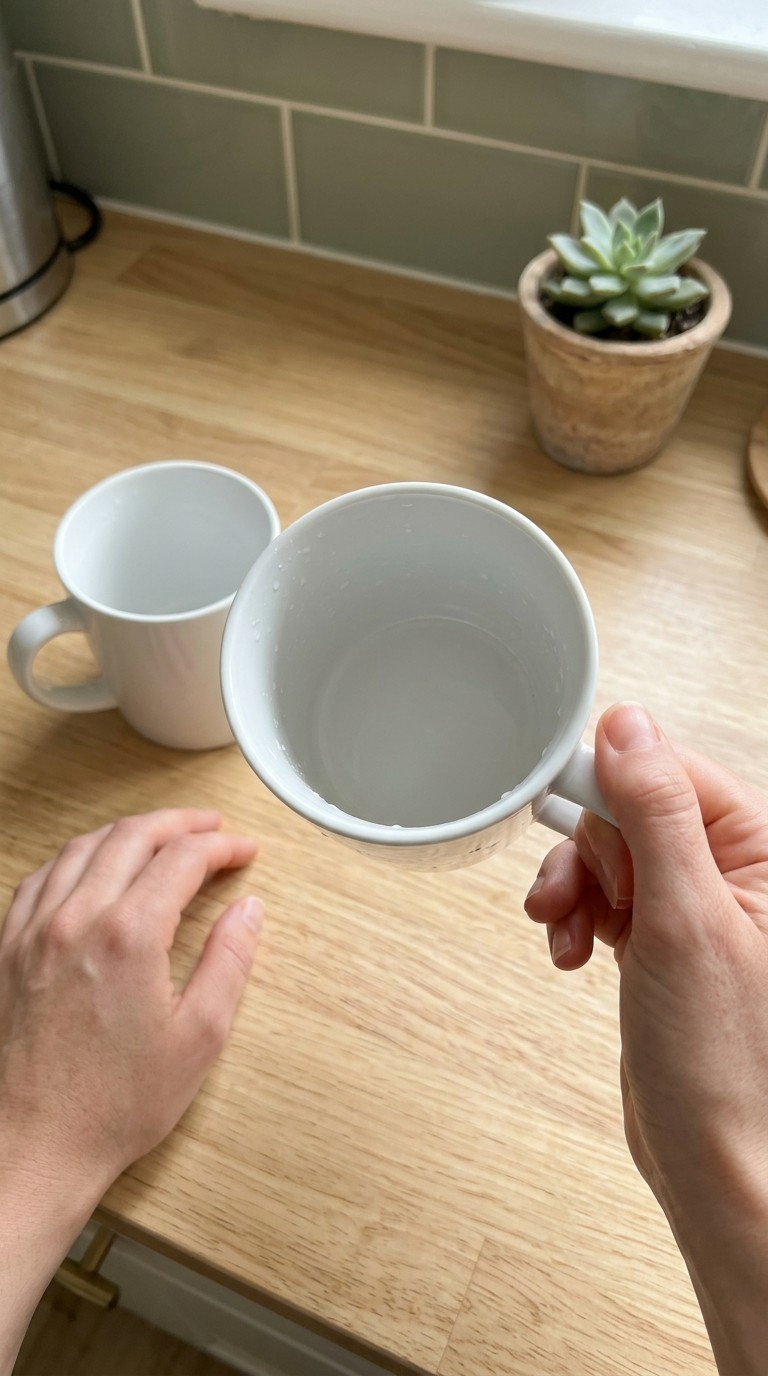
This is the trick from our CleanLab Hacks reel. Tea and coffee contain tannins, dark compounds that cling to the glaze inside a mug and build up ring by ring. Dishwasher detergent cleans the mug, but it does not scrub, so the rings stay. A baking soda paste is just abrasive enough to lift tannin stains without scratching a good glaze.
You need
- 1 tbsp baking soda per mug
- 1 to 2 tsp water
- A soft sponge or cloth (non-scratch side only)
- Dish soap and hot water
- Optional: a small bowl for mixing the paste if you are doing several mugs at once
Steps
- Rinse the mug and leave it damp.
- Mix the baking soda with the water into a thick paste, or sprinkle the baking soda straight into the damp mug.
- Scrub the stained areas in small circles with the sponge, including the rim and the bottom.
- For stubborn rings, leave the paste on for 5 minutes, then scrub again.
- Wash the mug with dish soap and hot water and rinse well.
- Hold it up to the light. If a faint ring is left, repeat once; most mugs come clean in one or two rounds.
Keep them white: rinse mugs soon after you finish your drink instead of leaving them to dry on the desk. Stains set when the last sip evaporates, and a quick rinse means you will need this scrub far less often.
Safety
This is for glazed ceramic, porcelain, glass and stainless steel. Do not scrub hand-painted designs, gold or silver rims, metallic decals or crackle glazes, where any abrasive can wear the finish. Be gentle with plastic travel mugs, which scratch easily. Never use steel wool on mugs, and never mix bleach with vinegar or other cleaners if you try other stain removers.
What the viral version gets wrong
Some videos soak mugs overnight or use harsh mixes; for normal tea and coffee rings, a short scrub is enough. What no trick can fix is crazing, the fine network of cracks in an old glaze: stains sink into those cracks and stay. If the brown lines look like a spider web, it is the glaze, not dirt.
Related guides
More tricks every day on CleanLab Hacks on Facebook.