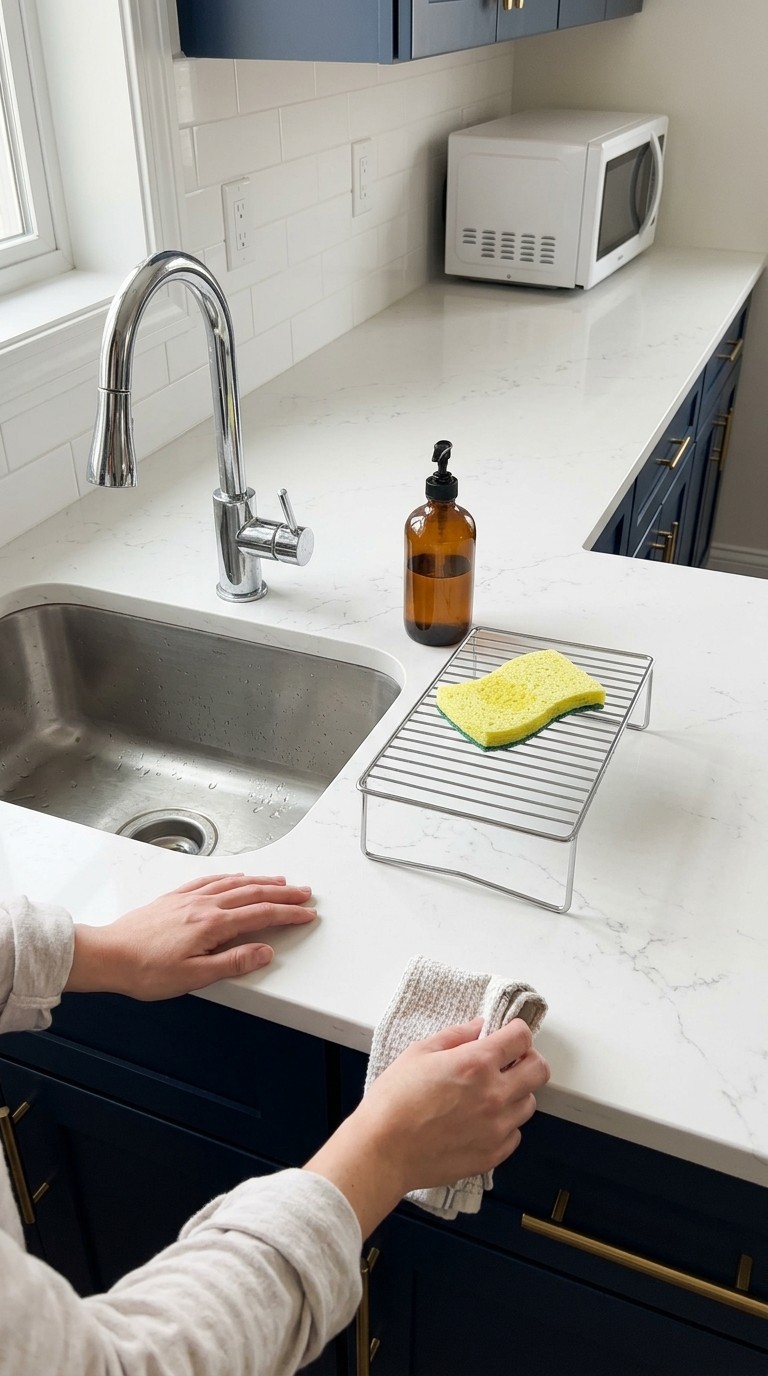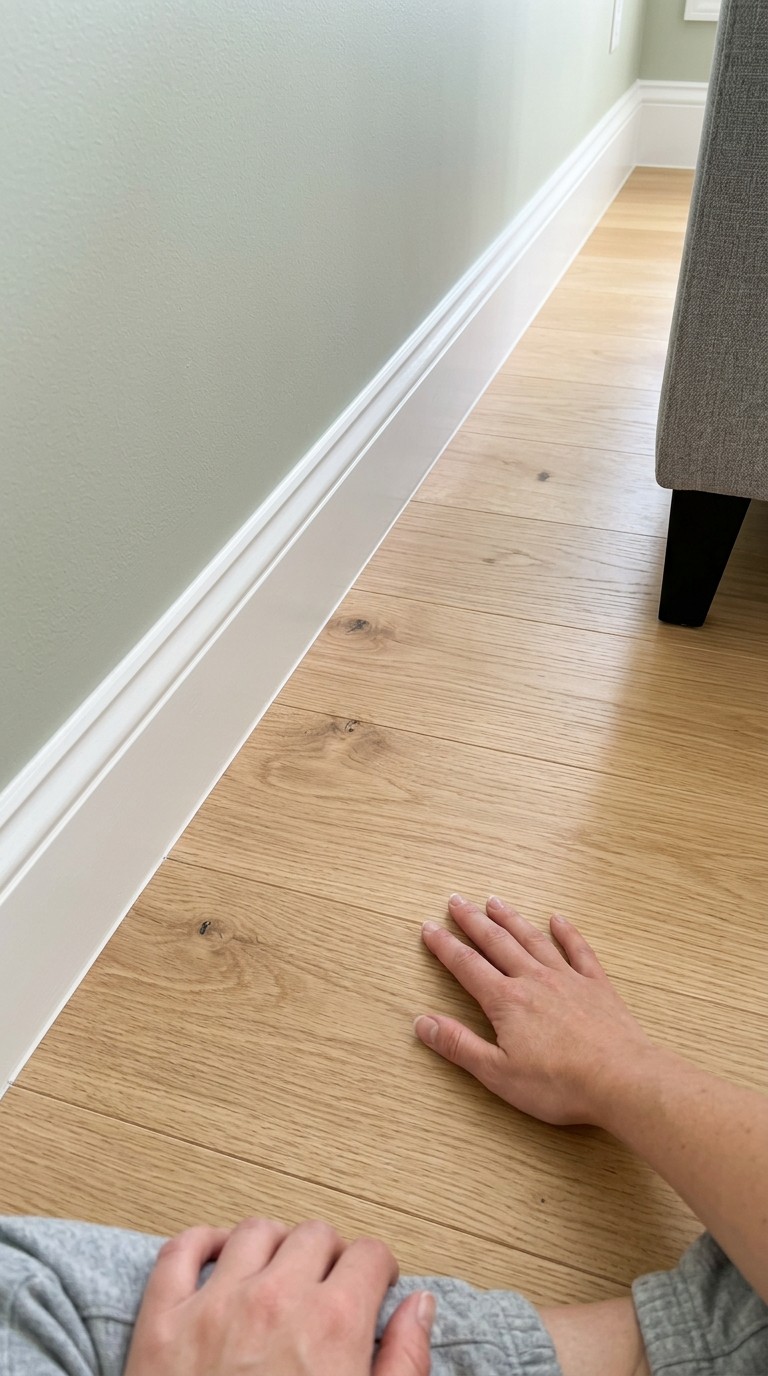
This is the trick from our CleanLab Hacks reel. Baseboards collect a strip of grey fuzz, pet hair and dust that a mop never quite reaches. A dryer sheet grabs that fuzz like a tacky cloth, and the thin softener coating it leaves reduces static, so dust settles a little more slowly afterwards. It is a quick maintenance job, not a deep clean, and it works best after one small step.
You need
- A vacuum with a brush attachment
- 1 to 2 dryer sheets (used ones work fine; unscented if you are sensitive to fragrance)
- A damp microfiber cloth
- A small bowl of warm water with 1 drop of dish soap for scuffs
- Optional: a flat mop or duster you can clip the sheet onto
Steps
- Vacuum along the baseboards with the brush attachment to pick up loose dust and hair. Skipping this is what turns the wipe into a smear.
- Wipe any scuffs or sticky spots with the damp microfiber cloth dipped in the soapy water, then let them dry.
- Fold a dryer sheet into a small pad and wipe along the top edge first, then the face, in long strokes.
- Switch to a fresh side or sheet as soon as it turns grey.
- To skip the bending, wrap the sheet around a flat mop head or duster and walk it along the wall.
Safety
Dryer sheets leave a light softener film. Test on a hidden section first, and skip them on unsealed or raw wood, waxed trim and paint that is less than a month old. Keep the sheet off hard floors, where the film can make them slick. Throw used sheets away where children and pets cannot chew them. Choose unscented sheets if anyone in the home is sensitive to fragrance.
What the viral version gets wrong
Posts claim a dryer sheet keeps dust away for weeks or months. It slows dust down a bit; it does not stop it. The film can also build up and hold grime over time, so every few months wipe the baseboards with a damp soapy cloth to reset them. For a deep clean, warm soapy water is still the real answer.
Related guides
More tricks every day on CleanLab Hacks on Facebook.