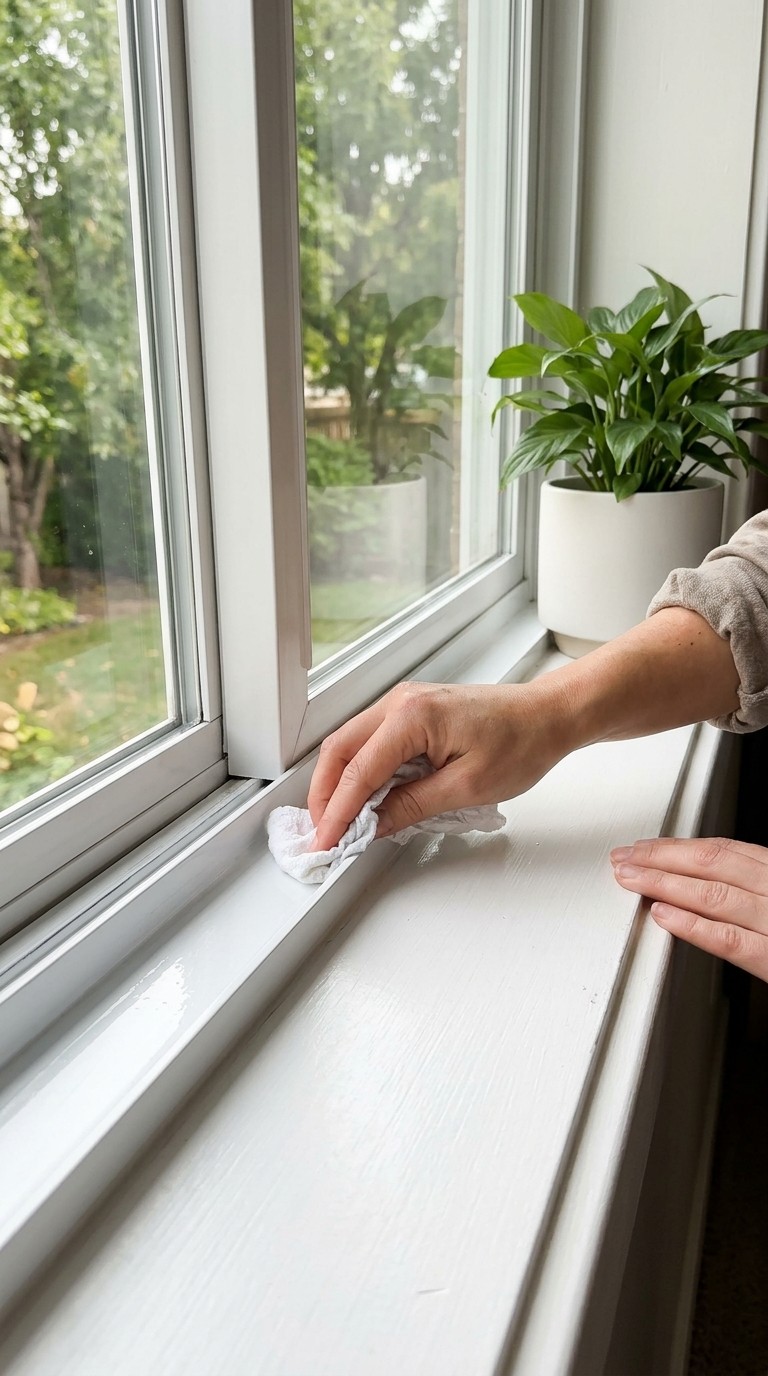
This is the trick from our CleanLab Hacks reel. Sliding window tracks collect grit, dust and pollen that turn into black grime every time condensation runs down the glass. Baking soda gives you a gentle scrub, vinegar loosens the film, and the fizz between them helps lift dirt out of the corners. The order matters, though: do it in the wrong order and you just make mud.
You need
- A vacuum with a crevice tool
- 2 to 3 tbsp baking soda
- 1/2 cup (120 ml) white vinegar mixed with 1/2 cup water in a spray bottle
- An old toothbrush
- A cloth or paper towels
- A butter knife wrapped in a thin cloth, for tight corners
- Cotton swabs (optional)
Steps
- Open the window and vacuum the track thoroughly to remove loose grit and debris.
- Sprinkle the baking soda along the track, concentrating on the dirtiest corners.
- Spray the vinegar mix over it. It will fizz. Let it sit for 5 to 10 minutes.
- Scrub the track with the toothbrush, working into the corners and the grooves.
- Wipe out the paste with a damp cloth. Run the cloth-wrapped butter knife along the grooves and use cotton swabs in the corners.
- Wipe once more with clean water, dry the track, and slide the window a few times to check it runs smoothly.
Safety
Vinegar is acidic: keep it off natural stone sills such as marble, and test on painted or coated frames first. Do not flood the track, since water can run into the wall; spray lightly and wipe. Keep the small drain slots at the outer edge clear, but do not poke hard enough to damage the weatherstripping. Wear gloves if your skin is sensitive, and never mix vinegar with bleach.
What the viral version gets wrong
The fizz looks dramatic, but baking soda and vinegar mostly neutralize each other; it is the scrubbing and wiping that do the cleaning. The most important step is the one videos skip: vacuuming first. Add liquid to dry dirt and it turns into mud that sinks deeper into the corners.
Related guides
More tricks every day on CleanLab Hacks on Facebook.