This is the trick from our CleanLab Hacks reel. A sponge stays warm, wet and full of food bits, which is why it starts to smell sour within days. A quick reset with heat helps, but let us be honest from the start: refreshing only buys time. Replacing kitchen sponges often, every week or two, is the best fix. Here are three ways to stretch the life of the one you have.
You need
- The sponge: plain cellulose or foam only, with no steel wool or metallic scrub layer
- Water
- A microwave-safe plate
- Tongs
- Dish soap
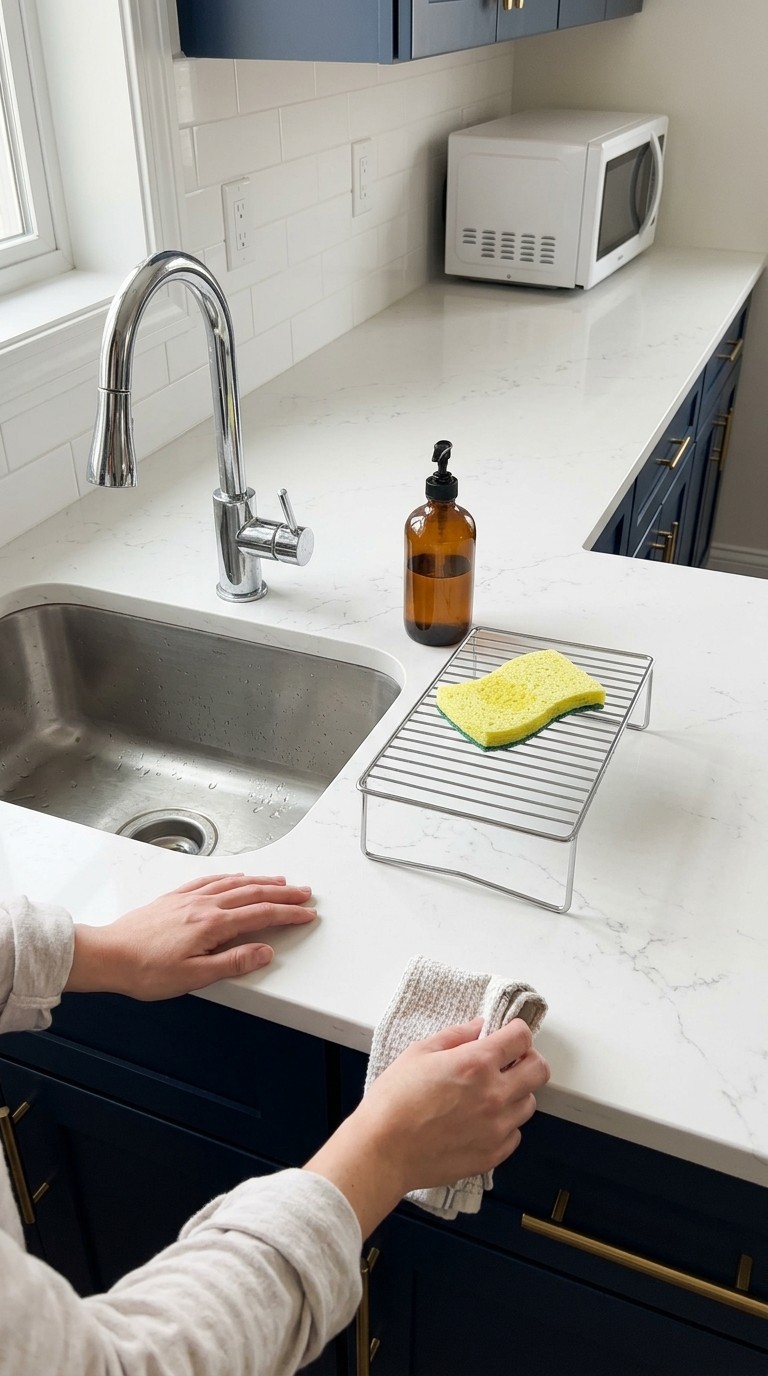
- A drying rack or a spot where air can reach the sponge
Steps
- Rinse out food bits and squeeze the sponge.
- Microwave method: soak the sponge until it is completely wet and dripping. A partly dry sponge can scorch or catch fire.
- Put it on the microwave-safe plate and heat on high for 1 minute. Stay next to the microwave the whole time.
- Leave the door closed for 10 minutes. The sponge and the water on the plate will be scalding.
- Lift it out with tongs, squeeze it once it is cool enough, and let it dry on the rack.
- Dishwasher method: put the sponge on the top rack and run a hot cycle with heated dry. Hot soak: soak it in hot water with a squirt of dish soap for 10 minutes, squeeze well and dry. It is the gentlest option and works best on smell.
Safety
The microwave method is only for a fully wet sponge with no metal of any kind; metallic fibers can spark. Never walk away while it heats, and do not exceed the time. Use tongs, since steam and hot water cause burns. Never mix cleaning products while soaking sponges, especially bleach with vinegar or ammonia. Throw out any sponge that is crumbling, slimy or still smells after a reset.
What the viral version gets wrong
Videos make it look like a sponge can be reset forever. It cannot. Heat reduces the smell for a while, but sponges trap food and moisture again within days. Wring yours out after each use and let it dry, swap it every week or two, and use a dish brush, which dries faster, for most of the scrubbing.
Related guides
More tricks every day on CleanLab Hacks on Facebook.