My name is Nora. I’m thirty-four and I run a small flower stall by the town square. My father, Walt, spent forty years repairing city buses and never owned a new coat in his life. He fixed the neighbors’ cars for free, kept every appliance on our street alive with duct tape and stubbornness, and when he passed in March the whole street brought casseroles to my door.
Every December since I was four, something strange happened on Alder Street. Sometime before dawn, an envelope would slip into a few mailboxes, always the ones that needed it most: the widow with the broken furnace, the man laid off from the mill, the young couple with a new baby and no crib. Inside was cash and a tiny pencil drawing of a sparrow. Never a name. The town called the sender The Sparrow, and every year we wondered who it was.
This year we assumed The Sparrow had stopped. Nobody said it out loud, but on the first of December people stood a little lonelier at their mailboxes.
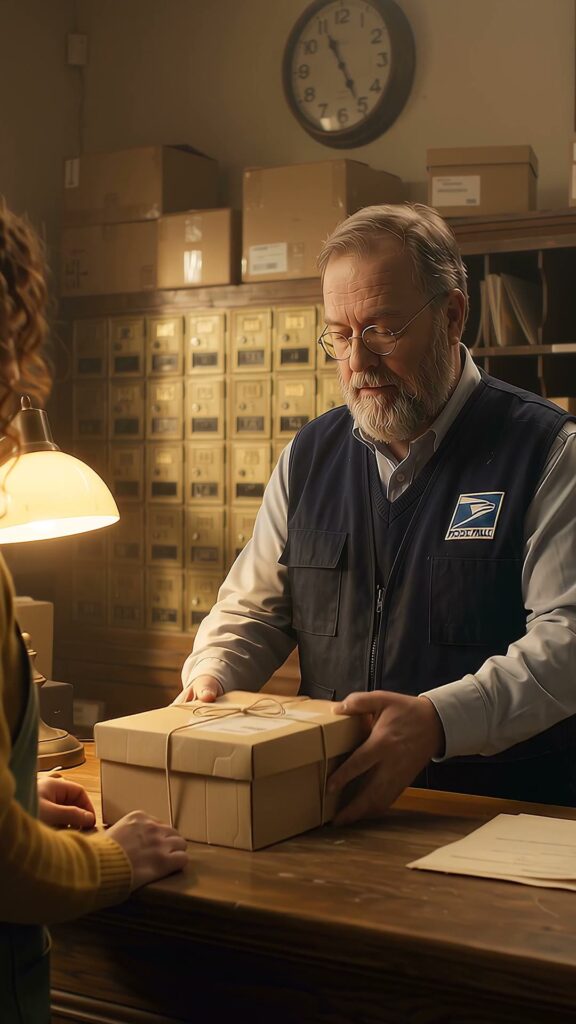
On the second, the postmaster, Mr. Okafor, phoned me at the flower stall. “Nora,” he said, “could you come to the counter? Alone, please. There’s something I’ve been keeping for a long time.”
When I arrived he locked the front door and turned the sign to closed. On the counter sat an old shoebox tied with string. He lifted the lid, and I saw dozens of cream envelopes, each addressed in a slanted, careful hand. I knew that hand. I had seen it on every birthday card of my life, on the notes in my school lunches, on the back of the photograph beside my bed.
Mr. Okafor put one finger on the top envelope and slid it toward me. “Your father brought these in himself,” he said. “In February, before he got sick. He made me promise to tell no one, not even my wife. But the last envelope in the box isn’t for anyone on Alder Street. It’s addressed to you, and he made me swear to give it to you only after the first of December.”
My hands shook so badly that Mr. Okafor had to slit it open for me. Inside was a single sheet, folded twice, in Dad’s handwriting.
“Dear Nora-bird,” it began. “If my old friend Okafor gave you this, then I’m not there to tell you myself, and I’m sorry. I was never good at saying things. I was better with my hands.”
He explained it all in plain, crooked lines. The winter I was four, the bus depot cut everyone’s hours and we ate soup for two months. One morning a stranger left an envelope in our mailbox with a little pencil bird and enough cash to pay the rent. We never found out who. When we were back on our feet, my mother said we ought to pass it on, so Dad did. Every year since, from the overtime money he told me was for a new truck. He never bought the truck. “I’m sorry about that too,” he wrote.
There were forty-two envelopes in the box, three for every December for the next fourteen years, each addressed to a neighbor he had chosen with care. Mr. Okafor had agreed to slip them into the boxes at first light. Yes, he had known the whole time. “He’s the best man I know,” Dad wrote, “besides you.”
Underneath the letter lay a bank book in my name, with enough in it to keep going after the fourteen years, if I wanted. He had sold his tools to fund it. “You’re not obliged,” said the last lines. “You’re only allowed. And if you do it, draw the bird yourself. You were always better at it than me.”
I read it three times. Then I put my forehead on the cool wood of the counter and cried in front of a man I had known all my life, and he stood beside me and said nothing, which was exactly right.
That night I sat at the kitchen table with a soft pencil and drew my first sparrow. My father’s slant, his tilt of the wing. It took me eleven tries to get it right.
On the third of December, before dawn, Mr. Okafor and I walked Alder Street together. He carried the box. I carried the pencil. Three mailboxes, three envelopes: the widow with the furnace, the man from the mill, and the young couple, who now have a two-year-old and a very good crib. Lights came on in the windows one by one, and the street breathed out.
Last week I saw old Mrs. Pruitt at her mailbox, holding that cream envelope to her chest and looking up at the sky. I stood behind the hedge and let her believe whatever she needed to believe. The fund is in my name now, but every sparrow on every card is still my father’s. I have learned to copy the slant. It is the best thing I have ever done with my hands.



Join the conversation