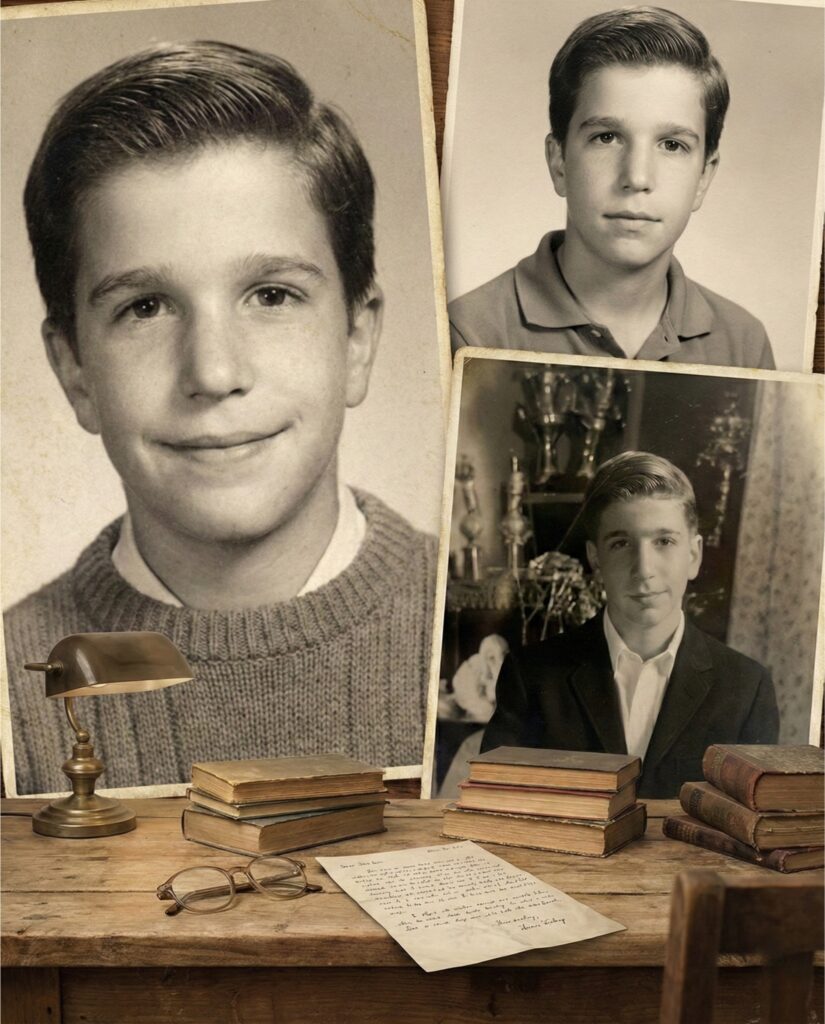
Henry Winkler’s path to success was far from easy. He struggled immensely in school, which led his parents to criticize him harshly. Their repeated insults and negative comments slowly eroded his confidence—an experience that shaped his vow never to treat his own children the same way. It wasn’t until many years later that Winkler finally discovered the real reason behind his academic challenges. With that understanding, he made it his mission to use his diagnosis to motivate others, especially young people.
Although Winkler built a highly successful acting career, he had to work extraordinarily hard for every accomplishment. His difficulties surfaced early in life, heavily influenced by the strict expectations his parents placed on education.
“My parents were very, very, very, very, very short Jews from Germany,” Winkler told The Yale Center for Dyslexia & Creativity. “They believed in education. They thought I was lazy. I was called lazy. I was called stupid. I was told I was not living up to my potential.” Deep down, Winkler knew he was trying as hard as he could, no matter what they thought.

Determined not to be labeled “stupid,” he tried every strategy he could think of to excel in school. But despite his efforts, he often fell short and was repeatedly punished at home. His academic struggles even kept him from participating in school dances and plays. “I was grounded for most of my high school career. They thought if I stayed at my desk for six weeks at a time, I was going to get it, and they were just going to put an end to the silliness of my laziness.”
Even with these setbacks, Winkler ultimately earned an MFA from Yale University. Still, the challenges followed him beyond graduation—especially when it came to reading scripts. “You learn to negotiate with your learning challenge. I improvised. I never read anything the way it was written in my entire life,” he said. He perfected the skill of memorizing large sections of a script and improvising the rest, often relying on humor to secure roles.

His iconic portrayal of Arthur “Fonzie” Fonzarelli on *Happy Days* also came with difficulties. Winkler admitted that table reads were particularly tough, as he often felt embarrassed in front of producers, cast members, directors, and department heads. “When we did *Happy Days*, I embarrassed myself for 10 years reading around that table… On Monday morning, we read the scripts. I stumbled over every word.”

It wasn’t until his stepson experienced trouble in school and underwent testing for a learning disability that Winkler began to consider he might have dyslexia as well. “I went, ‘Oh my goodness. I have something with a name.’ That was when I first got it,” he said. He was 31 years old.

Learning that dyslexia had caused his lifelong reading difficulties stirred up deep emotions. “I got very angry. Because all of the arguments in my house with the short Germans who were my parents were for naught. All of the grounding was for naught.” But rather than letting bitterness consume him, Winkler chose to turn his diagnosis into a force for good. He went on to write a children’s book series featuring a boy named Hank, an elementary school student with dyslexia. The series resonated widely, and Winkler received countless letters from children who found encouragement in Hank’s journey. “Every child who writes me a letter about Hank Zipzer, I write back. In every letter I include, ‘Your learning challenge will not stop you from meeting your dream. Only you will stop yourself from meeting your dream.’”
Though dyslexia remains a challenge in his daily life, Winkler has achieved remarkable success. Alongside numerous Hollywood awards, he has written several books, and his memoir was recently announced for release in 2024. Despite all of his achievements, he says the books he has authored bring him the most pride. “Outside of my family, my proudest moment, no matter what I have achieved, are the books.”

Henry Winkler’s journey is a powerful reminder of resilience and self-belief. Despite years of misunderstanding and criticism, he transformed his struggles into inspiration for others.





Join the conversation