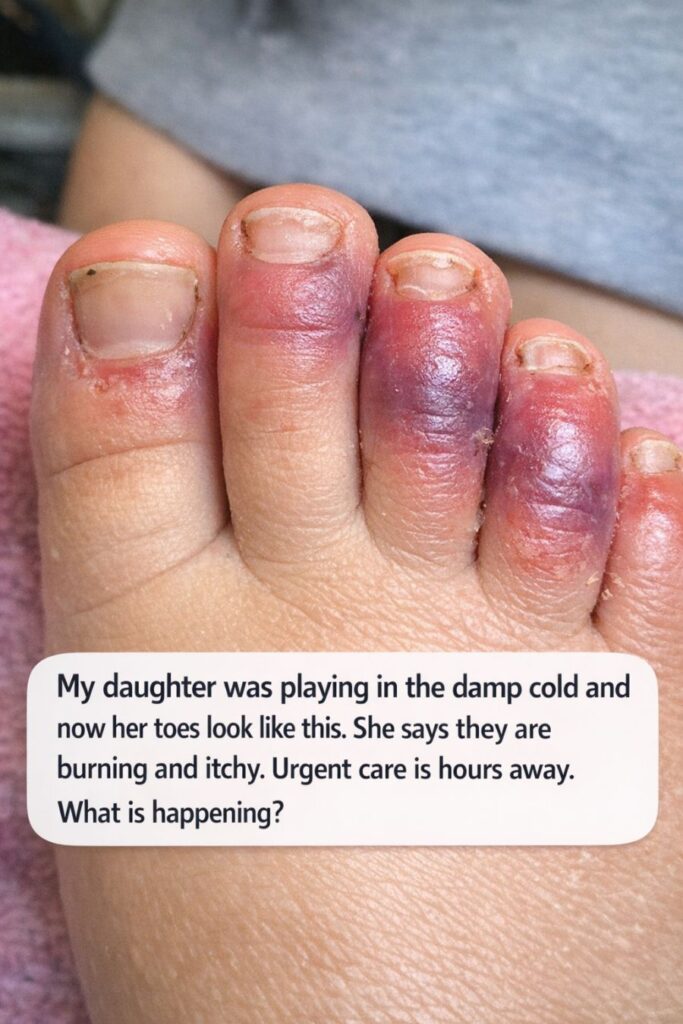
As winter approaches, many parents find themselves worried about their children’s exposure to the cold, especially when outdoor play is involved. Children are naturally drawn to the excitement of snow and the allure of exploring in cool weather, often without the awareness of the risks that come with damp and chilly conditions. It’s not uncommon for parents to notice changes in their children’s skin after a day of playing outside, particularly on extremities like fingers and toes, which are more susceptible to the cold.
In situations where a child’s toes become red, itchy, and burning after playing in the damp cold, parents might find themselves concerned and unsure of what to do next. Understanding the possible causes and knowing how to respond can make all the difference in ensuring your child’s safety and comfort. This article delves into the specifics of why cold, damp weather can be harmful to toes, the condition known as chilblains, and how to manage it effectively.
1. Why Cold, Damp Weather Can Suddenly Damage Toes
Cold, damp weather can have a significant impact on the body’s extremities due to the way it affects blood circulation. When the body is exposed to cold temperatures, blood vessels near the skin surface constrict to conserve heat. However, prolonged exposure, especially when combined with moisture, can lead to the vessels suddenly expanding, causing damage to the surrounding tissues.
2. Chilblains 101: The Likely Culprit Behind Burning, Itchy Toes
Chilblains, also known as pernio, are a common condition affecting people exposed to cold and damp environments. They occur when small blood vessels in the skin become inflamed due to rapid rewarming after being cold. This inflammation leads to symptoms such as redness, itching, swelling, and a burning sensation, primarily affecting fingers, toes, ears, and nose.
The condition can develop within hours of exposure and may persist for several days if untreated. Chilblains are more common in children and young adults due to their developing circulatory systems. Understanding the signs of chilblains can help parents recognize the condition early and take appropriate action to alleviate discomfort.
While chilblains and frostbite can both result from cold exposure, they have distinct characteristics. Chilblains are typically marked by red, swollen patches on the skin that are itchy and tender. In contrast, frostbite involves freezing of the skin and underlying tissues, leading to numbness, pale or waxy skin, and possibly blisters.
Infections, on the other hand, often present with warmth, pus, or an increase in pain and redness in the affected area. It’s important to differentiate between these conditions to prevent long-term damage and ensure proper treatment. Chilblains do not cause tissue death like frostbite but can lead to skin ulceration if not managed properly.
4. Who Is Most At Risk: Kids, Teens, And Others Prone To Chilblains
People with a family history of chilblains or those who frequently engage in activities in cold, damp environments are also at higher risk. Understanding these risk factors can help parents and caregivers take preventive measures to protect vulnerable individuals from chilblains.
5. What To Do Right Now At Home While You Wait For Care
If you suspect your child has chilblains, begin by gently warming the affected area. Avoid direct heat sources like hot water or heaters, which can aggravate the condition. Instead, use warm compresses or wrap the area in a soft blanket to gradually raise the temperature.
Encourage your child to move around to improve circulation, and ensure they wear dry, warm socks to keep their feet protected. Applying a moisturizing lotion can help soothe the skin, but avoid massaging the area aggressively. If the symptoms worsen or persist, seek medical attention.
While chilblains generally resolve on their own, certain situations warrant immediate medical attention. If your child experiences severe pain, blistering, or signs of infection such as increased redness, warmth, or pus, it’s crucial to seek professional help promptly.
Additionally, if your child has a pre-existing health condition that affects circulation, such as diabetes or Raynaud’s phenomenon, consult a healthcare provider to prevent complications. Early intervention can prevent further damage and ensure proper management.
7. What Doctors Do: Diagnosis, Treatment, And Follow-Up
In a clinical setting, doctors diagnose chilblains based on the appearance of the affected areas and the patient’s history of exposure to cold. In some cases, blood tests or skin biopsies may be conducted to rule out other conditions.
Treatment typically involves topical corticosteroids to reduce inflammation and itching. For recurrent cases, medications that improve circulation, such as nifedipine, may be prescribed. Follow-up care is essential to monitor healing and prevent future occurrences. Doctors also provide advice on protective measures and lifestyle changes to mitigate risk.
One common mistake is using hot water or heating pads to warm the affected areas, which can exacerbate symptoms and lead to burns. Over-massaging the area in an attempt to improve circulation can also worsen inflammation.
Another error is neglecting to check for signs of infection or waiting too long to seek medical advice. Prompt attention to symptoms and following proper care procedures are crucial in managing chilblains effectively and minimizing discomfort.
9. How To Prevent Chilblains The Next Time Your Child Plays Outside
Prevention is key when it comes to chilblains. Ensure your child wears appropriate clothing, including waterproof boots and insulated socks, to keep their feet dry and warm. Layer clothing to trap heat and prevent direct exposure to cold.
Encourage regular breaks from the cold to warm up indoors, and educate your child on the importance of recognizing early signs of cold-related discomfort. Additionally, maintaining good skin health through moisturizing can help reduce susceptibility to chilblains.
Chilblains can be mistaken for other conditions such as frostbite, Raynaud’s phenomenon, or eczema. Raynaud’s, for example, also affects circulation but is often characterized by color changes in the skin in response to cold or stress.
Eczema can cause similar itching and redness but is generally associated with dry skin and may not be limited to areas exposed to cold. Consulting a healthcare professional is important for a correct diagnosis and appropriate treatment plan.
11. How To Talk To Your Child About Cold-Weather Safety Without Scaring Them
Discussing cold-weather safety with your child should be approached with reassurance rather than fear. Emphasize the fun and enjoyment of outdoor activities while highlighting the importance of dressing warmly and recognizing when it’s time to come inside.
Use age-appropriate language and encourage your child to share any discomfort they might feel. Remind them that taking breaks and warming up is simply part of staying healthy and ensuring they can continue enjoying their favorite outdoor adventures.


Join the conversation