Former Model Opens Up About Addiction and Life on the Streets: “I’m in a Lot of Pain”
For years, Loni Willison’s name was synonymous with flawless beauty, radiant confidence, and the sculpted physique of a top-tier fitness model. She graced magazine covers, built a prominent presence in the modeling world, and lived a life many young women dreamed of—seemingly glamorous, enviable, and untouchable.
Her striking looks, sun-kissed hair, and strict fitness regimen helped her earn a place in an industry obsessed with image and perfection. But today, the same woman who once posed under studio lights is now more often seen under the harsh glow of streetlamps—pushing a shopping cart filled with discarded belongings, wandering barefoot, or rummaging through dumpsters across California.
Her decline is among the most heartbreaking transformations witnessed by fans and the media. Now, after years of silence and speculation, Loni has spoken out—not just about her drug addiction and homelessness, but about who she believes played a role in her downfall.

A Marriage That Triggered Her Decline
When asked what marked the turning point in her life, Loni didn’t hesitate:
“My ex-husband,” she said. “Getting married… at least I got divorced. He set everything up to do this to me.”
Her tone was not bitter, but heavy and resigned, as if the weight of years of pain had finally found its voice.
Loni married Jeremy Jackson—the “Baywatch” actor once hailed as Hollywood’s golden boy—in 2012. Behind the scenes, however, their relationship was tumultuous, defined by drug use, emotional breakdowns, and violent incidents. Their marriage ended in 2014 following a shocking confrontation in which Jackson allegedly tried to choke her during a drunken fight. Loni recalls this moment as the start of her emotional and psychological unraveling.
From the Spotlight to Disappearance

After her marriage ended, the structured world of modeling slipped away. Without the support of her career or personal life, long-standing cracks in her mental health widened, ultimately leading to her disappearance from public life.
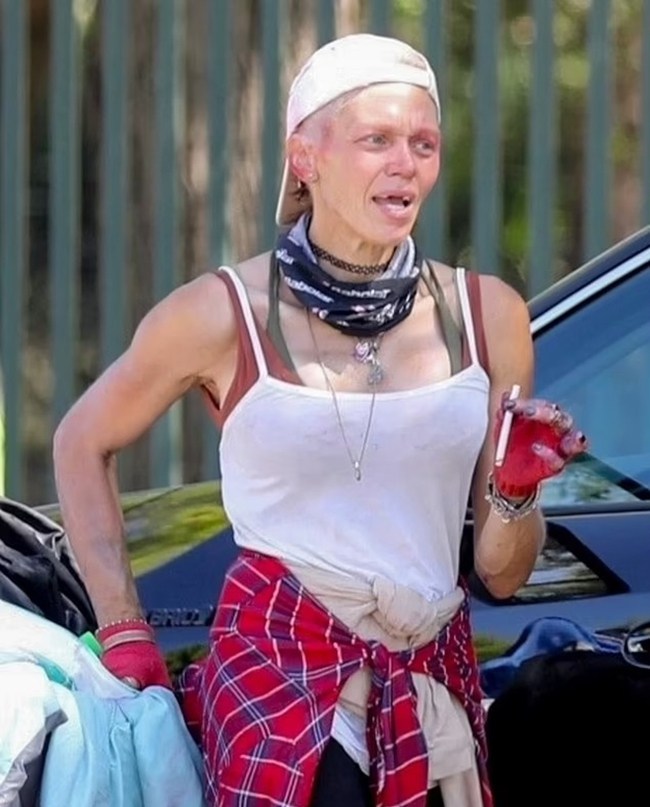
For nearly four years, Loni vanished—no public appearances, no modeling assignments, no updates. Then, in 2018, she reemerged—but not as the glamorous figure the world remembered. Photographs captured her on the streets of Los Angeles: short, uneven hair; a face etched with exhaustion; missing front teeth; a visibly frail frame; and clothes torn, dirty, and oversized.
The contrast was staggering. This was not just a fall from fame—it was a total collapse. Years later, she continues to struggle for survival on the streets.
A Life Marked by Pain
In a recent interview, Loni spoke candidly about her physical suffering:
Constant, severe stomach pain
Chronic body aches
Injured hands and fingers
Reluctance to seek medical help
When advised to see a doctor for her damaged hands, she simply said, “I’ll be fine.” But the words carried exhaustion, not confidence.
A Unique Fear: Electricity
Loni says she cannot live indoors because she is “electrosensitive.” According to her, she was “electrocuted every day for almost a year,” and now her body reacts to electrical sources like wires, batteries, and metal, making indoor living impossible.
Her statements suggest profound mental-health struggles beyond addiction—likely rooted in trauma, paranoia, or psychosis, which are tragically common among long-term homeless individuals.
“There’s nothing anyone can offer me,” she added. Despite offers for housing, rehab, and medical help, she refuses, feeling that healing may not be possible.

The Shadow of Addiction and Trauma
In 2018, Loni admitted to struggling with crystal meth addiction and feeling “tortured” in her own home—signs of deep psychological distress. Today, those struggles persist, compounded by past abuse, trauma, and instability.
The Contrast With Jeremy Jackson
While her ex-husband also faced addiction, legal troubles, and violent incidents, he found help, rehab, and support networks. Loni, meanwhile, sank further into homelessness, bearing the brunt of trauma and isolation alone.
From Glamour to Survival
Once earning a living through modeling, photoshoots, advertising campaigns, and promotional appearances, Loni now survives by collecting recyclables, scavenging for food, and sleeping outdoors. Her story exemplifies one of Hollywood’s most extreme downward spirals, yet she remains polite, soft-spoken, and grateful in public encounters.
The Psychological Toll
Her “electrosensitivity” and other fears are not attention-seeking—they reflect a mind stretched to its limits by trauma, violence, addiction, and homelessness. Mental health experts note that such extreme stressors can result in paranoia and delusional thinking, which feels entirely real to the person experiencing it.
Why She Rejects Help

Loni avoids help not from stubbornness but fear: fear of betrayal, fear of confinement, and fear of being trapped again. After years without stability, trust, or hope, offers of assistance feel threatening, not comforting.
The Human Side
Despite everything, Loni is gentle, polite, and empathetic. Her demeanor reflects the enduring humanity of someone who has endured extreme loss but has not let cruelty erase her ability to show kindness.
A Glimpse of What Could Have Been
If life had been different, Loni might still be:
Training clients
Modeling for magazines
Inspiring young women
Living in a safe home
Building a career and family
Instead, trauma, addiction, and homelessness reshaped her life—but she survives every day, a testament to resilience.
Possibility of Recovery
Recovery is possible, but it requires mental health care, addiction rehab, stable housing, medical attention, therapy, and consistent support. Loni is still young and strong enough to heal, but she cannot do it alone.
What Loni Represents
Her story is not just about a fallen celebrity—it reflects the thousands of people whose suffering goes unseen:
Addiction is not a choice
Homelessness is not weakness
Mental illness is not shameful
Trauma can affect anyone
Human connection can save lives
A Life of Survival and Courage
As she curls beneath a blanket on another California night, Loni’s life is a daily battle between pain and survival. She clings to what little she has left, demonstrating that even in despair, survival itself is an act of courage.
Her story is tragic—but it is not over. There remains hope, and perhaps one day, she may accept the help that allows her to step out of the shadows and rebuild a life she once dreamed of.