This is the trick from our CleanLab Hacks reel. Reaching around blender blades with a sponge is slow and risky, and dried smoothie loves the corners under the blades. The blade spins water and soap against every inside surface faster than your hand ever could, so the jar ends up scrubbing itself. It works best right after you use the blender, before anything dries.
You need
- Warm tap water to fill the jar about halfway (about 2 cups / 500 ml for a standard jar)
- 1 to 2 drops of dish soap (a small drop is plenty)
- A bottle brush or soft sponge for the lid
- A dish towel
Steps
- Empty the jar and give it a quick rinse to remove leftover food.
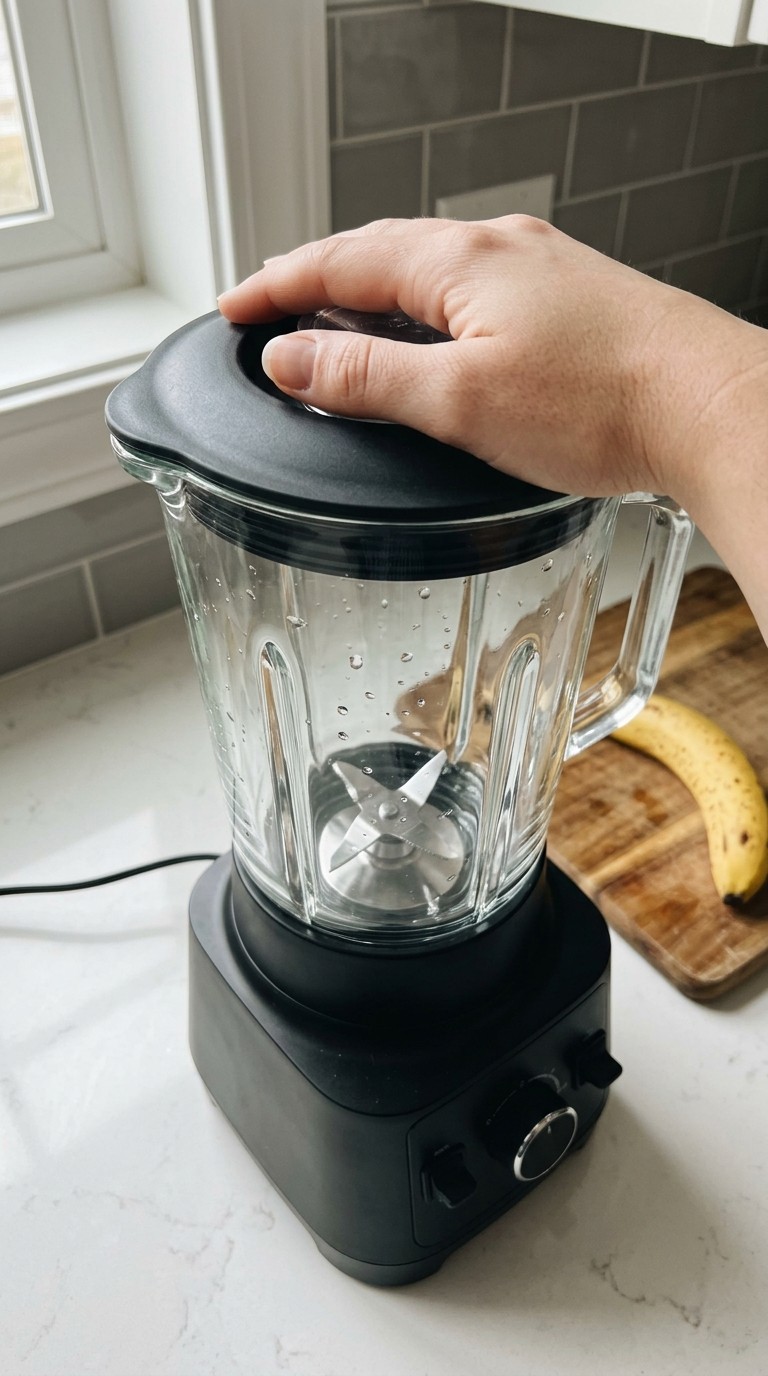
- Fill the jar about halfway with warm, not hot, tap water and add 1 to 2 drops of dish soap.
- Put the lid on firmly and keep one hand pressed on top of it.
- Pulse a few times, then blend on low for 30 to 60 seconds. Turn it off before you lift the lid.
- Pour the soapy water out and rinse the jar. If suds remain, blend again for a few seconds with plain water and pour it out.
- Wash the lid and its rubber seal separately, then let the jar dry upside down on a towel.
Dried-on smoothie? Fill the jar with the same warm soapy water and let it soak for 10 minutes before you blend.
Safety
Do not use hot or boiling water: steam builds pressure and can push the lid off and spray you. Keep a hand on the lid while it runs. Unplug the blender before you reach into the jar, remove the blade assembly or wipe the base, and never put the motor base in water; wipe it with a damp cloth. Check your manual before putting any part in the dishwasher.
What the viral version gets wrong
Most videos use too much soap, and the foam climbs up and leaks around the lid. A drop or two is enough. The pulse also does not reach under the rubber gasket or behind a removable blade assembly, so take those apart and wash them every week or two if your model allows it. A cloudy film that stays after cleaning is usually hard-water residue, not dirt.
Related guides
More tricks every day on CleanLab Hacks on Facebook.