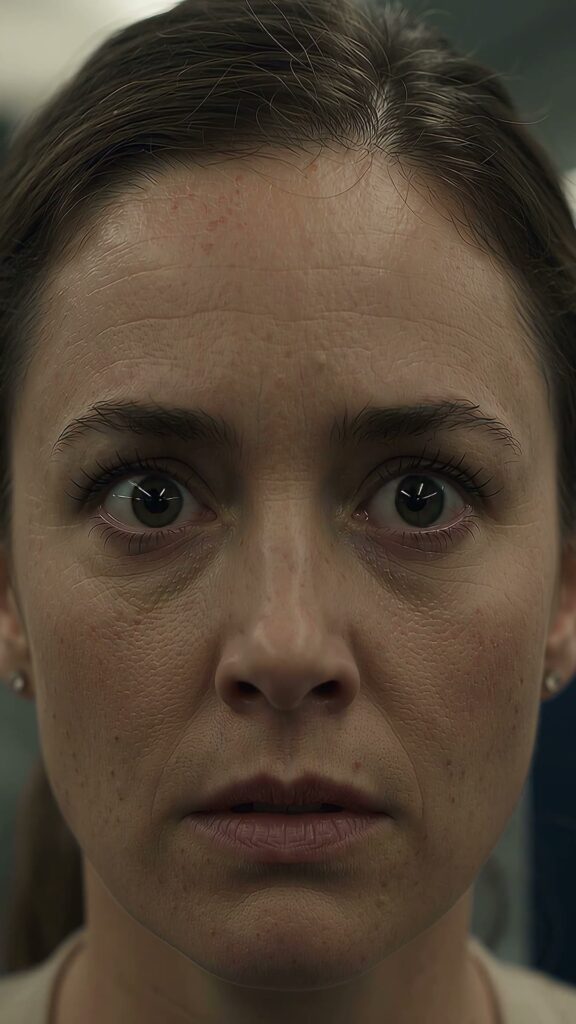
My name is Elena. I was on the red-eye to Lisbon, seat 14C, exhausted from six weeks of hospital visits to my sister. Across the aisle a tall man in a dark shirt sat holding his phone and a small paper cup. A flight attendant asked if he needed anything.
I had been looking at him for an hour, and I couldn’t say why.
Then he lifted his hand to accept a napkin, and I saw a small scar between his thumb and forefinger, shaped like a crescent moon.
My little brother Tomas had a scar exactly like that. He got it at eight, from our grandmother’s garden gate. He disappeared at nineteen after a fight with our father, and my family stopped saying his name.
I leaned across the aisle, too quietly for anyone else to hear, and said the one word only Tomas would know: ‘Gate.’
The man turned his head very slowly. His face went still.
‘Who are you?’ he asked. His voice was a stranger’s, deeper, but the way he tilted his head was our grandmother’s.
‘Elena,’ I said. ‘Your sister.’
He put down the paper cup because his hand had started to shake. The flight attendant hesitated and stepped away without a word.
For the next hour, at thirty-five thousand feet, my brother told me what he had never been able to say. He had gone abroad with nothing, worked on ships and in kitchens, and then, ashamed, never found a way to come back.
He wrote to us every year. Our father had burned the letters.
We landed at dawn. I helped him carry his one bag to the terminal. Our mother was waiting for me at arrivals, because I had told her I was bringing back a friend.
She saw him and dropped her handbag. She didn’t say anything. She just held out both her hands, the way you do for a child who has been lost for a long time.




Join the conversation